
The U.S. Developed the World’s First Fighter For Cruise Missile Defence: Iran is Now Turning it Against America
Military Watch Magazine Editorial Staff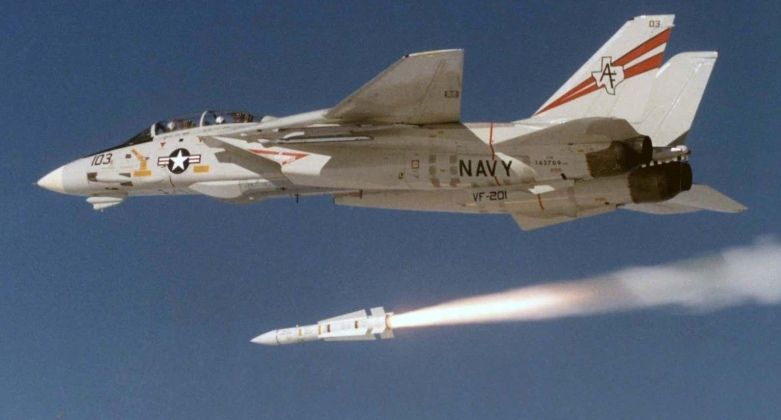
F-14 Fires AIM-54 Air-to-Air Missile
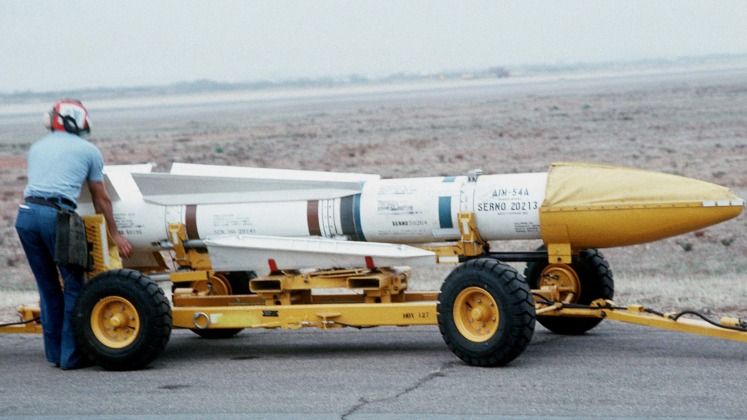
Following the emergence of footage confirming that the Iranian Air Force has deployed F-14 Tomcat fighters to support its ongoing war effort against the United States and its strategic partners, significant questions have been raised regarding the extent of the aircraft’s ability to contribute to the war effort. The F-14 is by far the heaviest and longest ranged fighter type in Iranian service, and is the largest fighter ever developed in the Western world. Its sheer size and range reflect highly ambitious performance requirements to provide a long range air defence capability for the U.S. Navy’s carrier groups, with the aircraft required to carry an outstandingly large and powerful radar by Western standards, as well as air-to-air missiles considerably larger than those integrated onto regular fighters such as the F-15, namely the AIM-54 Phoenix. The F-14’s combination of the AN/AWG-9 radar and AIM-54 missile represented one of the most advanced integrated air defence systems ever installed in a fighter aircraft, with the two together being specifically optimised to defeat mass raids by bombers and cruise missiles.
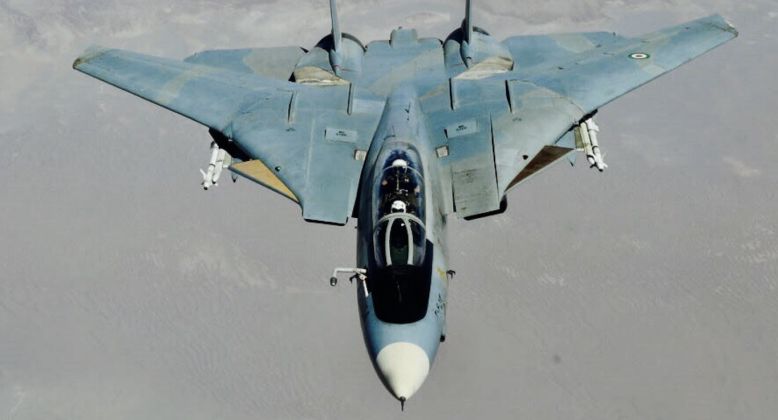
While the F-14’s age means it is unlikely to be able to pose a significant threat to hostile aircraft, primarily due to the vulnerability of its radar, and the seeker on the AIM-54 missile, to jamming and other modern electronic warfare techniques, the aircraft has the potential to play an important role in supporting anti-missile operations, specifically in shooting down hostile cruise missiles. Cruise missile attacks have represented the primary means of striking Iranian targets, as penetration strikes by hostile aircraft to use shorter ranged munitions have resulted in significant losses. The F-14 was the first fighter specifically designed with the capability to engage large numbers of incoming cruise missiles at long ranges, which was a mission that the U.S. Navy strongly prioritised during the Cold War due to the advanced anti-ship capabilities of Soviet tactical bombers. With bombers like the Tu-22M capable of launching missiles well beyond the range of anti-aircraft assets to threaten them, it was vital to be able to destroy the missiles they launched before they could hit U.S. Navy ships.
The F-14’s AN/AWG-9 was by far the most more powerful radar ever integrated onto a Western fighter during the 20th century, and boasted a detection range exceeding 300 kilometres against large targets and the ability to track up to 24 targets simultaneously while engaging up to six at once. Importantly, its sophisticated look-down/shoot-down capability allowed it to detect and track low-flying cruise missiles against the clutter of the sea surface, overcoming a major limitation that affected many earlier radar systems. A major shortcoming of the design was that it relied on a mechanically scanned array, with the U.S. only introducing a serial production fighter with an electronically scanned array radar into service in 2005, more than three decades after the F-14 entered service. Electronically scanned array radars, like that integrated onto Soviet MiG-31 interceptors from 1981, were far more challenging to jam, and allowed for much more rapid scanning and simultaneous attacks against far more widely dispersed targets.
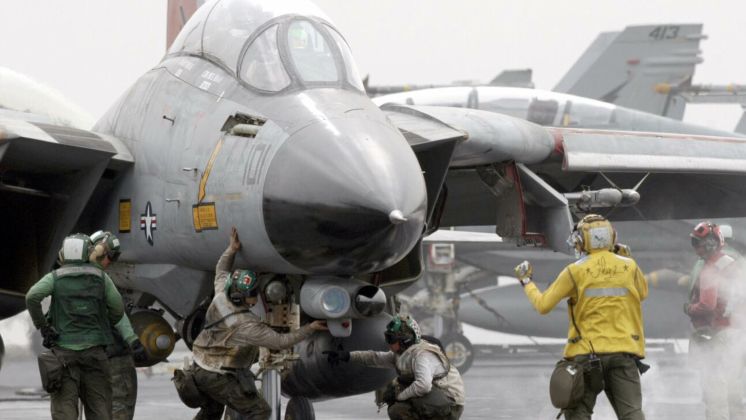
At a time when most fighter radars could track only one target at a time and required continuous illumination until missile impact, the AN/AWG-9 could detect, track and prioritise dozens of targets simultaneously. Another revolutionary feature was its Track-While-Scan mode, as rather than ceasing surveillance to focus on a single target, the radar could continue scanning a wide volume of airspace while simultaneously maintaining tracks on up to 23 other targets and guiding missiles towards up to six targets at once. This capability was specifically developed to counter saturation attacks by large numbers of cruise missiles. The radar was key to the F-14’s unprecedented airborne battle management capability, and prioritised targets automatically based on threat level to reduce workload for the crew, after which it presented the Radar Intercept Officer with engagement options
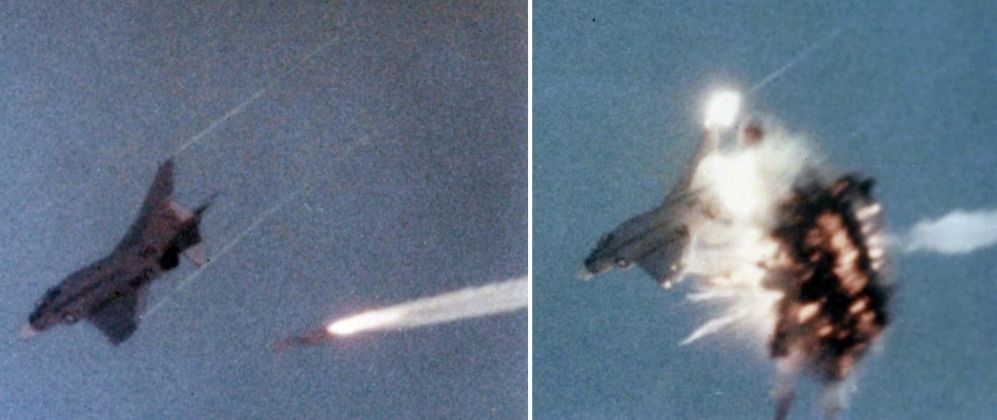
The AIM-54 missile was developed specifically to engage cruise missiles, and used an active radar seeker in its terminal phase to reduce reliance on guidance from the launching aircraft, thus allowing a single F-14 to engage up to six cruise missiles simultaneously. The aircraft’s two-seat crew arrangement reflected this demanding mission, with the pilot concentrating on flying and tactical manoeuvring, while the Radar Intercept Officer (RIO) managed the AN/AWG-9 radar, target prioritisation and missile engagement, allowing crews to better cope with the enormous information workload associated with defending a carrier battle group against coordinated missile attacks. The combination of the AIM-54’s capabilities with those of the AN/AWG-9 represented a fundamental shift in fighter operations, and made the F-14 became an airborne fleet defence system capable of extending a protective umbrella hundreds of kilometres into contested airspace. Its ability to detect low-flying cruise missiles, manage multiple simultaneous engagements and launch long-range active radar-guided missiles established concepts that influenced later systems.
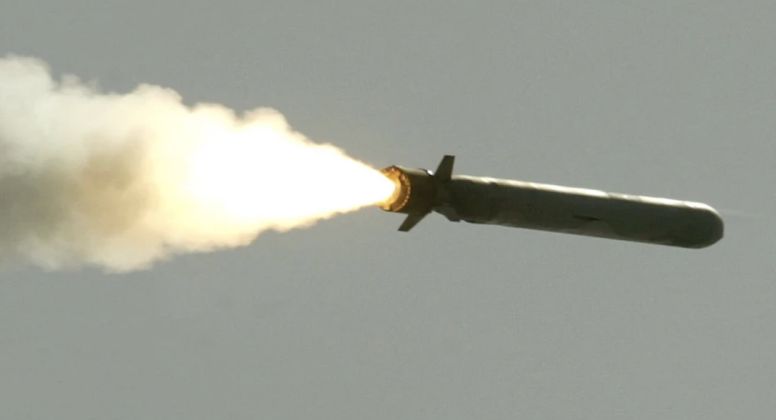
Faced with adversaries that are suffering a severe shortage of cruise missiles after having rapidly depleted stockpiles by firing them in their thousands from late February, Iran’s F-14 fleet could represent an optimal asset to further constrain adversaries’ offensive options. While the F-14 was designed primarily to respond to the challenge posed by Soviet Kh-22 supersonic anti-ship cruise missiles, the subsonic cruise missiles relied on by the U.S. Armed Forces such as the Tomahawk and JASSM are very significantly less challenging to shoot down. Against such targets, F-14s have significantly more time time to detect, classify and intercept as well as a higher probability of kill using the AIM-54. The AIM-54 itself, flying at approximately Mach 4 or higher, possessed an enormous speed advantage over subsonic targets, making interception geometrically straightforward and providing opportunities for repeated engagement if the first missile failed. While Iran received only a limited number of AIM-54 missiles, the country’s defence sector was able to reverse engineer and produce an enhanced variant of the missile, the Fakour 90, which could play a key role in accelerating the attrition of the U.S. and its strategic partners’ cruise missile arsenals.
