
U.S. Threats to Attack Colombia Provide Opportunity For China’s J-10C Fighter Exports
Military Watch Magazine Editorial Staff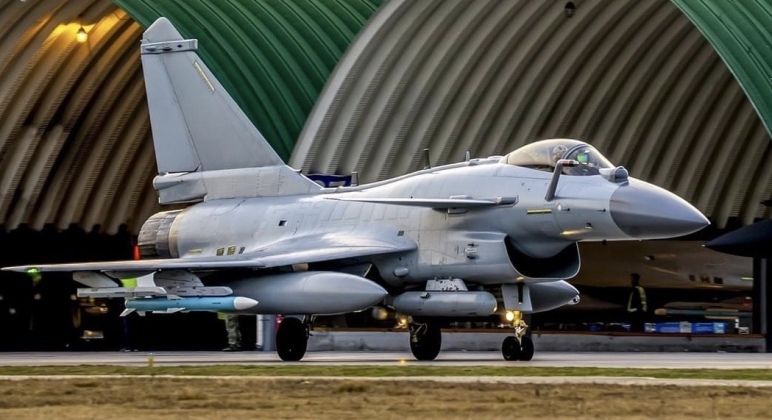
Chinese PLA Air Force J-10C Fighter
Following the initiation of Operation Absolute Resolve against Venezuela on January 3, which U.S. forces strike key military and infrastructure targets across Caracas and abduct President Nicolas Maduro, Washington has explicitly warned of the possibility of launching similar attacks against Colombia. President Donald Trump publicly stated that after the attack on Venezuela, a similar “operation” against Colombia “sounds good to me.” Accusing Colombian President Gustavo Petro of cocaine trafficking, and describing Colombia as “very sick,” he said the U.S. could carry out military action in Colombia has it had in Venezuela. The Colombian leader responded by stating his readiness to “take up arms” to defend Colombia’s sovereignty, while the country’s foreign minister and defence officials stressed that they would defend their territorial sovereignty and reject any foreign aggression.
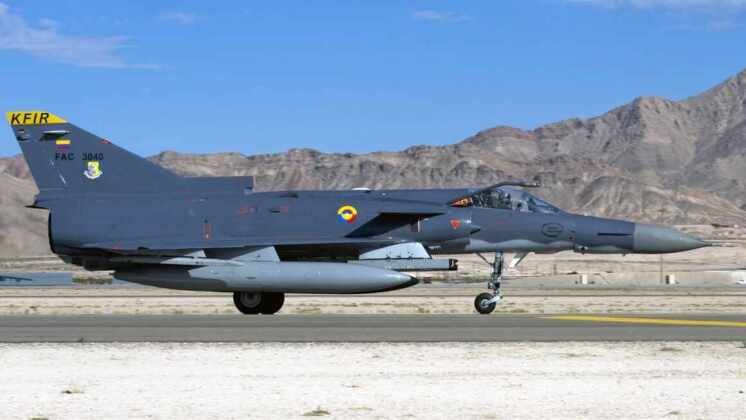
Colombia has responded to recent threats by initiating a $1.6 billion National Anti-Drone Shield Program intended to create a nationwide detection and interdiction architecture designed to counter unmanned aerial threats. Significant uncertainty nevertheless remains regarding the future of the country’s fighter procurement plans, with the American F-16 and Swedish Gripen previously having been considered leading candidates to replace obsolete French-Israeli Kfir fighters. Although Colombia’s strategic ties with countries across the Western world had previously been a primary barrier to Chinese efforts to market its JF-17 Block 3 and J-10C fighters as replacements for the Kfir, ongoing tensions with the United States could lead the Colombian Defence Ministry to reconsider this decision.
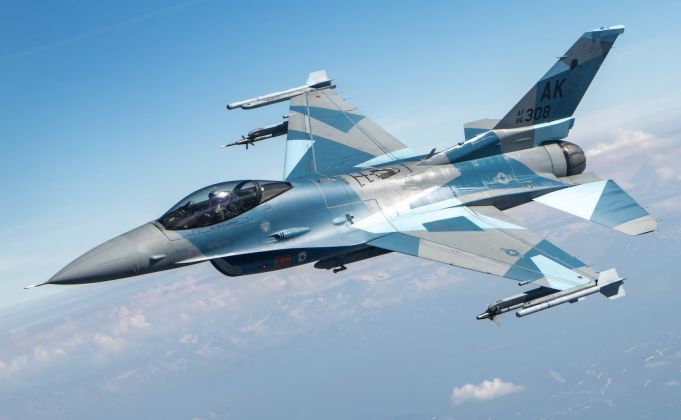
China has made multiple efforts to market its fighter aircraft in Latin America, with tensions between Bogota and Washington raising the possibly that the Colombian Defence Ministry will seek an air defence capability which is intimately known and easily compromised by the United States. While the United States developed and produced the F-16, it was also deeply involved in the development of the Gripen, including providing its engine and weaponry and contributing to its avionics. The much more limited autonomy permitted for operators of Western fighters also limits their ability to be used against Western Bloc interests. The J-10C, by contrast, would not only be significantly less costly, but would also be the most capable fighter in Latin America while providing access to cutting edge PL-15 and PL-10 air-to-air missiles and modern active electronically scanned array radar and data sharing technologies.
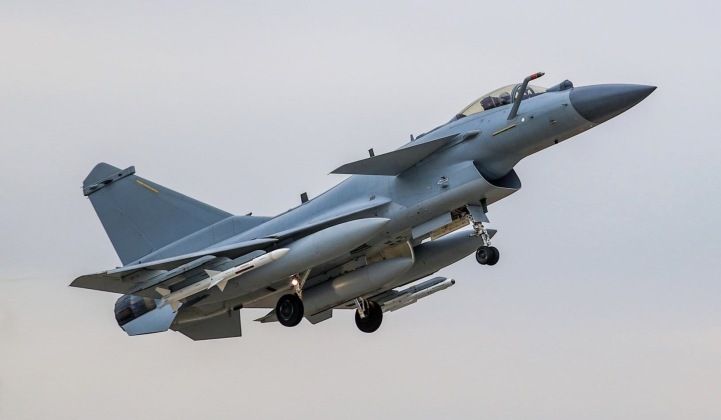
Many of the technologies integrated on the J-10C were initially developed for China’s J-20 fifth generation fighter program, with China considered the only competitor to the United States in fifth and sixth generation fighter aviation. Where the F-16 has never been combat tested against a post-Cold War adversary, the J-10C is the only post-Cold War Chinese fighter type to have been used in air-to-air combat, and reportedly achieved major successes in the hands of the Pakistan Air Force in early May, shooting down multiple Indian Air Force fighters including a reported one-to-four French-supplied Rafales. Nevertheless, political factors including an unwillingness to alienate countries across the Western world could be a major factor preventing Colombia from investing in procuring non-NATO standard fighters.
