
U.S. Sacrificing Carrier Groups’ Sensor Capabilities to Boost Air Force’s Counter-Stealth Performance
Military Watch Magazine Editorial Staff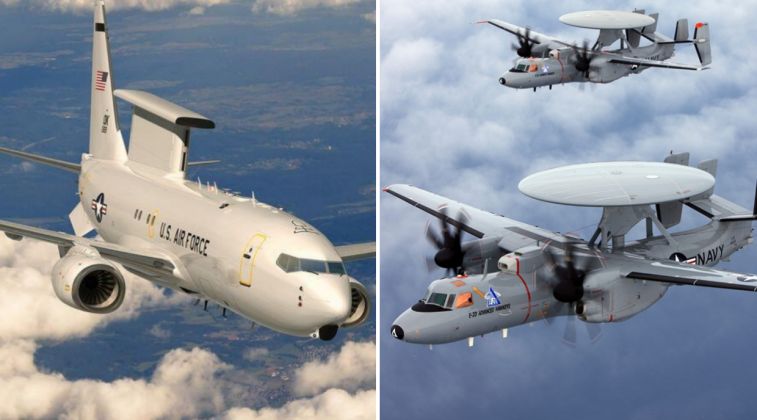
E-7 (left, artwork) and E-2D AEW
Following confirmation from the U.S. Department of War that a $1.55 billion spending plan would be financed in Fiscal Year 2027 for the procurement of E-7 Wedgetail airborne early warning and control (AEW&C), it has been confirmed that 42 percent of this financing will be provided by cutting funding for the Navy’s procurement of E-2 AEW&C systems. The Pentagon and the Air Force announced plans to cancel the E-7 program in mid-2025, after it had suffered delays and cost overruns. It was planned at the time that this would be compensated for by procuring E-2Ds, which were built to operate from U.S. Navy supercarriers, bringing these into service in the Air Force as a transitional measure until a space-based alternative could be developed. The E-7 is considered a medium weight AEW&C system, where the E-3 it is replacing integrated a much larger radar and was a heavyweight system, and the E-2 is a lightweight system with much more limited situational awareness.
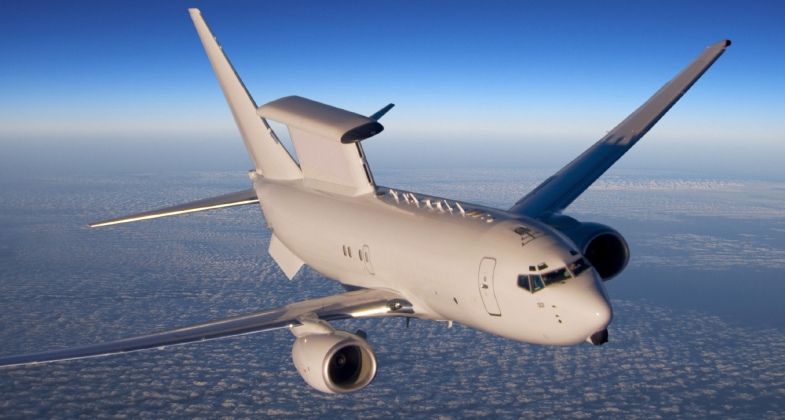
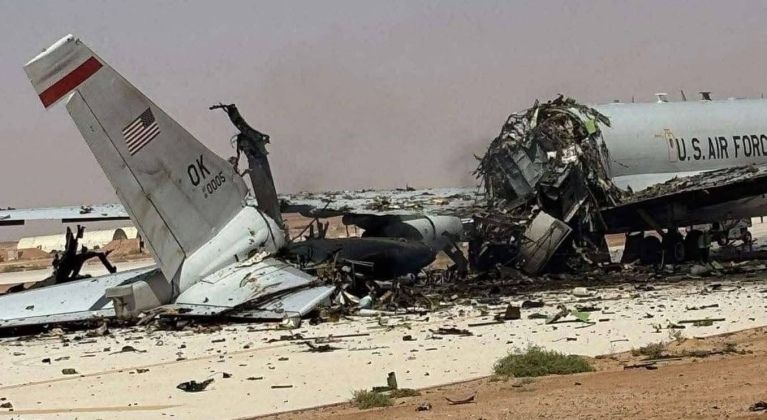
At a time when the Air Force’s budget was under considerable strain, Secretary of War Pete Hegseth in mid-2025 advocated for the cancellation of the E-7 and its replacement with satellites and E-2Ds. In May 2026 he reversed course, stating that a fundamental change had occurred. At a hearing held by members of the House Appropriations Committee, Representative Tom Cole, a Republican from Oklahoma and chairman of the committee, requested an update from Hegseth on the E-7 program. He specifically mentioned that the Iranian attack on the Prince Sultan Air Base in Saudi Arabia in March 2026, during which an E-3 system was destroyed. The attack was seen to further highlight the importance of beginning procurements of a replacement for the E-3.
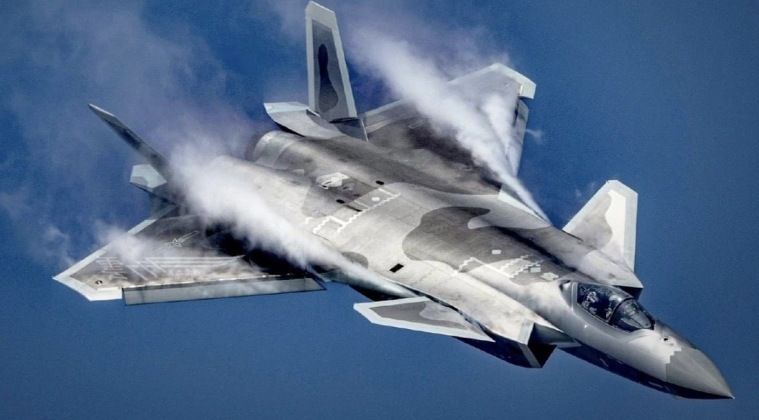
The decision to cancel E-7 procurements in 2025 was made just three years after the Air Force first began to show interest in making procurements in mid-2022, specifically due to the E-3’s demonstrated inability to provide high situational awareness during encounters with Chinese J-20 fifth generation fighters. Pacific Air Forces commander General Kenneth Wilsbach stated in March 2022 regarding the first encounter between F-35s and J-20s regarding E-3s in the region: “our early warning aircraft could not see the J-20…. Those sensors that we rely on the E-3 aren’t really capable in the twenty-first-century, especially against a [stealth] platform like the J-20 or something similar to that. It just can’t see those platforms far enough out to be able to provide an advantage to the shooters… that’s why I would like to have the E-7.”
The conflict with Iran has more recently exacerbated the pressure on the aging E-3 fleet, which was heavily relied on to compensate for the destruction of ground-based radars across the Middle East, further raising the perceived importance of bringing the E-7 into service. The E-3 fleet’s low availability rates were previously also raised as a serious issue in the Pacific theatre. While the E-7 is considered an increasingly urgent procurement priority, cuts to E-2D procurements are expected to undermine the situational awareness of the U.S. Navy’s carrier groups. The E-2 provides the eyes and command centre for the entire carrier strike group, without which situational awareness is limited largely to the horizon of its ships and the much smaller sensors of individual fighters.
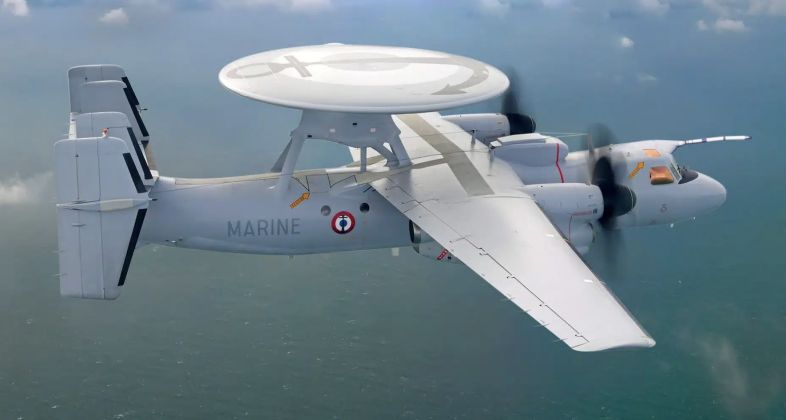
By flying at high altitude hundreds of kilometres from aircraft carriers, the E-2 dramatically extends the fleet’s radar coverage, allowing threats to be detected much earlier. The aircraft’s powerful rotating radar, although much smaller and weaker than that on the E-7, can detect aircraft, cruise missiles, and ships at long range, providing valuable warning of incoming threats. The E-2 also serves as the strike group’s airborne battle management and command-and-control platform, coordinating friendly aircraft, assigning intercepts, managing airspace, and directing fighters toward hostile aircraft. The aircraft is also relied on to support beyond-visual-range combat by tracking enemy aircraft and providing targeting information. Following the defunding of the Navy’s urgently needed F/A-XX next generation carrier based fighter, cuts to E-2 procurements are expected to represent a further serious blow to maritime power projection capabilities.
