
U.S. Combat Aviation’s Pivot Against China Sees Alaska’s ‘Fightertown’ Take Central Position
Military Watch Magazine Editorial Staff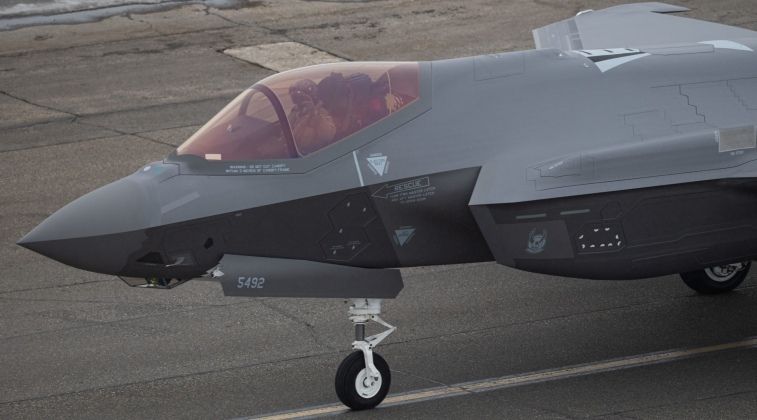
F-35A in Alaska
USAF
The U.S. Air Force is beginning to implement a massive modernization and expansion program at Joint Base Elmendorf-Richardson, with the aim of transforming the base into a premier hub for fighter operations. This is being achieved by replacing aging 1950s-era infrastructure with modern hangars, maintenance facilities, operations centers, training infrastructure, and support buildings capable of sustaining large numbers of advanced combat aircraft for decades to come. The concept was publicly highlighted in April–May 2026, when Senator Dan Sullivan promoted the “JBER Fighter Town Recapitalisation” initiative during a Senate Armed Services Committee hearing. The proposal, included in the administration’s defense budget request, calls for approximately $6.9–7 billion in investment, making it one of the largest military construction projects ever planned in Alaska.
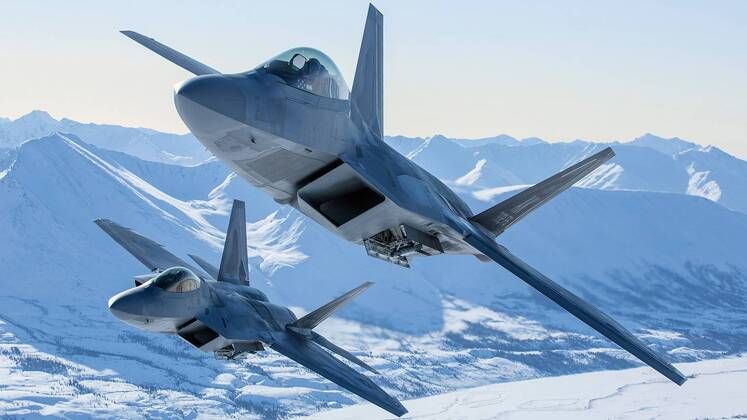
The purpose of Fightertown is to capitalize on Alaska’s growing strategic importance. The state already hosts one of the world’s largest concentrations of fifth generation fighters, namely F-22s and F-35s, which combined with the vast Joint Pacific Alaska Range Complex provides unmatched opportunities for large-scale air combat training and rapid deployment to both the Arctic and Pacific theaters. Another key element is the expansion of Alaska’s training infrastructure. The Air Force is pursuing significant growth of the Joint Pacific Alaska Range Complex (JPARC), already one of the largest military training areas in the world. Larger training airspace would allow F-22s, F-35s, tankers, bombers, drones, and allied aircraft to conduct more realistic long-range combat scenarios that better reflect potential conflicts in the Pacific.
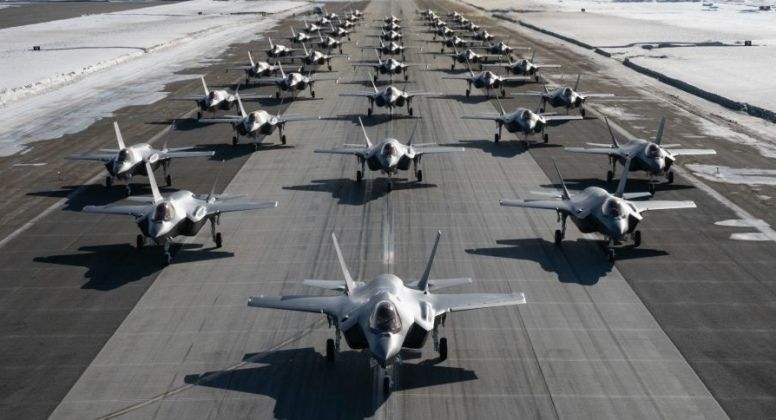
Efforts to cement Alaska’s position as a critical hub for air combat operations, training, and power projection are in line with broader trends towards a growing military focus on the Arctic, and to an even greater extent on the Pacific. Not only are fighter units in Alaska relied on for power projection, including to reinforce air bases in Japan, but they are also depended on for air defence duties. U.S. air defences in Alaska have come under growing strain from Russian bomber patrols, while in 2024 China conducted its first bomber patrol near the territory as H-6 bombers were temporarily based in Russia for such operations. China and Russia are currently the only ones in the world serially producing bomber aircraft, with China expected to begin fielding its first intercontinental range stealth bomber in the early 2030s, after the aircraft was first seen in flight testing in October 2025.
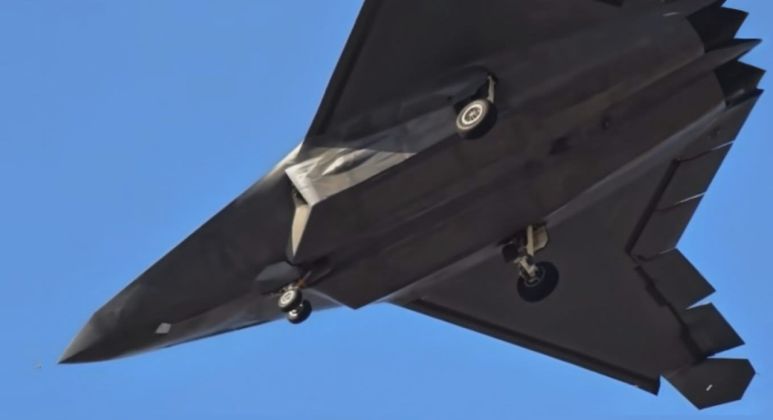
Despite the concentration of the bulk of the most capable American fighter units in the Pacific, the viability of efforts to maintain a viable aerial warfare capability against China has increasingly been brought to question. China is the only country to have bought sixth generation fighter programs to a flight testing stage, with two separate heavyweight long range fighter types both expected to enter service close to a decade before the sixth generation fighters of any other country. While both are expected to enter service in the early 2030s, a growing consensus has formed among analysts that the rival U.S. F-47 fighter will enter service only in the 2040s. The fifth generation F-35, meanwhile, has seen urgent effort to bring it up to the required Block 4 standard delayed by close to a decade and now pushed back into the early 2030s.
