
U.S. Marines Train to Interdict Civilian Shipping in International Waters: Chinese Trade Routes at Risk
Military Watch Magazine Editorial Staff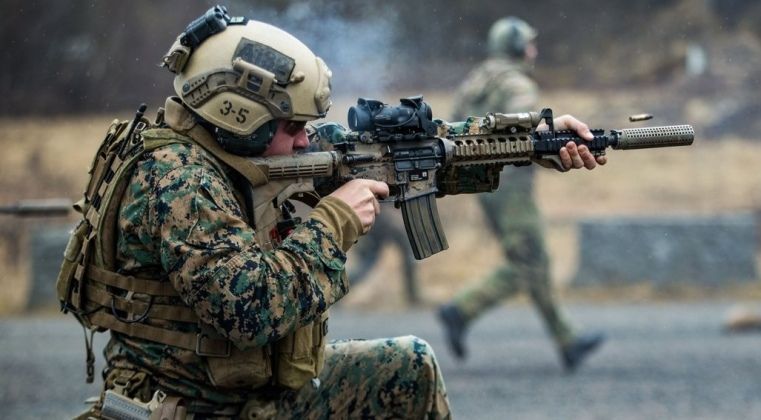
U.S. Marines
USMC
The U.S. Marine Corps 22nd Marine Expeditionary Unit assigned has conducted advanced maritime interdiction operations training in the Caribbean Sea. The unit was deployed with the Iwo Jima Amphibious Ready Group, which four days later on January 3 played a central role in an assault against Venezuela which aimed to destroy critical infrastructure and abduct President Nicolas Maduro. The 22nd Marine Expeditionary Unit is one of the Corps’ standing forward-deployed crisis response formations, and is built around a reinforced infantry battalion landing team, a composite aviation combat element, a combat logistics battalion, and an integrated command element. It was designed specifically to project power at the sea. A Maritime Special Purpose Force within the unit is optimised for high-risk special operations.
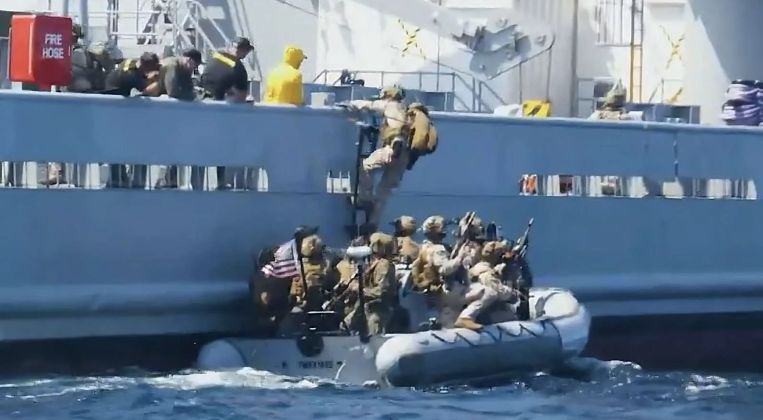
Marines rehearsed operations to seize civilian shipping in international waters, and used rigid-hulled inflatable boats to execute high-speed approaches, ship-to-ship transfers, ladder ascents, compartment clearing, and the detaining of the targeted vessels’ crew members. While the U.S. Coast Guard has been responsible for boarding multiple ships transporting Venezuelan oil for export, Marine training for such operations has more significant implications in the Pacific, where the Corps’ operations are increasingly concentrated. The possibility of U.S. and Western forces launching ‘distant blockade’ operations aimed at cutting off Chinese trade, which could provide the Western Bloc with leverage against Beijing without the need to engage the Chinese People’s Liberation Army directly, has been raised repeatedly by Western experts. This included proposals published by the U.S. Naval Institute for hiring mercenary privateers to seize and otherwise launch attacks on Chinese civilian shipping should relations further worsen.
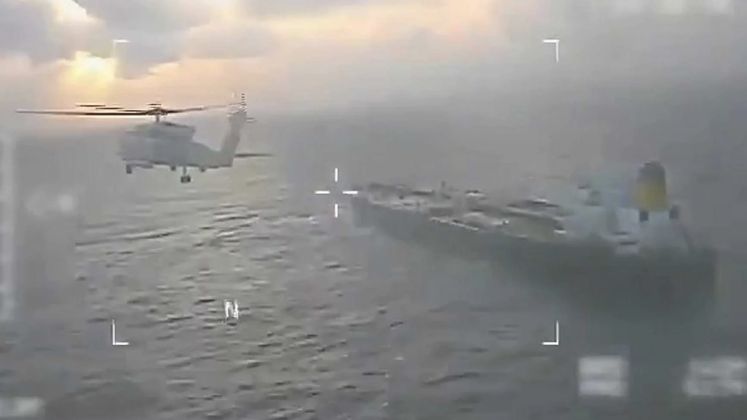
The targeting of civilian shipping by U.S. and Western forces in international waters has continued to grow, with the U.S. Armed Forces having in December conducted armed takeovers of three large tankers transporting Venezuelan crude oil for export China. This included the commandeering of the tanker the Centuries owned by the China-based firm VSatau Tijana Oil Trading near the end of the month, which the Chinese Ministry of Foreign Affairs condemned as a serious violation of international maritime law and an illegal interference in legitimate global trade. Previously in November U.S. special forces boarded a cargo ship in the international waters in the Indian Ocean, securing, removing and destroying Chinese civilian goods that were being shipped to Iran.
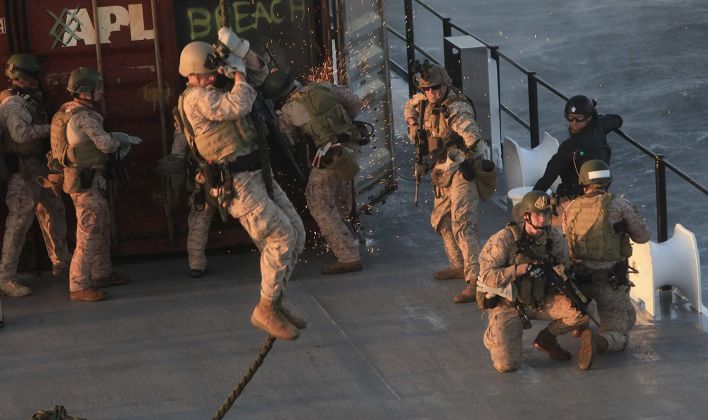
Beginning under the first Trump administration, the United States has on multiple occasions appropriated civilian cargo from adversary states as a means of placing pressure on their economies. A notable example was the targeting of Iranian oil tankers from the late 2010s, the oil from which was taken by the United States Navy and subsequently sold with no compensation paid to Iran. Another was the seizure of the North Korean cargo ship Wise Honest by the U.S. Navy, and its subsequently sale, the funds from which were appropriated with North Korean entities given no compensation. European states have similarly targeted civilian tankers carrying Russian oil or export. An escalation of these operations has the potential to pose a major threat to international shipping.
