
U.S. Firm Kratos Developing New Long Range Strike Drone For the Republic of China Air Force
Military Watch Magazine Editorial Staff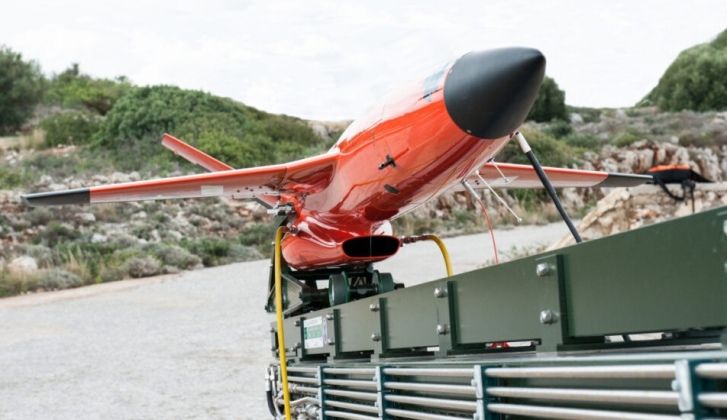
Mighty Hornet IV Test Demonstrator Airframe
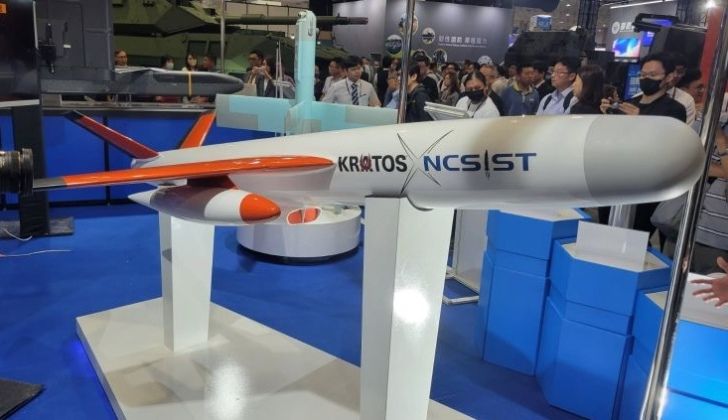
Leading U.S. unmanned aviation developer Kratos Defense & Security Solutions has confirmed the integrated testing of the Mighty Hornet IV unmanned strike aircraft, in collaboration with the Taipei-based National Chung-Shan Institute of Science and Technology (NCIST). Developed specifically for the Republic of China Air Force, the aircraft will enable manned-unmanned teaming and loitering munition capabilities. Integrated testing was based on the Kratos MQM-178 Firejet target drone, combining it with mission payloads and guidance and control systems developed by NCIST. The Institute stated that the modified MQM-178 demonstrated a Mach 0.8 speed, high-G manoeuvrability, and an operating altitude exceeding 10,500 metres during testing, making it an ideal base platform for the Mighty Hornet IV program.
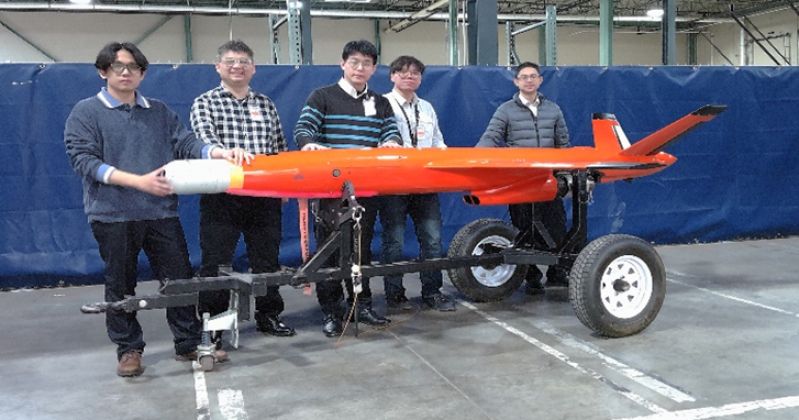
Testing has confirmed that the interface integration and functional operation of the aircraft’s subsystems has met program expectations, and that the overall integration process required no significant platform modifications. NCIST indicated that the ultimate goal of the project is to deploy a large number of the aircraft in the Republic of China Armed Forces to provide cost-effective combat power, possessing both deterrence capabilities and the ability to be deployed for combat operations at any time. Collaboration leveraging the mature technologies from both the United States and the Republic of China, is expected to significantly shorten the development timeline from concept to operational system. This strategy is considered a crucial key to achieving near-term, combat-ready, cost-effective tactical unmanned systems and "affordable mass capabilities."
The joint development of a long range single use attack drone has taken place as the Republic of China Armed Forces have faced an increasingly unfavourable balance of power across the Taiwan Strait, as the Chinese People’s Liberation Army (PLA), with which the Forces remain in a state of civil war, has increasingly emerged as a world leader in its combat aviation capabilities. The PLA Air Force began to operate its first fifth generation fighters in early 2017, and today leads the world in bringing sixth generation fighters into flight testing. Sixth generation fighters are expected to begin to enter service in the early 2030s, placing the Republic of China’s fighter fleet at risk of being left two generations behind.
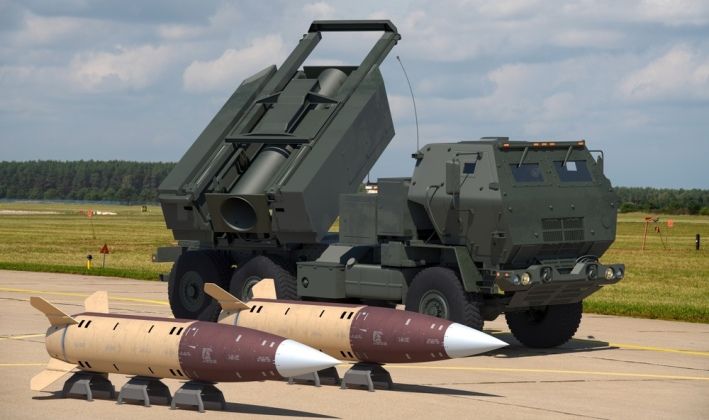
The development of the Mighty Hornet IV is expected to complement broader investments in strike assets aimed at maximising the Republic of China Armed Forces’ ability to hold key targets on the Chinese mainland at risk. While the United States has refrained from providing access to high value manned fighter aircraft, in particular the F-35, due to both the significant possibility of technologies being leaked to the PLA, and due to the history of Republic of China Air Force pilots defecting to the mainland, it has supported the strengthening of strike capabilities using single use assets. Aside from the Mighty Hornet IV, this has included the transfer of hundreds of ATACMS ballistic missiles, Harpoon cruise missiles, and reported transfers of technologies to support local long range cruise missile programs. The establishment of a Joint Firepower Coordination Centre in January has allowed U.S. forces to contribute to selecting targets for these arsenals, allowing high value targets on the Chinese mainland such as ports, factories, research centres and critical infrastructure to be destroyed effectively by proxy.
