
U.S. Flies F-16s Near China with Live AIM-120 Air to Air Missiles: Why the Chinese Air Force Isn’t Worried
Military Watch Magazine Editorial Staff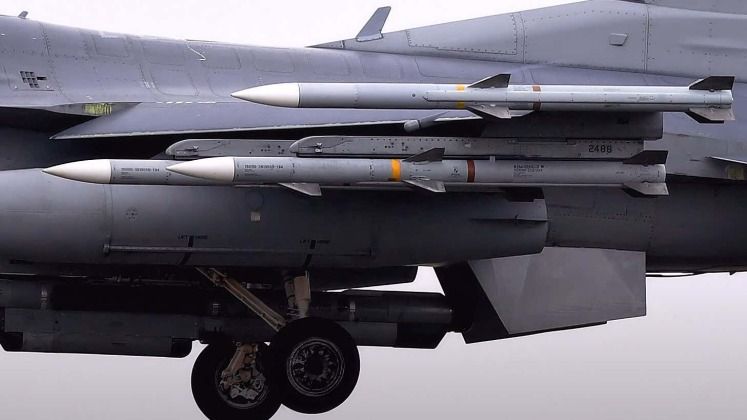
F-16 from Yokota Air Base with AIM-120C Missiles
LORI on Twitter
Amid rising tensions between Beijing and Washington, the U.S. Air Force flew four F-16 fighter jets heavily armed with live AIM-120 air to air missiles over the contested South China Sea. The F-16 is the most widely use American fighter both domestically and by allied countries, and has been in service for close to 45 years with the Air Force currently considering further orders for the aircraft due to problems with its replacement the F-35. Other than the Swedish-American Gripen fighter, the F-16 is the lightest and cheapest Western fighter to have been produce in several decades although it is limited in its endurance, altitude and the size of its radar. Forward deployment from Yokota Air Base in Japan, and improvement to the fighter’s range using conformal fuel tanks, has allowed the F-16 to be used for power projection operations in East Asia despite its limited range.
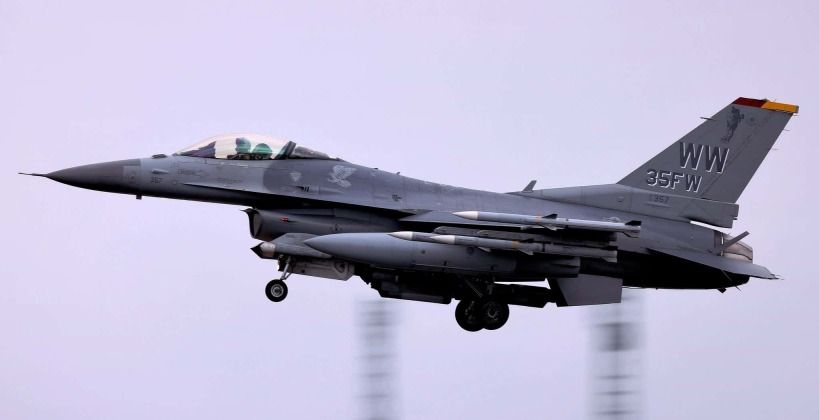
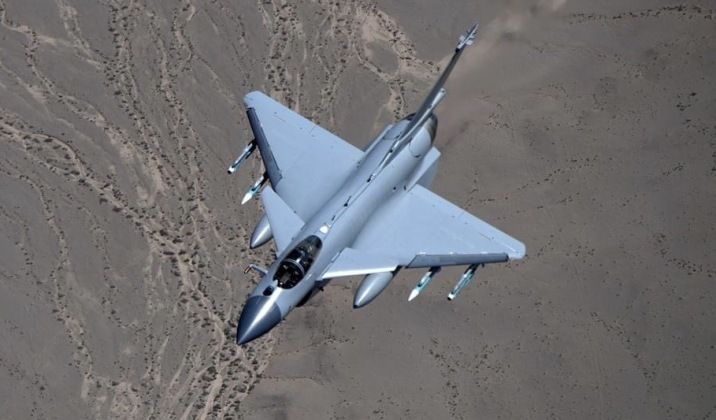
F-16s deploying from Japan were equipped for long range air to air engagements, with each carrying five beyond visual range AIM-120C-7 AMRAAM missiles and a single AIM-9 Sidewinder short range missile. The AIM-120C has an approximate range of 100km and benefits from active radar guidance — which provides ‘fire and forget’ capabilities against enemy aircraft. Since entering service in the early 2000s, the AIM-120C has been eclipsed by newer missile classes such as the AIM-120D, which has 60-80% longer range, and the Chinese PL-15 which has an estimated range of around 250km with some estimating its range to be as long as 300km. China’s closest analogue to the F-16, the J-10, deploys PL-12 missiles which have a similar performance to the AIM-120. The newer J-10C fighters, which are expected to face off against American jets in the event of regional war, use the superior PL-15, and also benefit from stealth coatings, thrust vectoring engines and an AESA radar - all features the F-16s deployed to Japan notably lack.
F-16s flying over the South China Sea also made use of the AN/ALQ-184 electronic countermeasures self-protection pod, which is relied on to provide the older non-stealth aircraft with a degree of survivability against attacks. The fact that the missiles deployed by the aircraft were live, and the Air Force allowed them to be extensively photographed, indicated that the flight from Yokota Air Base was intended as a show of force aimed at China. The F-16’s age, and the fact that it is still relied on so heavily particularly in light of the F-35’s continued unsuitability for high end combat, means China’s People’s Liberation Army Air Force will likely not be overly concerned with the deployment. Tensions are expected to continue to increase as the U.S. moves to strengthen defence ties with Taiwan - which although not recognised as a state actor and having no UN recognition has been sold considerable quantities of American arms.
