
U.S. Demonstrates Landmark ‘Loyal Wingman’ Stealth Drone Support Capability to Bolster F-35s in the Pacific
Military Watch Magazine Editorial Staff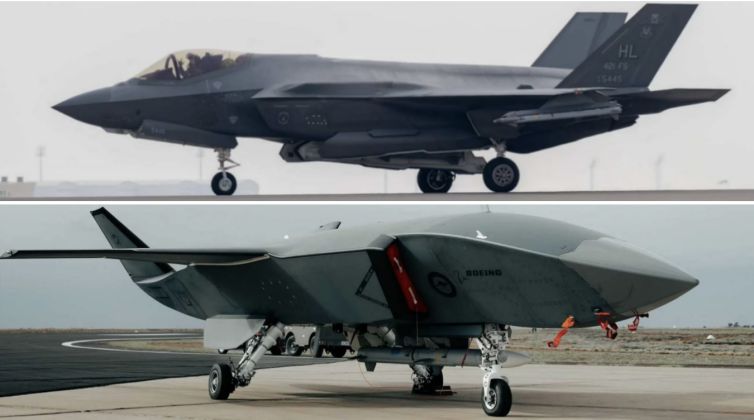
F-35 (top) and MQ-28 Collaborative Combat Aircraft
Boeing's MQ-28 Ghost Bat unmanned stealth fighter has reached a major milestone in the evolution of unmanned air combat after successfully operating alongside multiple variants of the F-35 fifth generation fighter during the multinational Exercise Valiant Shield 2026 in the Western Pacific. The exercise marked the first time a Collaborative Combat Aircraft (CCA), of which the MQ-28 is among the most advanced to have been developed outside China, has participated in a large-scale multinational Pacific exercise. This is thought to have provided the U.S. Air Force with valuable experience integrating unmanned ‘loyal wingman’ aircraft into realistic combat operations.
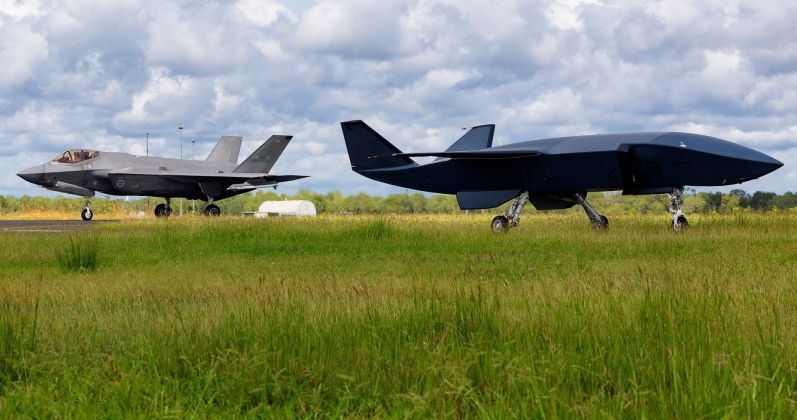
Unlike previous demonstrations conducted largely under controlled testing conditions, Valiant Shield subjected the MQ-28 to a realistic operational environment involving multiple allied services and complex command-and-control networks. The aircraft operated from dispersed Pacific airfields while integrating into joint operations designed to simulate high-intensity conflict against a technologically advanced adversary. Boeing described the exercise as demonstrating not only the aircraft's flying qualities, but also its deployability, sustainment and compatibility with Agile Combat Employment concepts.
https://militarywatchmagazine.com/m/articles/2026/07/15/article_6a57990f317830_27500173.jpg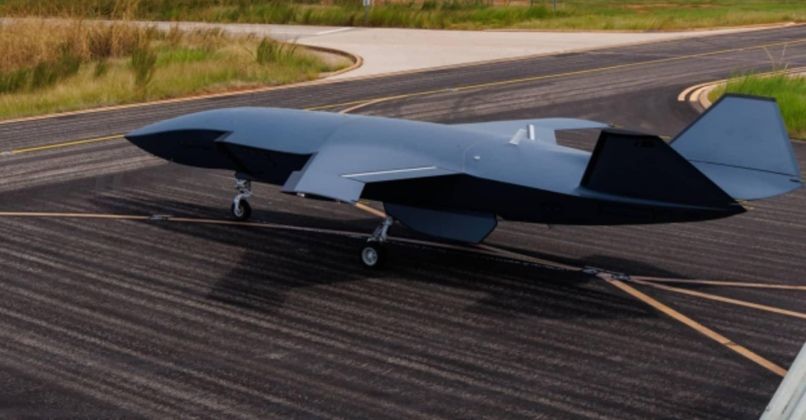
Alongside F-35s, the MQ-28 flew alongside a broad range of supporting aircraft including E-3 and E-2D airborne early warning and control systems, EA-18G electronic attack aircraft, and RC-135 reconnaissance aircraft. The deployment was coordinated by the U.S. Air Force's Experimental Operations Unit, which is responsible for developing tactics, techniques and procedures for new generations of unmanned air combat systems. The exercise reflects the growing importance of Collaborative Combat Aircraft in future U.S. air power doctrine, with such aircraft intended to accompany fighters like the F-35 into combat.
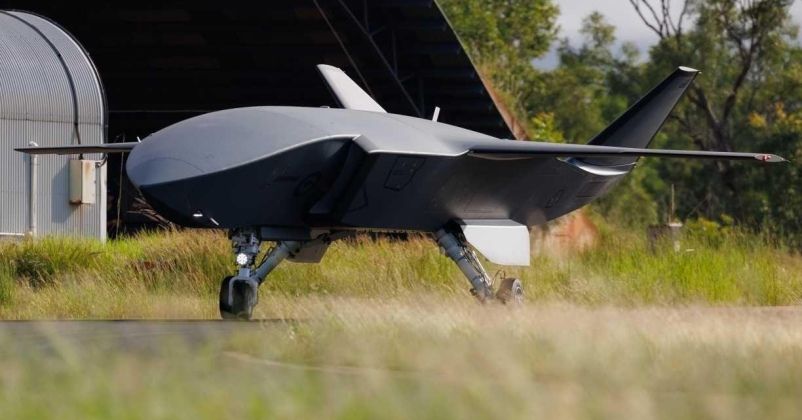
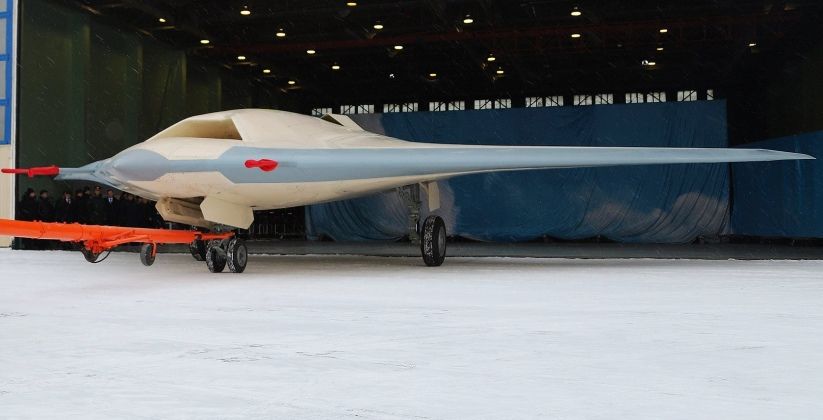
Integration with unmanned Collaborative Combat Aircraft is considered a key prerequisite for fighters to be considered to have reached a ‘5+ generation’ standard. Such integration provides multiple advantages, including extending sensor coverage, carrying additional weapons, conducting reconnaissance, performing electronic warfare missions, and acting as decoys to improve the survivability of manned fighters. China and the United States have led the world in the development of such aircraft, while Russia is the only country to have tested the concept under combat conditions, deploying its S-70 unmanned stealth fighter to support Su-57 fifth generation fighter operations in the Ukrainian theatre.
The MQ-28 occupies an unusual position within the Collaborative Combat Aircraft field because, unlike many American designs still under development, it already exists as a flying aircraft with several years of testing behind it. Originally developed by Boeing Defence Australia for the Royal Australian Air Force, the aircraft was designed around an open-systems architecture allowing customers to integrate different sensors, electronic warfare packages and mission equipment depending on operational requirements. This modular approach makes the aircraft particularly attractive for coalition operations where participating nations often possess different communications systems and weapons. With exercises such as Valiant Shield illustrating how rapidly air combat doctrine is evolving, it is likely that anticipated delays to the F-47 sixth generation fighter program will result in increased funding to integrate Collaborative Combat Aircraft like the MQ-28 to support F-35 operations.
