
U.S. Delivers New Harpoon Anti-Ship Missile Systems to the Republic of China Armed Forces
Military Watch Magazine Editorial Staff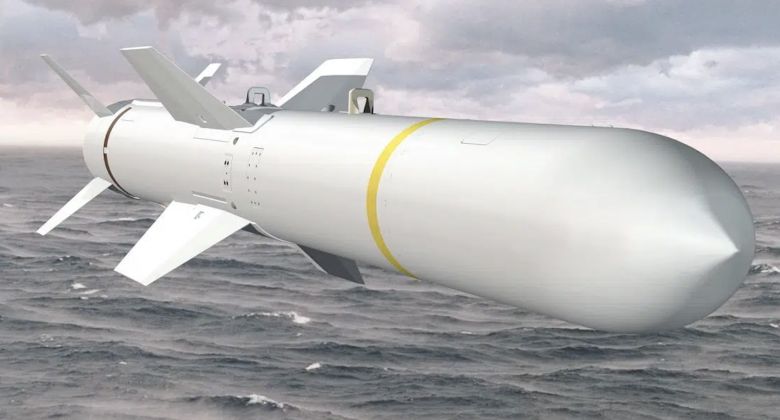
Harpoon Block II Missile in Flight - Artwork
The Republic of China Armed Forces (RoCAF) have begun to receive mobile Harpoon missile launch systems from the United States, with images confirming vehicles associated with the new system, including mobile missile launchers, radar vehicles, and command-and-control units. The Republic of China Ministry of National Defence has ordered 100 land-based Harpoon Coastal Defense Systems and 400 associated missiles, which are expected to revolutionise coastal defence capabilities. The RoCAF have since 1949 based the bulk of their forces on Taiwan Island, the geography of which makes coastal defence systems particularly critical. Deliveries are being conducted in phases under a schedule agreed by Taipei and Washington, with 32 complete systems intended to be delivered by the end of 2026, followed by 68 more in 2027.
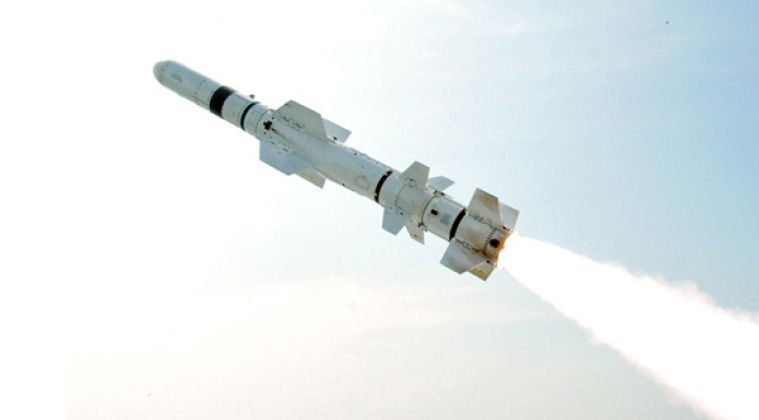
Harpoon missiles ordered for the RoCAF are of the RGM-84L-4 Block II (U) variant, which has an improved range and superior guidance and targeting capabilities compared to preceding variants. Despite improvements, the Harpoon’s viability for attacks against well defended warships has been brought to serious question, with the missile’s range, slow speed, and lack of radar evading capabilities limiting its utility. Its high cost, meanwhile, has made it unsuitable for swarm attacks. The Harpoon has been in service for close to half a century since 1977, with even updated variants being relatively straightforward for modern air defence systems or fighters to intercept. A fleet of mobile launch vehicles and radar systems capable of supporting Harpoon missile launches nevertheless remains at the core of the Republic of China Navy’s asymmetric anti-access area-denial strategy against the Chinese mainland.
The delivery of the Harpoon Coastal Defense System represents part of a much broader effort by the United States to rapidly strengthen the RoCAF’s strike capabilities, with ATACMS ballistic missile systems, HIMARS rocket artillery, and multiple jointly developed single use unmanned attack aircraft all expected to be delivered to revolutionise the ability to hold targets on the Chinese mainland at risk. In December 2025 the U.S. Department of War approved a $11.1 billion arms sale that included the transfer of 420 ATACMS, with the first batch of 11 launchers for HIMARS artillery systems, which can accommodate these missiles, having been delivered in November 2024. The first Republic of China Army unit equipped with these systems was formed in early July 2025. U.S. technology transfers are also widely considered by analysts to be likely to be supporting local cruise missile programs, most notably the Hsiung Feng IIE which provides a longer range strike capability.
