
U.S. Chief of Space Operations Warns of Growing Enemy Anti Satellite Capabilities
Military Watch Magazine Editorial Staff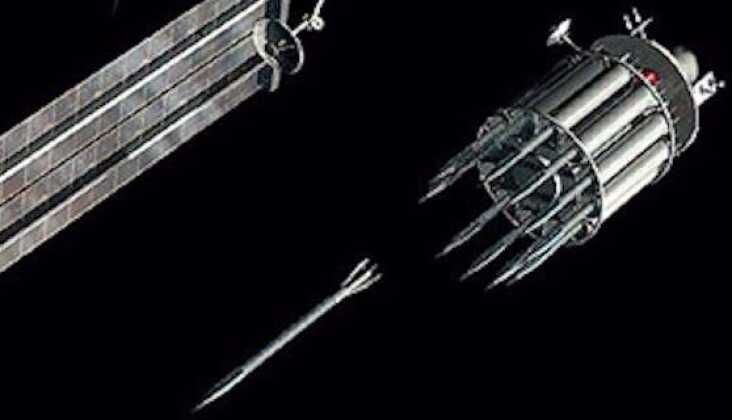
Project Thor U.S. Air Force Satellite - Concept Art
Chief of Space Operations at the U.S. Space Force , General John Raymond, has warned that space will play a growing role in the future of warfare and that America’s potential adversaries have increased their capabilities to threaten U.S. satellites. The general highlighted that China and Russia had developed “weapons that can either disrupt our satellites or destroy our satellites, from on the ground or in space, or in cyber,” notting that this threat “is something that has really materialised here over the last handful of years.” Regarding Chinese capabilities, he stated: “China has already fielded ground-based [Anti-Satellite weapons] missiles intended to destroy satellites in [Low Earth Orbit] and ground-based ASAT lasers probably intended to blind or damage sensitive space-based optical sensors on LEO satellites,” with means of disabling satellites including “reversible jamming of communications satellites and GPS satellites.”
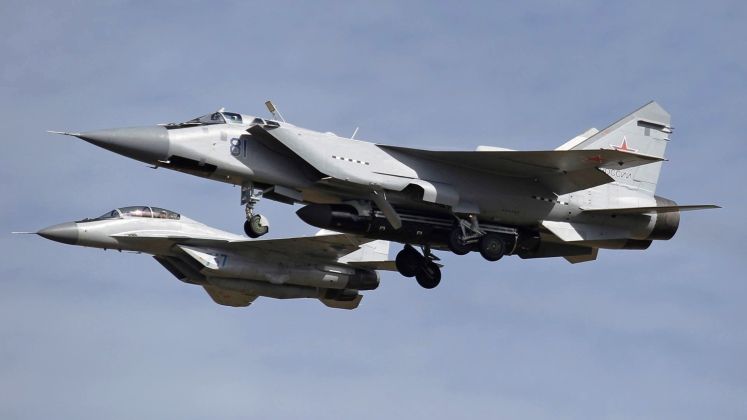
The United States and Soviet Union both invested heavily in modernising their space warfare capabilities in the 1980s, with the Soviet MiG-31 Foxhound interceptor today still considered the most capable combat jet for space warfare. It is not only the fastest an highest flying combat jet in the world, but is one of the few to be able to fire air to air missiles from several thousand kilometres above the Armstrong Limit and is large enough to carry bulky anti satellite missiles. The Foxhound is a unique aircraft in terms of its performance in these regards and has since been modernised extensively - with neither China nor the U.S. having an equivalent. Russia is expected to begin fielding a successor to the MiG-31 in the 2030s, which is currently under development as the MiG-41 and will be able to fly at even higher altitudes and speeds. The MiG-41 will be more focused on space warfare than its predecessor. China has increasingly taken the lead in several fields of space exploration, and on April 29th launched the first module of a new space station. Even excluding the possibility of the deployment of weapons in space, control of space will play a major role in deciding which country has the advantage in intelligence gathering and which can best obtain targeting data - which its particularly important amid the growing importance of long range satellite guided missiles in 21st century warfare.
