
U.S. Army Deploys M2A3 Bradley Fighting Vehicles For Live-Fire Show of Force Next to Russian Border
Military Watch Magazine Editorial Staff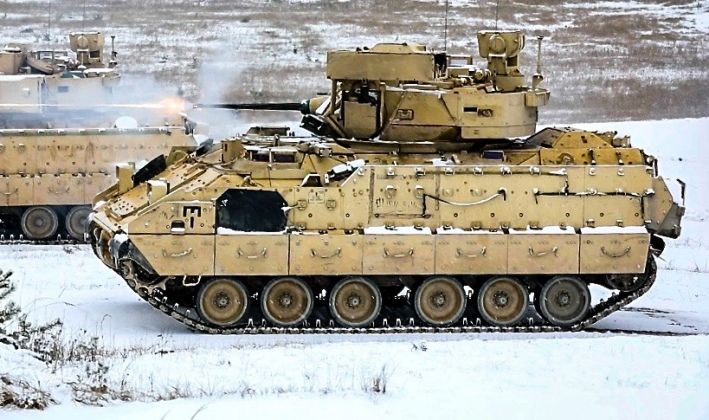
U.S. Army Bradley Fighting Vehicles Conduct Live Fire Exercises
The U.S. Army 3rd Battalion, 8th Cavalry Regiment has deployed Bradley Fighting Vehicles live fire exercise in Poland, which focused on preparing for mounted manoeuvre under harsh winter conditions. The exercises were staged at Poland’s Bemowo Piskie Training Area, located approximately 60 kilometres from Russia’s Kaliningrad region, and 90 kilometres from the Belarusian border, leading them to be interpreted by multiple analysts as a show of force. Exercises particularly focused on maintaining disciplined vehicle spacing, command and control, and coordinated fires, and handling traction changes and engine and hydraulics difficulties that resulted from the winter weather. Bradleys deployed were modernised M2A3 variants, which integrate digital architecture upgrades that significantly improve situational awareness and allow targets to be detected, classified and engaged considerably more rapidly.
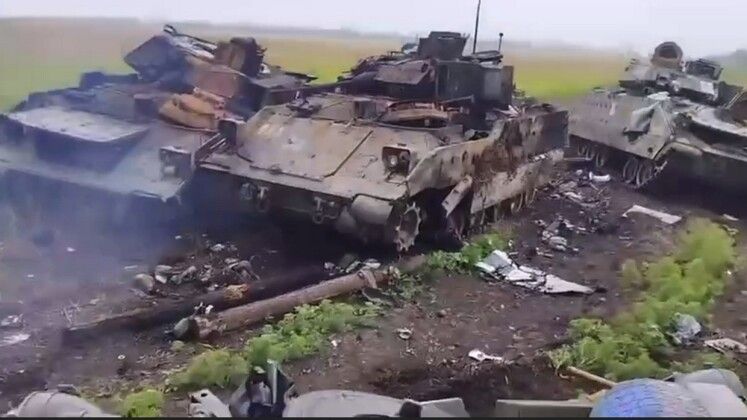
The Bradley has faced significant criticisms for its lack of survivability, with vehicles donated to the Ukrainain Army having taken extreme losses. CNN and multiple other Western sources have reported that Ukrainian personnel have expressed growing dissatisfaction with the vehicle’s performance against Russian forces. Ukrainian crews have reportedly been particularly critical of the Bradley’s limited “ability to weather the harsh Ukrainian winter.” After beginning combat operations in June 2023, over 80 Bradley’s were within five months estimated to have been lost in combat, of which Western sources confirmed more than 50. Footage released by Russian sources on July 22 that year showed particularly heavy losses and a ‘graveyard’ of the new vehicles near the Rabotino settlement in the Zaporozhye Region. The vehicle’s combat record in the theatre raised serious questions regarding their continued viability for high intensity combat operations.
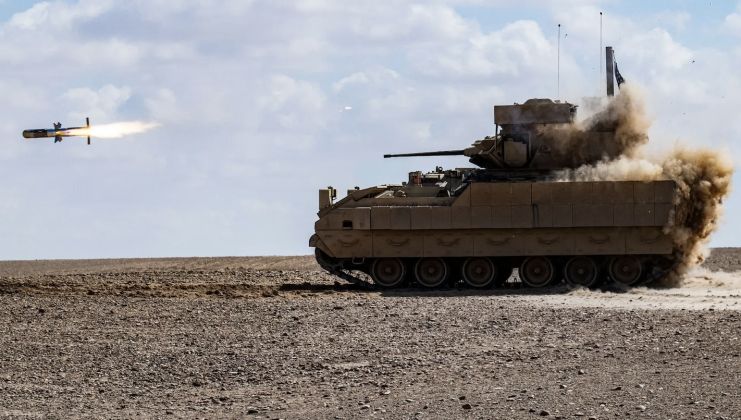
Despite its shortcomings in particularly in terms of survivability, the Bradley has proven to be capable of engaging main battle tanks under some circumstances, with the integration of depleted uranium rounds for the 25mm M242 Bushmaster chain gun providing a considerable penetrative capability despite its low calibre. A coaxial 7.62mm M240C machine gun and twin BGM-71 TOW anti-tank missile launchers serve as secondary armaments, with this layered armament mix being a defining feature of the vehicle. The U.S. Army has continued to invest in expanding the number of modernised Bradleys in service, and in November 2025 finalised a $390 million contract to upgrade additional vehicles to the improved M2A4 standard. Although production of the vehicles ended in 1995, the vast Cold War era reserves the Army has in storage has allowed numbers to be easily expanded, while having also provided a considerable capacity to donate vehicles to the Ukrainian Army.
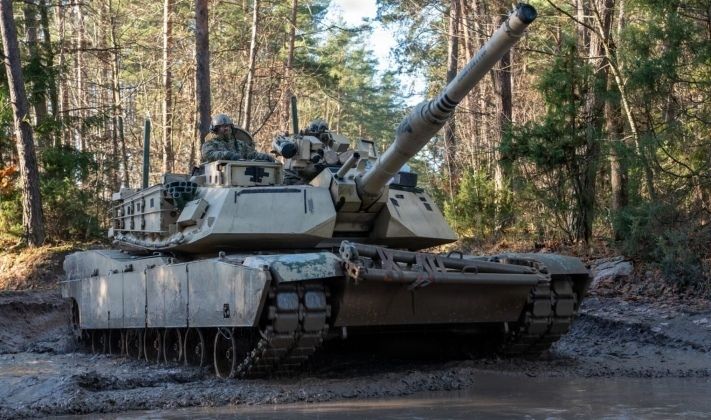
Russia and Belarus have faced a rapid expansion of NATO members’ armour deployments and operations near their borders, with the U.S. Army having in early December 2025 deployed M1A2 Abrams tanks to participate in live-fire exercise in Lithuania, during which the tanks demonstrated the engagement capabilities of their 120mm main guns. The exercises occurred less then ten days after U.S. Army M1A2 Abrams tank conducted intensive training at the Bemowo Piskie Training Area in neighbouring Poland under the Forward Land Forces expansion exercise, for which tanks were delivered from multiple locations across Poland to take part. In late January it was confirmed that the Army would deploy an Abrams-equipped detachment as part of its normal rotational forces in Romania.
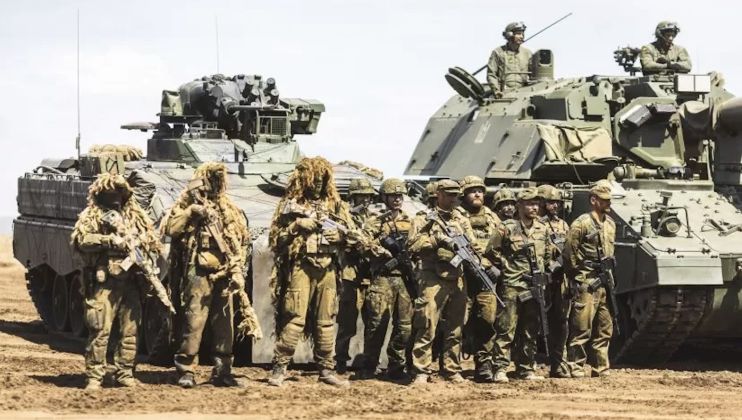
In parallel to U.S. Army deployments, the German Army on May 22, 2025, inaugurated the 45th Armoured Brigade stationed in Vilnius, Lithuania, providing an elite forward deployed mechanised warfare capability 150 kilometres from the Belarusian capital Minsk, and less than 800 kilometres from Moscow. The unit will be one of the first to field new Leopard 2A8 tanks. Poland has meanwhile tremendously strengthened its armoured warfare capabilities, primarily with the procurement of several hundred of a planned 1000 K2 tanks, and over 150 of a total of 366 ordered Abrams tanks. The result has been an increasingly unfavourable balance of power in the ground facing the Russian Army and Belarusian Army, with reported delays to Russia’s planned expansion of T-90M tank production, and the defence sector’s failure to operationalise the promising T-14 next generation tank, limiting their ability to respond.
