
U.S. Warns of Chinese Strategic Hypersonic Breakthrough Which Could Give Major Advantage in Nuclear War
Military Watch Magazine Editorial Staff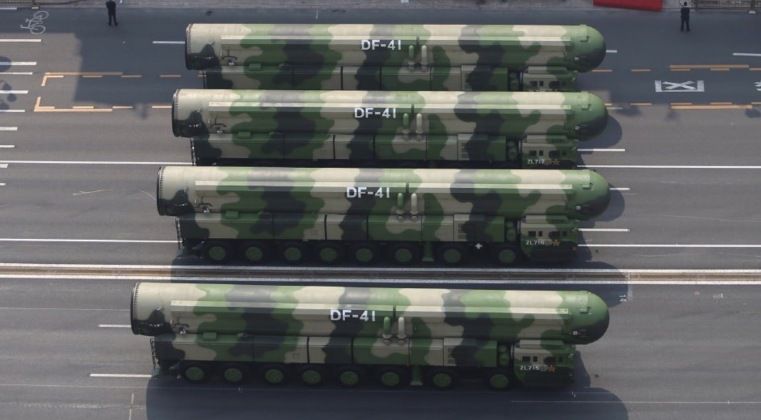
DF-41 ICBMs
On April 4 the head of the U.S. Strategic Command Admiral Charles Richard warned that China was on the verge of a major breakthrough in modernising its strategic nuclear arsenal. The admiral referred particularly to an intercontinental range ballistic missile carrying a hypersonic glide vehicle which China reportedly tested in July 2021, stressing that this would seriously threaten American security interests. The vehicle was reported to have flown 40,000 kilometres for over 100 minutes, which he described as “the greatest distance and longest flight time of any land attack weapon system of any nation to date.” Richard’s warnings were made in a written testimony prepared for a hearing on Capitol Hill. China already deploys hypersonic glide vehicles on its shorter ranged DF-17 ballistic missiles which entered service in 2019, and while Russia deploys an intercontinental range glider with its Avangard system the Chinese platform appeared to demonstrated significantly higher capabilities still. China fields a nuclear arsenal less than one tenth the size of that of the United States, which has made developing the most efficient means of delivery particularly critical.
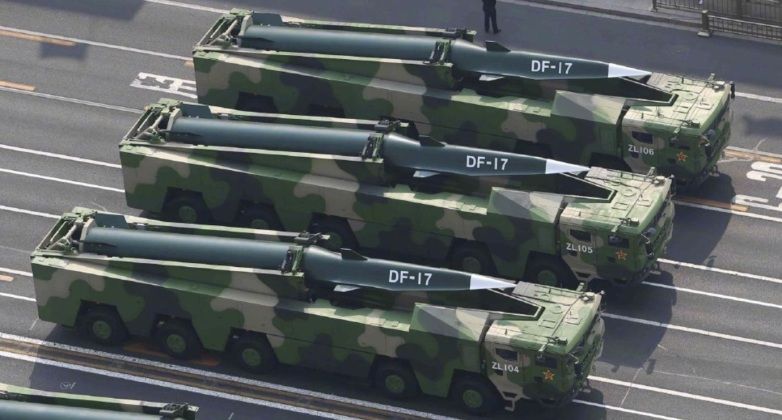
Hypersonic glide vehicles are prized for their high manoeuvrability, extreme speed, and ability to engage targets from almost any direction which makes interception almost impossible and increased their reliability significantly. Admiral Richard warned that China’s attainment of such a capability, considered up to a decade ahead of anything in the Western word, would have “serious implications for strategic stability” and could nullify American nuclear deterrence. This was previously highlighted by Vice Chairman of the U.S. Joint Chiefs of Staff General John Hyten who highlighted China’s new hypersonic weapon could be used for a first strike to neutralise America’s strategic arsenal. “If strategic or nuclear deterrence fails, integrated deterrence and no other plan or capability in the DoD will work as designed,” Richard added, which followed a prior warning in October 2021 that China’s and Russia’s combined nuclear capabilities were leading the U.S. into “uncharted waters” with China increasingly capable of executing “any possible nuclear employment strategy.” China’s nuclear forces are set to be modernised considerably by a range a new assets, including the country’s first intercontinental range bomber the stealthy H-20 set to enters service in the late 2020s, the Type 96 Class ballistic missile submarine which has been widely speculated to be the quietest in the world, and the JL-3 submarine launched ICBM which is reportedly based on the relatively new ground launched DF-41 first unveiled in 2019.
