
U.S. Navy to Retire Brand New Littoral Combat Ships Due to Overwhelming Performance Problems
Military Watch Magazine Editorial Staff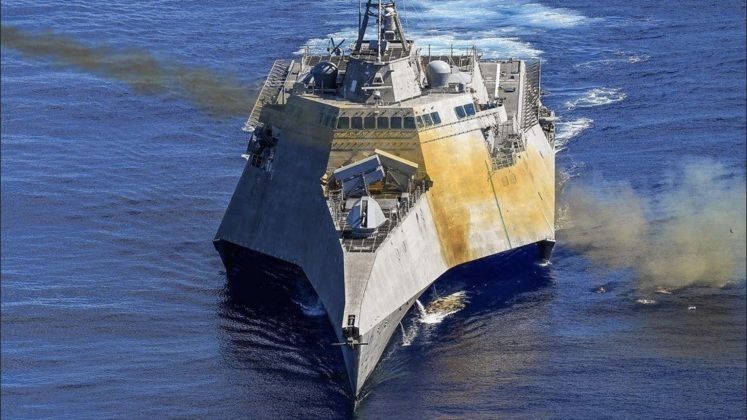
Independence Class Littoral Combat Ship
As part of a broader effort by the U.S. Navy to retire its new but troublesome Littoral Combat Ships (LCS) several decades ahead of schedule, the service seeks to cut four of the ships from its fleet in 2022. These include ships from both LCS variants, including one from the Independence Class variant USS Coronado (LCS-4) and three from the Freedom Class variant the USS Fort Worth (LCS-3), USS Detroit (LCS-7) and USS Little Rock (LCS-9). The ships are all under ten years old, with the Forth Worth commissioned in 2012, the Coronado in 2014, the Detroit in 2016 and the Little Rock in 2017. Although the LCS was developed as a small and low cost stealth ship, its manufacturing and operational costs are considerably higher than initially intended with each having a similar operational cost to a heavy destroyer despite having a very limited combat capability and carrying only relatively a tiny amount of firepower. Cutting four ships will reportedly save the Navy $186 million, according to the service’s FY2022 budget request.
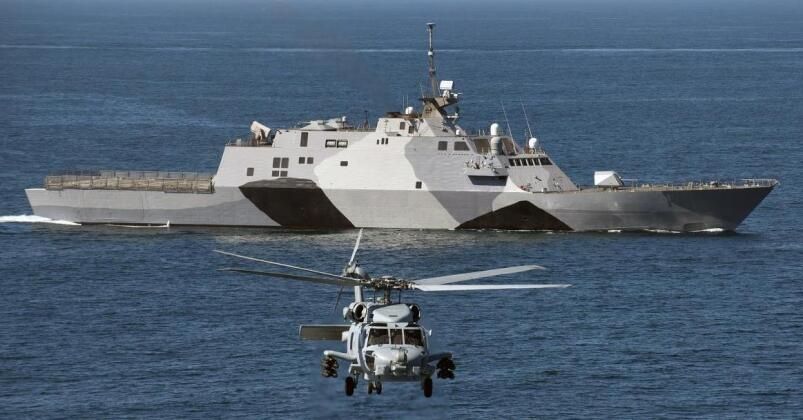
According to a report by the Navy, cutting the LCS is favourable because it “avoids the cost to upgrade these ships to the common configuration and capability with the rest of the fleet and allows for investments in higher priority capability and capacity.” Furthermore, two of the ships “do not have mission packages (MP) assigned and the current MP procurement does not account for MP procurement for these two ships. Continued fleet operations would require purchasing an MP for each ship. The replacement capability is the FFG 62 Constellation class of ships.” It stressed that the Detroit and Little Rock had very troublesome engines which were not worth the effort or expense fixing or replacing, and that they “have experienced major propulsion train casualties (known combing gear issues) and will incur significant associated repair costs. Decommissioning these two ships includes a cost avoidance strategy, so that scarce maintenance funding can be allocated to the highest priority ships. The replacement capability is the FFG-62 Constellation class of ships.” The LCS is one of several recent American surface warship classes which have faced very serious performance issues and cost overruns - the other notable examples being the Gerald Ford Class supercarrier and the Zumwalt Class stealth destroyer. Problems with these ships have raised serious questions regarding the state of the country’s military shipbuilding industry and its ability to retain basic parity with major competitors.
