
U.S. Navy’s Most Advanced Recon Planes Deployed For Days of Continued Surveillance Around Cuba
Military Watch Magazine Editorial Staff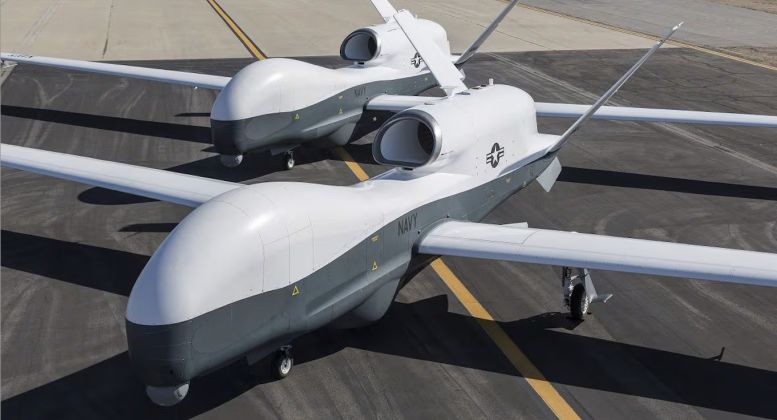
U.S. Navy MQ-4C Triton
The U.S. Navy has launched an extended aerial surveillance campaign around Cuba, with MQ-4C Triton unmanned high-altitude reconnaissance aircraft observed operating near the island for three consecutive days from July 20-22. Flight tracking data circulated by military observers indicates that the unmanned aircraft again conducted a prolonged intelligence-gathering mission, highlighting sustained U.S. interest in monitoring activity across the Caribbean. The repeated flights have attracted attention because the MQ-4C Triton is among the most capable intelligence, surveillance, and reconnaissance aircraft currently in U.S. service, as well as due to repeated threats by Washington to launch attacks against its smaller neighbour.
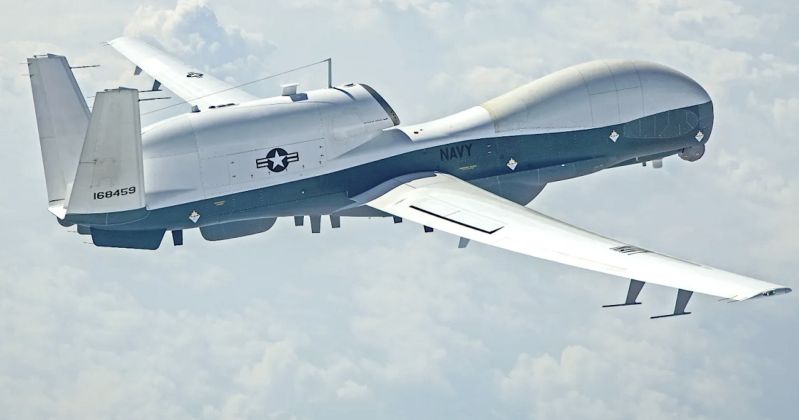
Although U.S. officials have not commented publicly on the purpose of the missions, repeated ISR flights are commonly conducted to establish patterns of activity, monitor military installations, observe naval movements, or collect electronic intelligence over extended periods. The MQ-4C’s systems can detect and track ships across enormous stretches of ocean, while electro-optical and infrared sensors provide high-resolution imagery of surface targets. The aircraft is also equipped with electronic intelligence systems capable of collecting information on radar emissions, communications networks, and other electronic activity, making it an important component of the U.S. Navy’s maritime domain awareness architecture.
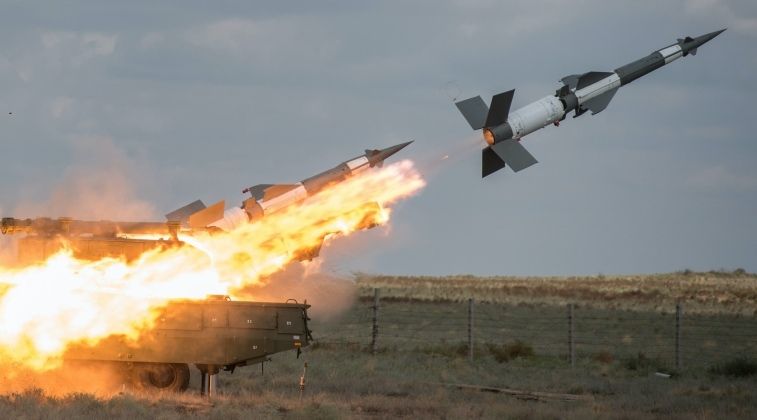
In May the U.S. significantly escalated hostilities with Cuba by bringing charges against former Cuban leader Raul Castro and others in the country’s current and former leadership for allegedly conspiring to kill U.S. citizens. Cuban President Miguel Diaz-Canel responded that the charges against Castro have no legal basis, and that their purpose is to justify military aggression against the country. This would closely mirror the indictment of Venezuelan President Nicholas Maduro by U.S. courts, which provided a pretext for a large scale military assault in early January resulting in his abduction. The Cuban Armed Forces that month launched live fire air defence exercises, deploying modernised Soviet S-125 medium range surface-to-air missile systems, in what analysts have assessed to be a simulation of a U.S. assault on the country.
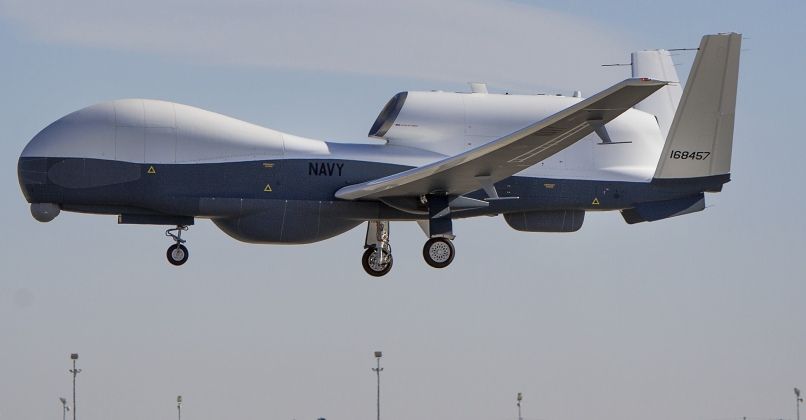
The U.S. Navy has prioritised deployments of MQ-4Cs to the Pacific theatre for operations against China and North Korea, where their long ranges are particularly highly prized. The Navy on April 14 confirmed that an MQ-4C Triton unmanned surveillance aircraft crashed in the Persian Gulf region on April 9, with multiple sources indicating a shootdown by Iranian forces was likely. Each MQ-4C is estimated to have a value of $235-250 million, with its extreme cost meaning only 20 have been brought into service. The aircraft is a close derivative of the U.S. Air Force RQ-4A Global Hawk, which saw one aircraft shot down by the Islamic Revolutionary Guard Corps on June 20, 2019. The scarcity of the aircraft indicates a high priority being allocated to gathering intelligence on Cuban targets, with flights potentially also being intended as a show of force against the Island country.
