
Cuba Deploys Air Defences For Live Fire Exercises as U.S. Carrier Group Approaches
Military Watch Magazine Editorial Staff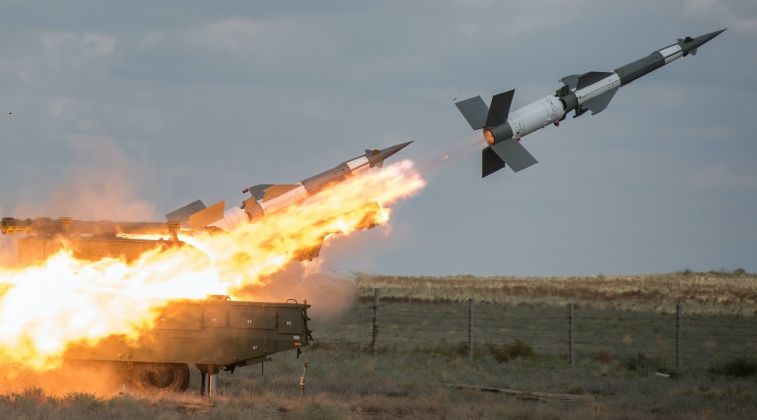
Missile Launch From S-125 System
The Cuban Armed Forces have launched live fire air defence exercises, deploying modernised Soviet S-125 medium range surface-to-air missile systems, in what analysts have assessed to be a simulation of a U.S. assault on the country. This has occurred as the U.S. Navy deployed the nuclear powered supercarrier, USS Nimitz, and its strike group, into the Caribbean Sea. The exercises closely follow the bringing of charges by the United States against former Cuban leader Raul Castro and others in the country’s current and former leadership for allegedly conspiring to kill U.S. citizens. Cuban President Miguel Diaz-Canel has stated that the charges against Castro have no legal basis, and that their purpose is to justify military aggression against the country. This would closely mirror the indictment of Venezuelan President Nicholas Maduro by U.S. courts, which provided a pretext for a large scale military assault in early January resulting in his abduction.
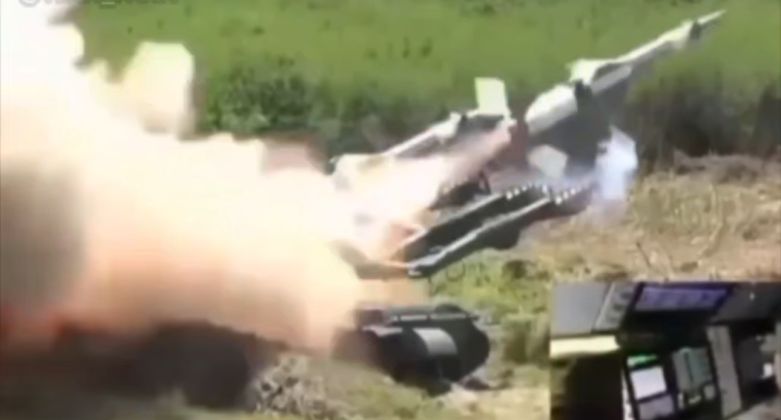
The S-125 was specifically designed to counter aircraft flying at low altitudes, and uses two-stage solid-fuel missiles and command guidance via ground radar. The system had world leading resistance to electronic countermeasures and effectiveness against manoeuvring targets for its time. The improved S-125M and later S-125M1 variants significantly expanded the system’s capabilities, with the M1 variant introduced upgraded 5V27-series missiles, improved radar guidance, and enhanced engagement envelopes. This variant has an engagement range of 35 kilometres. Cuban variants are reported to incorporate optical or television tracking systems, enabling operation in heavy jamming environments or even limited “silent” engagements without continuous radar emissions. The system remains in service in multiple countries including Ukraine, Serbia, and Egypt. Its ability to operate against modern U.S. electronic warfare systems, however, is expected to be highly limited unless unknown upgrades to radars and data links have been implemented.
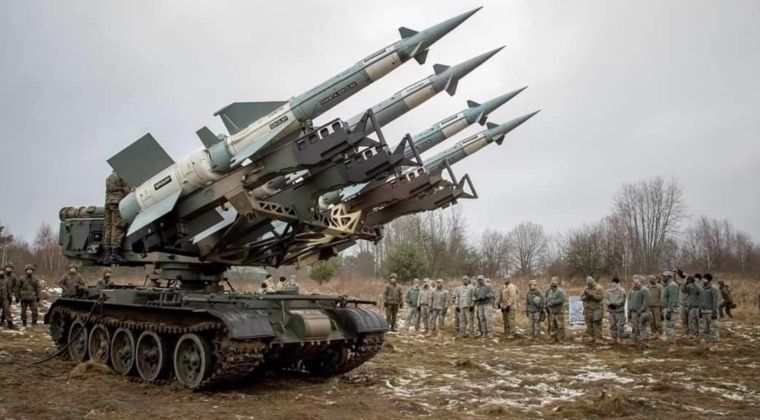
The fact that the S-125M/M1 still forms the backbone of Cuba’s air defence capabilities reflects the fact that the country’s armed forces having made negligible procurements since the end of the Cold War, and lack even more modern late Cold War era systems such as the 2K12 KuB or S-300PT. Moreover, the support previously provided by the country’s fighter fleet, which had for decades included the most advanced combat jets in Latin America, has diminished considerably as aircraft have aged and the number of operational units has shrunk significantly. The Cuban defence sector has nevertheless achieved successes in modernising the S-125 arsenal by integrating launchers and radars onto T-55 tank chassis, which has provided a degree of mobility for improved survivability. While Cuba’s air defences were previously among the most formidable in Latin America, allowing forces to achieve multiple shootdowns of U.S. military aircraft including challenging targets such as U-2 spy planes, capabilities have deteriorated significantly since the end of the Cold War. Should the country be able to deter a U.S. invasion, it is highly possible that the threat will spur investment in modernising its defences.
