
U.S. Military Acquires Russian Pantsir Air Defence System From Libyan Battlefield For Study
Military Watch Magazine Editorial Staff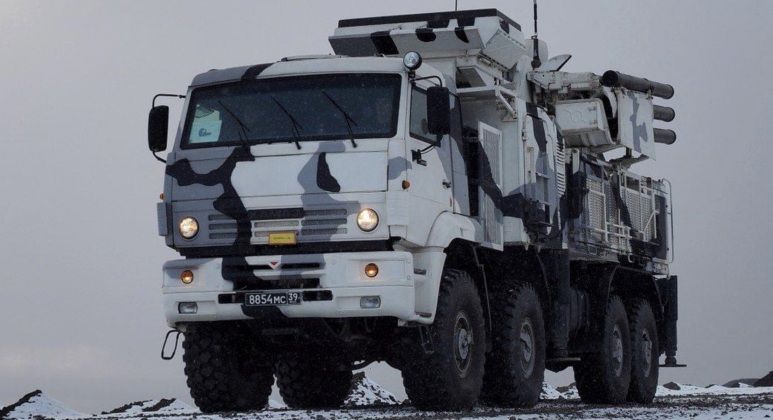
Pantsir Air Defence Combat Vehicle
The U.S. has acquired a Russian built Pantsir-S1 air defence combat vehicle from Libya, after the weapons system was supplied to the forces of Libyan National Army (LNA) for use in the country’s ongoing civil war. The weapons system was reportedly acquired as part of a covert operation which saw it transported to an American military base in Germany, with at least some measure Turkish support for its NATO ally suspected as Turkey retains the largest presence in Libya of any NATO member state. The Pantsir is a relatively new weapons system and has only been in service in the Russian military since 2012. It is prized for its high mobility and versatility and has downed over 100 drones as well as at least one manned fighter while in service in various countries. A number of more advanced variants of the Pantsir system such as the Pantsir-SM have since entered service, with neighbouring Algeria being a leading operator of this, and the combat vehicle has also been used as the basis for a close in weapons system for Russian warships. With the weapons system already very widely in use with over a dozen operators, gaining access to a fully operational model for study will be a valuable asset for the U.S. Military and for its Western allies.
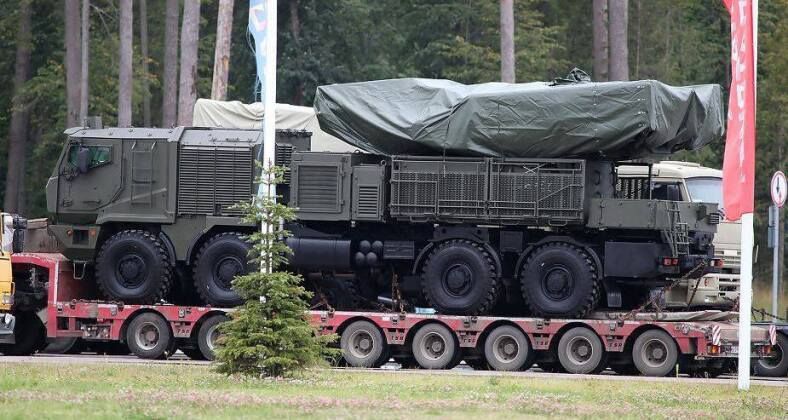
The operation to obtain and Pantsir for study is hardly the only case of the U.S. seeking an advanced Russian weapons system, most often from the Arab world or from Eastern Europe, in order to assess its design. The longer ranged and higher end S-300PT system was thought to have been acquired by the U.S. and shipped to the American mainland for testing between 2018 and 2019, with Ukraine being the source after it inherited these systems following the collapse of the Soviet Union. The U.S. also gained access to the latest Su-27 and MiG-29 fourth generation fighters from Belarus and Moldova respectively following the Soviet collapse, and prior to that was provided with the MiG-23 fighter and 2K12 KuB air defence system by Egypt after the Arab state had received them from the USSR. Studying weapons systems used by possible adversaries in this way provided the U.S. with a key means of developing effective countermeasures against the latest Russian and Soviet weaponry and shaped the development of future American weapons programs.
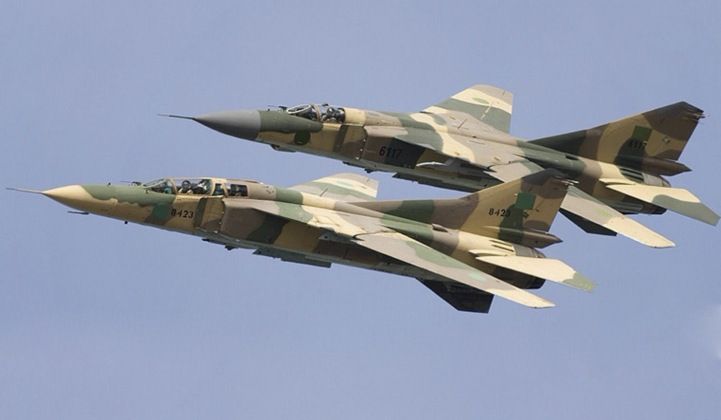
The acquisition of the Pantsir system is far from the only time that Libya unwittingly served as a source of advanced Soviet arms for study. Operation Mount Hope III in 1988 saw the U.S. military deploy two Chinook heavy lift helicopters to pull a crashed Libyan Mi-25 attack helicopter out of Chad, an export variant of the Mi-24, after the aircraft had crashed and been abandoned during the preceding war between the two African states. The Mi-24 was widely considered the world’s prime attack helicopter at the time, and its growing presence in Eastern Europe caused major concerns for NATO. In Libya’s most recent conflict the Libyan National Army has deployed a considerable arsenal of Russian armaments which reportedly includes newly delivered MiG-23MLD fighters as well as MiG-29 and Su-24M jets reportedly operated by affiliated Russian contractors. Much of this is thought to have been paid for by the United Arab Emirates which acts as a key financial sponsor, with a possible LNA victory expected to push out remaining Turkish influence in the country and reestablish Libya as a Russian defence client.
