
New Variant of Russia’s Pantsir Air Defence System Integrates Superior Drone Killing and Anti Missile Capabilities
Military Watch Magazine Editorial Staff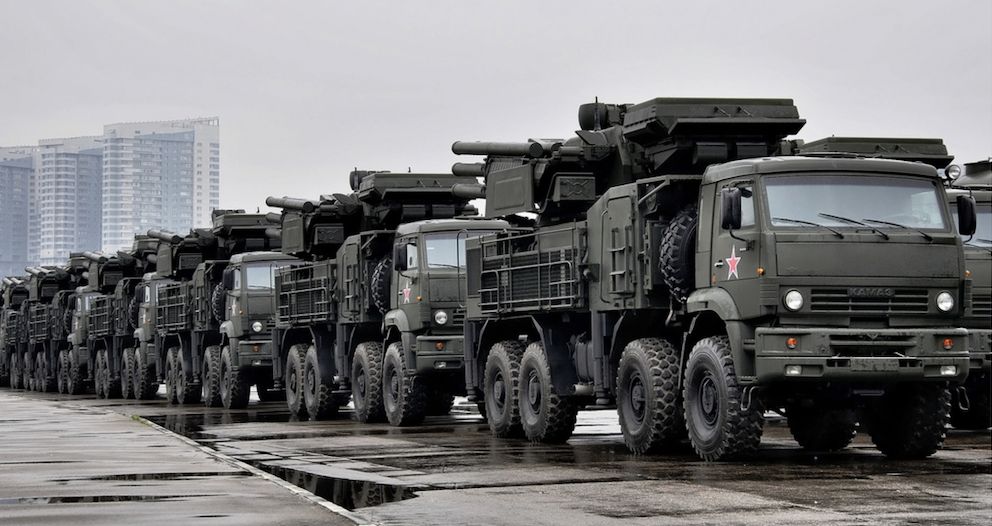
Russian Pantsir Air Defence Combat Vehicles
Russia’s KBP Instrument Design Bureau has reportedly modified its the Pantsir short range air defence combat vehicles to integrate superior capabilities against enemy drones and guided munitions. Design teams modifying the Pantsir design are have reportedly received guidance from the Russian armed forces based on their recent combat operations in Syria, where Pantsirs were deployed by both the Russian and Syrian armed forces and frequently engaged drones deployed by a number of state and non state actors including jihadist groups such as the Islamic State and the Al Nusra Front. While highly effective against drones, the platform's capabilities in Syrian hands against advanced guided munitions deployed by Israel was considered sub-par by some analysts. The Pantsir first entered service with Russia's armed forces in 2012, and was provided to the Syrian military by the end of the year. In Syria hands, the Pantsir was also responsible for downing a Turkish Air Force RF-4E Phantom - a considerable achievement for such a short ranged system given the Phantom's high altitude ceiling and speed. A new variant of the Pantsir known as Pantsir-SM will integrate more advanced capabilities, and the system was showcased at the Army2019 exhibition near Moscow. A number of reports have indicated that the Pantsir-SM is already in service in both Russian and Algeria, and the platform was sighted in military drills in the African country in late 2018.
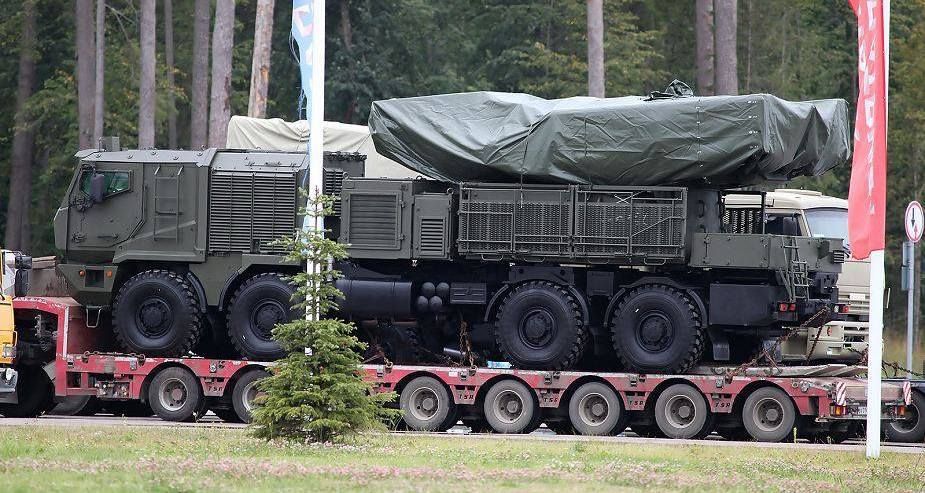
The Pantsir-SM is expected to incorporate a number of new technologies providing it with twice the engagement range of the original system, from 20km up to 40km, and a multi functional targeting station allowing it to detect fighter sized targets up to 75 km away. New sensors will reportedly give the air defence system the ability to target stealth aircraft - and are designed with the tracking of low radar cross section targets in mind. Electronic warfare countermeasures have also been considerably improved. Russian sources previously indicated that the Pantsir would be modified to deploy hypersonic missiles, and it is likely that the SM variant has been designed with this eventual goal in mind. The platform retains the autocannons of its predecessor, but integrates faster surface to air missiles which impact with greater force and can reach further targets. A new armoured chassis superior to that of the original in its stability, agility and survivability has also been designed for the Pantsir-SM. While formidable, the Patnsir-SM is expected to be considerably more costly than its less sophisticated predecessor. As such, the Patnsir-S will reportedly remain in production alongside the newer variant - with its low cost making it a highly attractive option for export clients.
