
U.S. Marines May Deploy Israeli Iron Dome for Air Defence - But China Already Has the Blueprints
Military Watch Magazine Editorial Staff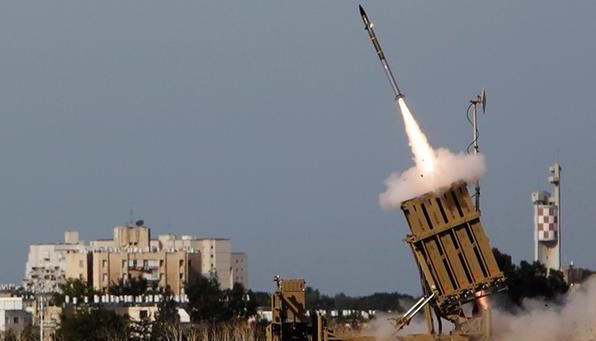
Israeli Iron Dome Missile Battery
The U.S. Marines are reportedly considering purchasing the Iron Dome air defence system - a platform developed by Rafael Advanced Defence Systems and Israel Aerospace Industries specialised in intercepting attacks from short ranged rockets and artillery. Iron Dome was deployed from the early 2010s by Israel’s armed forces on several occasion to intercept rocket attacks from Palestinian militants in the Gaza Strip, and while its successes in early conflicts were seriously questioned by experts it has since demonstrated higher levels of reliability. While most other air defence systems deployed by Israel are either American designs, such as the MIM-23 Hawk and MIM-104 Patriot, or jointly developed with American manufacturers such as the David’s Sling anti missile system, the Iron Dome represents a fully indigenous system - one with capabilities surpassing comparable platforms in Europe and the United States. The imperative for developing such a low level air defence system came from the risk of a potential conflict with the Lebanese militia Hezbollah, which alongside a vast arsenal of Korean and Iranian missiles deploys considerable rocket artillery assets. Neighbouring Syria, with which Israel has frequently gone to war, also deploys the seventh largest rocket artillery force in the world and the sixth largest towed artillery force - posing a potential threat to Israeli military targets and population centres in the event of a potential conflict.
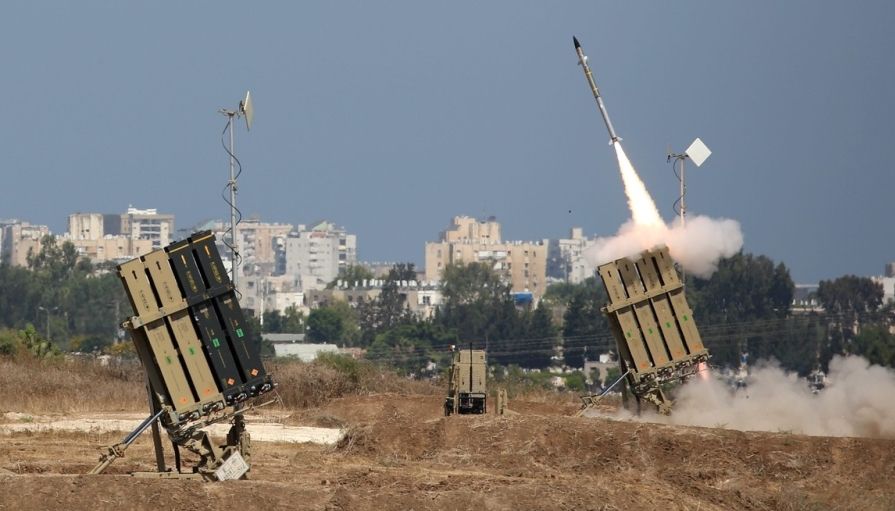
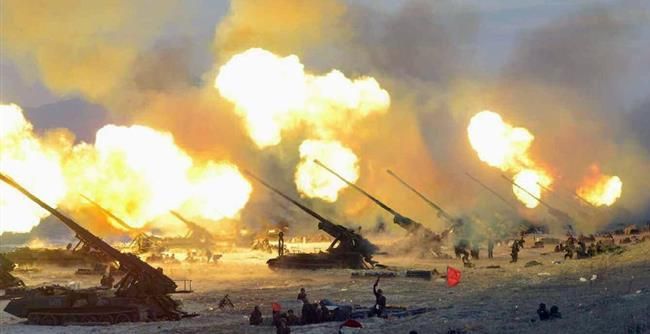
The Iron Dome’s capabilities could prove highly valuable for U.S. ground forces, with the U.S. Army having previously expressed an interest in the system. The platform was deployed to a firing range in the United States for testing in April 2016 and successfully downed an unmanned target aircraft. A number of reports in January 2019 indicated that the U.S. Army planned to purchase two batteries of the Iron Dome, each comprised of a command post, a radar system, six launchers and 240 missiles, under a $373 million contract. This remains unconfirmed. Recent interest from the Marines however could lead to a larger acquisition, with the platform highly valued due to the vast superiority in artillery of American adversaries. On the Korean Peninsula in particular, American assets are threatened by heavily fortified North Korean artillery positions including over 5000 rocket artillery pieces - the largest rocket artillery arsenal in the world, and the third largest arsenals of both towed and self propelled artillery with 4,500 and 2,500 pieces respectively. These include the 170mm Koksan artillery, the largest and longest ranged artillery guns in the world. With only a fraction of the U.S. Military’s far smaller artillery forces expected to be deployed to the Peninsula in the event of conflict, the ability to potentially intercept Korean artillery makes the Iron Dome a useful asset. Countering Russian artillery forces in Eastern Europe, another major front for U.S. ground forces, provides a second theatre where Iron Dome deployments could be highly valued.
Despite its unique capabilities, the Iron Dome’s ability to counter attacks from major U.S. adversaries such as North Korea or Russia may well be seriously compromised - with reports in 2014 indicating considerable quantities of technical data on the platform was obtained from Israeli computers by Chinese hackers linked to the People’s Liberation Army (PLA). This reportedly occurred just months after the Iron Dome entered service, with cybersecurity expert Brian Krebs reporting: “Between Oct. 10, 2011 and Aug. 13, 2012, attackers thought to be operating out of China hacked into the corporate networks of three top Israeli defense technology companies, including Elisra Group, Israel Aerospace Industries, and Rafael Advanced Defense Systems… By tapping into the secret communications infrastructure set up by the hackers, CyberESI determined that the attackers exfiltrated large amounts of data from the three companies. Most of the information was intellectual property pertaining to Arrow III missiles, Unmanned Aerial Vehicles, ballistic rockets and other technical documents in the same fields of study.” While China and Israel retain positive relations - despite considerable Western pressure on Tel Aviv to downgrade its ties to the East Asian state - should the U.S. Military obtain and widely deploy the Iron Dome the Chinese PLA will likely probe the system for weaknesses and develop countermeasures. These in turn will almost certainly be shared with allied Russian and North Korean forces. While the PLA’s original obtaining of the details for the Iron Dome design was primarily for the benefits this could bring air defence development in China itself, the uses the military would make of this information would likely change drastically should an American acquisition go ahead.
