
Turkish Air Force F-16 Crashes Near Highway: U.S. Falcon Fighters Face Spate of Recent Accidents Globally
Military Watch Magazine Editorial Staff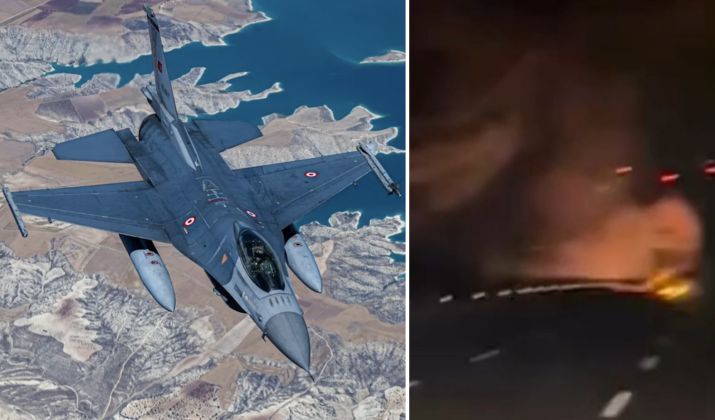
Turkish F-16C and February 25 Crash
A Turkish Air Force pilot was killed on February 25, local time, after an F-16C fighter assigned to the 9th Main Jet Base Command in Balikesir crashed during a training flight near the west of the country. The incident occurred at around 1am, local time, with officials reporting radio contact with the fighter shortly after takeoff, prompting immediate search-and-rescue operations. The Turkish Defence Ministry stated that the exact cause of the accident remains unknown. Turkey is by far the largest foreign operator of the F-16, although the variants in service are considered largely obsolete, while efforts to modernise them to the F-16V standard with U.S. support have faced delays. The fleet was employed for combat engagements against Syrian and Russian forces multiple times in the 2010s and early 2020s, and previously contributed to a Western-led air assault against Libya in 2011.
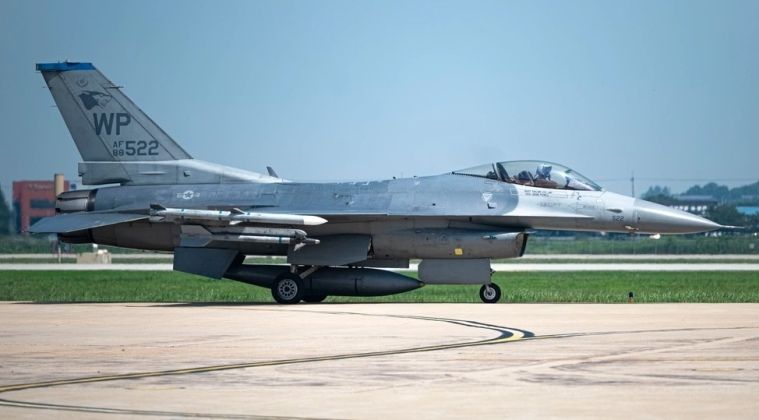
The F-16 has been involved in multiple crashes in recent months, with the U.S. Air Force on January 31 confirmed that an F-16 under the 8th Fighter Wing had fallen into the sea near the western South Korean city of Gunsan, marking the third crash of a U.S. F-16 in Korea in under nine months. Earlier that month, a Republic of China Air Force F-16V fighter crashed during a routine training mission on January 6, marking the latest of several fighter losses by the service to accidents in recent years. An F-16 fielded by Turkey’s NATO ally and close security parter Poland crashed during an airshow rehearsal near Radom, central Poland, in August. A particularly high crash rate affecting Ukrainain Air Force F-16s flown by local pilots has reportedly resulted in experienced U.S. and Dutch pilots being dispatched as contractors to fly the aircraft for the service.
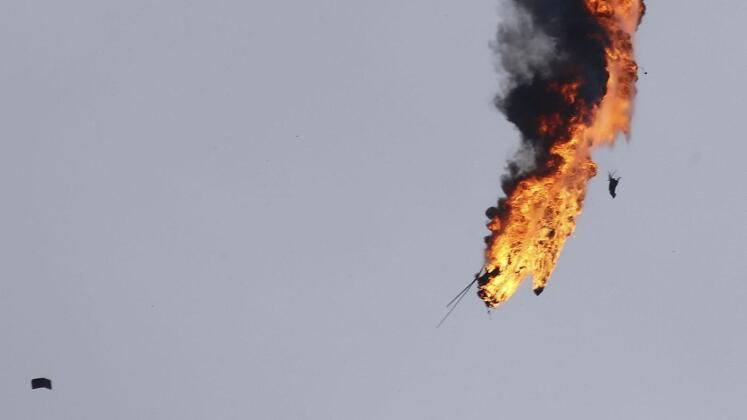
The Turkish Air Force relies on the F-16 to deliver nuclear strikes against potential adversaries, with the service having wartime access to U.S. Air Force B61-12 nuclear bombs stored in the country, and training its fighter pilots and ground crews to employ them. This shared Turkish nuclear capability, combined with Israel’s French-backed development of nuclear weapons, were considered among the primary factors leading Syria, which is situated between the two countries, to develop a chemical weapons arsenal and seek closer defence cooperation with the USSR, followed by Russia. Before the toppling of the Syrian state by Turkish and Western backed Islamist paramiltiary groups in December 2024, the Turkish Air Force F-16 fleet was highly active in providing air support to jihadist militias on the ground, which extended to shooting down Syrian aircraft deep inside the country’s airspace.
