
Turkey Unveils First Intercontinental Range Ballistic Missile as NATO Strengthens Arsenal Against Russia
Military Watch Magazine Editorial Staff
Israeli Jericho 2 Intercontinental Range Ballistic Missile
The Turkish defence sector has unveiled the country’s first type of intercontinental ballistic missile, the Yildirimhan, which is expected to transform the country’s long range strike capabilities and those of NATO more broadly. The missile has an estimated range of around 6,000 kilometres, placing it at the boundary between intermediate-range and intercontinental ballistic missiles, and can reportedly achieve speeds of over Mach 20. It is described as using a four-engine configuration and liquid propulsion based on nitrogen tetroxide. The missile’s unveiling has occurred at a time when multiple NATO members are working to bolster their missile and long range drone strike capabilities against Russia, with France having announced its own strategic intermediate range ballistic missile program, while countries across Eastern Europe are rapidly procuring U.S. ATACMS and South Korean Chunmoo ballistic missile systems.
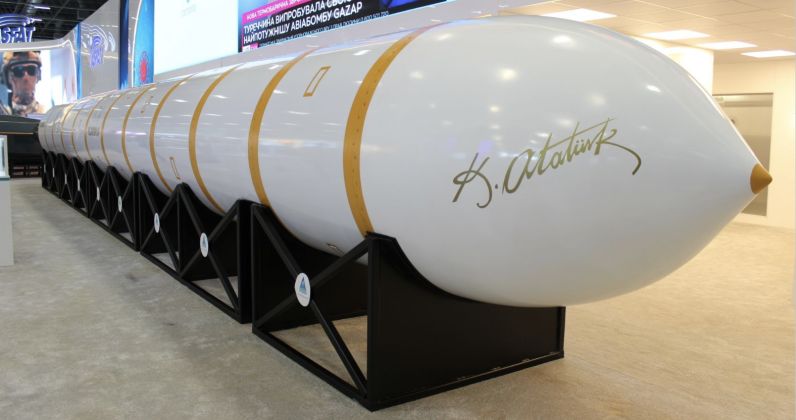
Turkey’s development of long range ballistic missiles is notable since, alongside Israel, it remains one of just two Middle Eastern states to have received considerable support from the Western world in doing so. Iran and previously Syria, by contrast, were placed under extensive Western economic sanctions for developing their own missile deterrents. This highlights Turkey’s key role in security broader NATO interests both in the Middle East, and in Eastern Europe, with its ballistic missile arsenal expected to be aimed primarily at Russia. Turkey’s labour costs are among the lowest in NATO, which has allowed it to emerge as a major exporter of defence products to other NATO members, including long range strike drones. The unveiling of the Yildirimhan ballistic missile has raised the significant possibility of the missile, or future shorter ranged derivatives, being offered to other NATO members.

The Yildirimhan is not a particularly advanced missile type, with its use of a liquid fuel composite expected to result in a long launch time leaving it vulnerable to attack. All other producers of intermediate range ballistic missiles have long since transitioned to solid fuel designs. Turkey’s lack of experience in ballistic missile development may be aided by NATO members, in particular the United States and United Kingdom which have extensive experience developing such missiles for their nuclear powered submarines. The relatively underdeveloped state of the Turkish defence sector and broader industrial base are likely to result in difficulties developing an advanced long range ballistic missile design without support.
