
Turkey Nears Deal to Decommission S-400 Air Defences and Return to F-35 Fighter Program - Reports
Military Watch Magazine Editorial Staff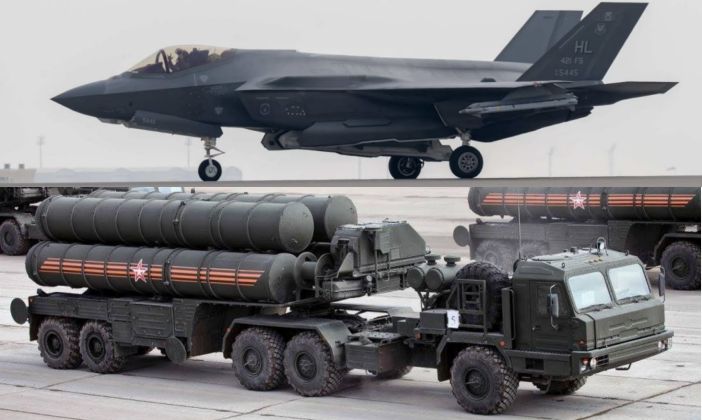
F-35 (top) and Missile Battery From S-400
Turkey has reportedly made significant progress in talks with the United States on the details of plans to decommission Russian supplied S-400 long range air defence systems, which is intended to facilitate the NATO member’s resumption of acquisitions of F-35 fifth generation fighters and possibly its full reentry into the F-35 program as a Tier 3 partner. Turkey was formally evicted from the F-35 program in July 2019, after receiving its first components from its S-400 system earlier that month, with Washington having used access to the F-35 to impose pressure on Ankara to abide by NATO’s wider policy of denying arms revenues to the Russian defence sector. While the Turkish government signalled that it could respond by acquiring Russian fighter aircraft such as the Su-35 or Su-57, the viability of this was always highly questionable due to the country’s membership of NATO and close integration with Western militaries as well as its tremendous dependance on the Western world for technology transfers, trade, and political and military support. After having made concessions to Washington to be able to acquire F-16 fourth generation fighters, which are exported with fewer restrictions than the F-35, Turkey is expected to end plans to acquire the older aircraft and focus financing on F-35 acquisitions.
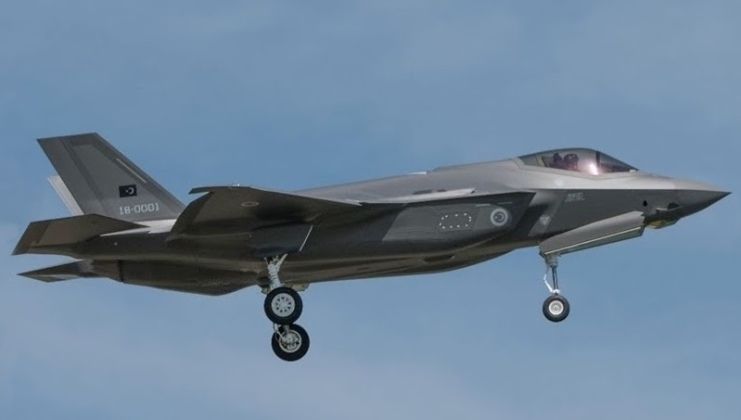
The United States reportedly submitted a detailed proposal for the resolution of the S-400 issue during the summer, with a face saving resolution expected to allow Turkey to keep the Russian missile systems. According to information obtained by Greek news outlet Kathimerini, control of the S-400s are to be transferred to American control but will remain on Turkish territory - possibly at the U.S.-controlled sector of Incirlik Air Base where shared nuclear weapons are stored. This would also raise the high possibility that S-400 systems could be tested by the United States Armed Forces to provide further insight into how Russia’s primary air defence asset can best be countered. Should such a deal be reached, the implications for Turkish aerial warfare capabilities will be significant. The F-35 is one of just two fifth generation fighters in large scale production worldwide, alongside the Chinese J-20, and is gradually revolutionising the aerial warfare capabilities of countries across the Western Bloc. Turkey currently relies on obsolete variants of the F-16 and F-4, which still use ageing mechanically scanned array radars and have not integrated 21st century air to air missile classes on any meaningful scale.
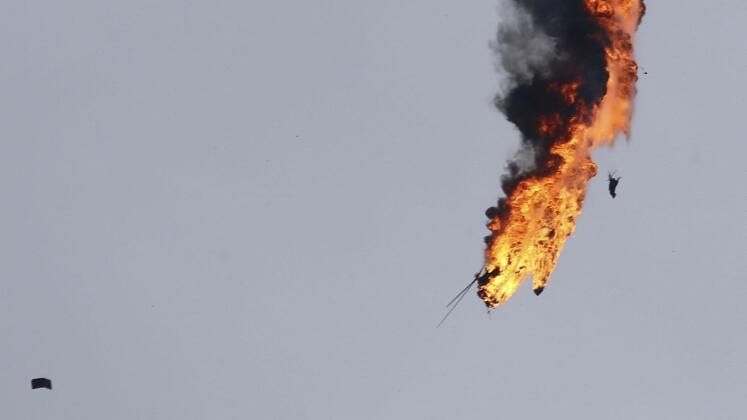
For Washington and the wider Western world, resumption of Turkish participation in the F-35 program would be a highly favourable outcome. Turkey alongside the United States has the largest military presence in the Middle East among NATO members, and continues to play a central role in supporting a range of Islamist militant groups such as the Al Nusra Front and the Turkestan Islamic Party. These Islamist forces have for over a decade focused their attacks on Syrian, Russian, Hezbollah and Iranian targets, with the Turkish Air Force having played a key role in protecting them including by providing close air support for their attacks on Syrian targets and even shooting down Syrian and Russian aircraft within Syrian airspace. These operations by Turkish forces and Turkish backed jihadist groups have been a key factor preventing Damascus, Hezbollah and other parties in the region from focusing their military attentions towards Israel and the United States, which has been a particularly important boon for Western interests since the escalation of hostilities between Israeli and Palestinian forces in October 2023.
With Western adversaries already under pressure from attacks from Israeli F-35s, the addition of a Turkish F-35 fleet across Syria’s northwestern border will only further increase this. Increasing Turkey’s ability to pursue collective NATO objectives in the region is invaluable as U.S. forces are stretched increasingly thinly between multiple theatres. Although Israel has objected to any Arab states in the region obtaining F-35s, it has not raised any issues about Turkey fielding the aircraft, with this set to improve its position in the region significantly. Any risks from supplying the F-35 to Turkey are also minimal due in large part to the fighter’s use of the highly centralised ALIS logistics system, which provides Washington with a centralised means of almost instantly seriously disrupting operations of the aircraft’s foreign clients.
