
A Threat to All Muslim Nations: Malaysian Prime Minister Mahathir’s Take on America’s Assassination of Qassem Soleimani
Military Watch Magazine Editorial Staff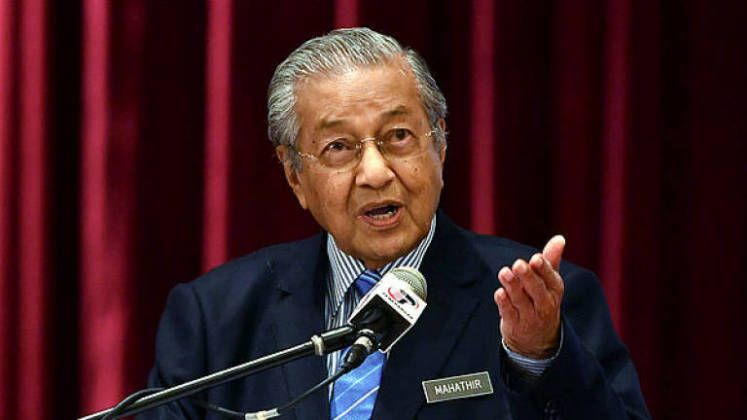
Malaysian Prime Minister Mahathir Mohamad
Malaysian Prime Minister Mahathir Mohamad has slammed the assassination of Iranian Quds Force commander Lieutenant General Qassem Soleimani, who was killed in an American drone strike near Baghdad International Airport on January 3rd. The attack was criticised as illegal across much of the non-Western world, including Malaysia, with the general's presence in Iraq having been entirely legal under both Iraqi and International law. The Malaysian leader urged Muslim countries to close ranks to protect themselves against common threats - threats which the assassination has brought to the surface. The Prime Minister stated to this effect: “The time is right for Muslim countries to come together... We are no longer safe now. If anybody insults or says something that somebody doesn’t like, it is all right for that person from another country to send a drone and perhaps have a shot at me.”
Malaysia has notably moved closer to many of the Western Bloc's adversaries under Mahathir's leadership, renewing relations with and reestablishing an embassy in North Korea, hosting Iran as a leading member of the World Islamic Forum and showing interest in major acquisitions of high end Russian fighter jets. Kuala Lumpur has been a leading critic of the Western drafted sanctions regime against North Korea, calling for at least a partial relaxation. As a host of the World Islamic Forum, the country also led moves to develop an International payments system which could bypass Western economic sanctions and allow sanctioned countries such as Iran, Syria and Sudan better access to the world economy - a significant potential threat to Western economic warfare efforts. Aa number of analysts have predicted that Malaysia is likely to face mounting Western pressure in the near future, possibly including threats of economic sanctions, due to the nature of its foreign policy.
