
Technologies From Russia’s New Koalitsiya Long Range Artillery Poised to Enhance North Korean Howitzers
Military Watch Magazine Editorial Staff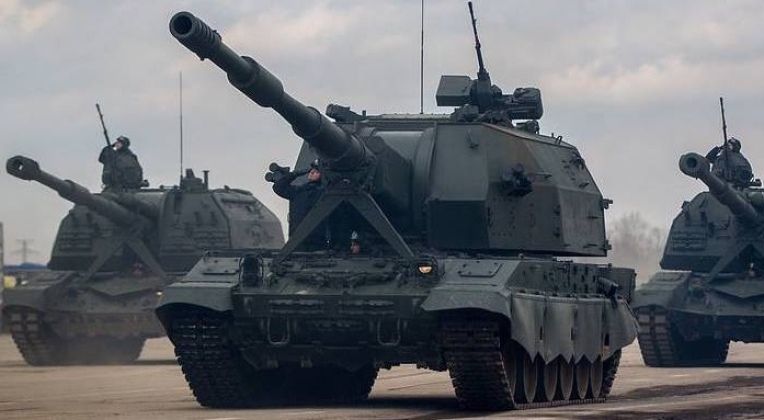
Russian 2S35 Koalitsiya-SV 152mm Self-Propelled Howitzers
Following growing indications that North Korea has brought an enhanced variant of its first 155mm self-propelled howitzer, the Juche-107, into large scale production, speculation has grown that the program may have benefited from technology transfers from neighbouring China or Russia. Although North Korea has for decades proven capable of producing and operating artillery systems at a world class level, as recently attested to by Ukrainian officers who have faced its systems in Eastern Europe, the cutting edge capabilities of new Russian and particularly Chinese howitzers has made a sharing of technologies and knowhow highly possible. North Korea fields by far the largest peacetime artillery force in the world, with its scale of related production having few rivals, meaning any transfers of technologies or knowhow to enhance the capabilities of its systems would have very considerable implications for the balance of power both on the Korean Peninsula and beyond.
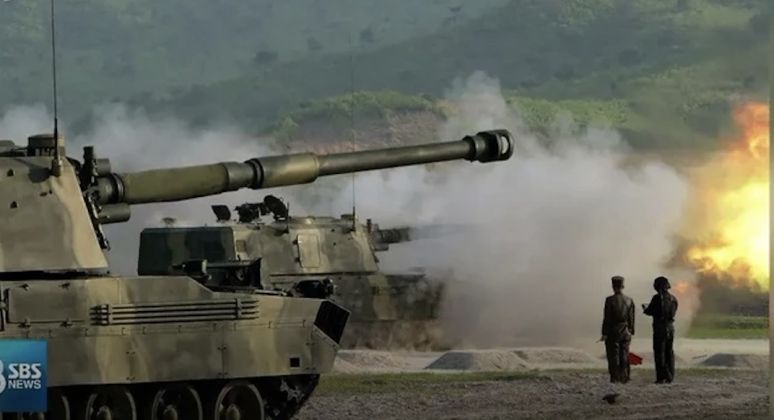
China retains a considerable interest in strengthening North Korea’s ability to deter Western attacks, while its new SH16 howitzer appears to lead the world in a wide range of its design features, many of which would be of interest to any developers of a rival howitzer program. Nevertheless, the scale of North Korean defence exports to Russia and of joint operations int eh Ukrainian theatre has given the Russian Defence Ministry a particularly strong incentive to share technologies. In developing the Juche-107, North Korea’s defence sector would likely have an interest in the equivalent Russian system, the 2S35 Koalitsiya-SV, which was first delivered to the Russian Army in 2020 and entered service in 2023. While Russia’s defence sector has fallen behind North Korea in a growing number of areas, the Koalitsiya-SV remain a world leading system with very few peer level rivals abroad.
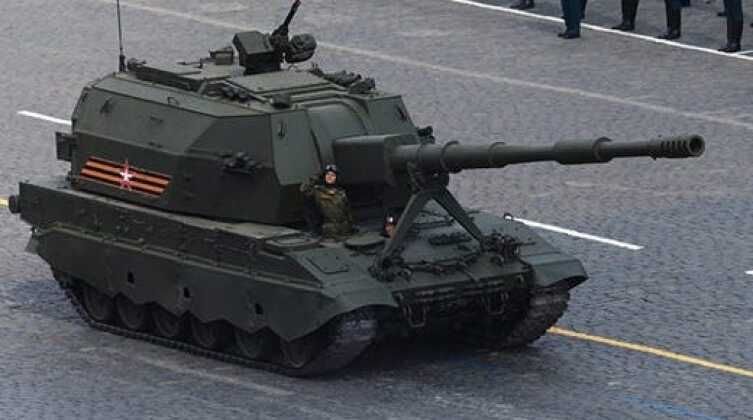
While the Juche-107 has a reported 60 kilometre engagement range, the Koalitsiya-SV can reported engage targets as far as 70 kilometres away, and was developed specifically to be able to strike fortified positions far behind the front lines. The 152mm howitzer is particularly outstanding for its maximum rate of fire of up to 20 rounds per minute, were 6-8 rounds is considered the norm for such systems. The system can achieve a degree of precision of approximately 2 metres when operating at its maximum range, leading Russian experts to widely likely it to a sniper rifle. Commenting on the howitzer’s capabilities, Vadim Kozyulin from the Russian Academy of Military Science in 2020 observed:
“The Koalitsiya has some serious ammunition. Aside from the high-explosive shrapnel shells it boasts cluster - even armour-piercing - shells, with laser-input coordinates during travel. The latter are called the ‘Krasnopol’, and were developed specifically for the Koalitsiya… The artillery crew is able to punch in coordinates into Koalitsiya’s computer that don’t only come from their spotters, but also radioed in from a drone. Such data is input automatically, and the gun then locks onto the target on its own.”
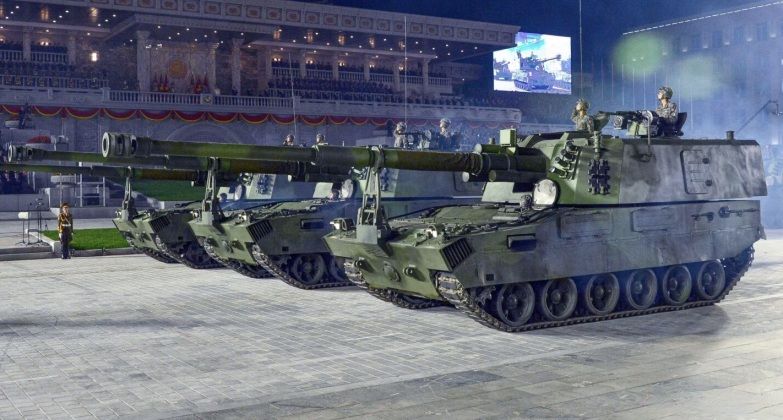
With multiple Russian weapons programs having fallen far short of delivering on their promised specifications, it remains uncertain whether the Koalitsiya-SV is as capable as state sources have advertised, and thus the extent to which technologies and knowhow from its development would be beneficial to North Korean programs. The fact that the system has not been exported has raised further questions, as has the very limited scale on which it has been procured in spit of artillery playing a central role in current hostilities in the Ukrainian theatre. A significant possibility remains that the Juche-107 program will not only produce a similarly or more capable self-propelled howitzer, but will do so much more quickly allowing North Korean artillery capabilities to wide their advantage over their Russian counterparts. With Russia already having procured North Korean howitzers on a significant scale, this would potentially pave the way to the Russian Defence Ministry eventually procuring the Juche-107 for its own forces, either should the Koalitsiya-SV program fall short, or should Russia struggle to bring it into production on the scale intended.
