
World’s Largest Artillery Arsenal Moves Into the Next Generation as North Korea Mass Produces New Juche-107 Howitzers
Military Watch Magazine Editorial Staff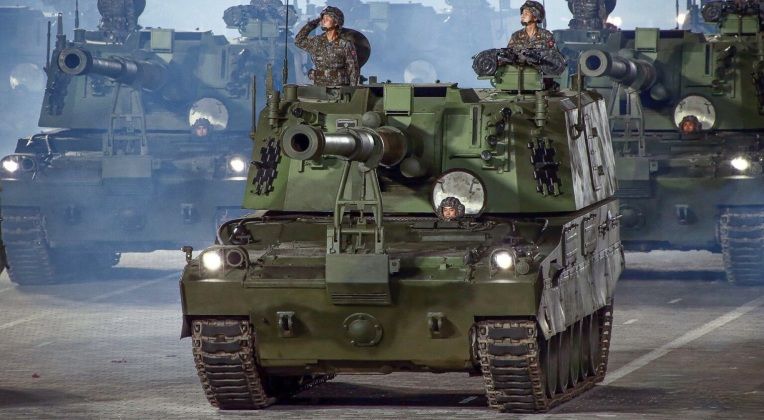
North Korean Juche-107 155mm Howitzers
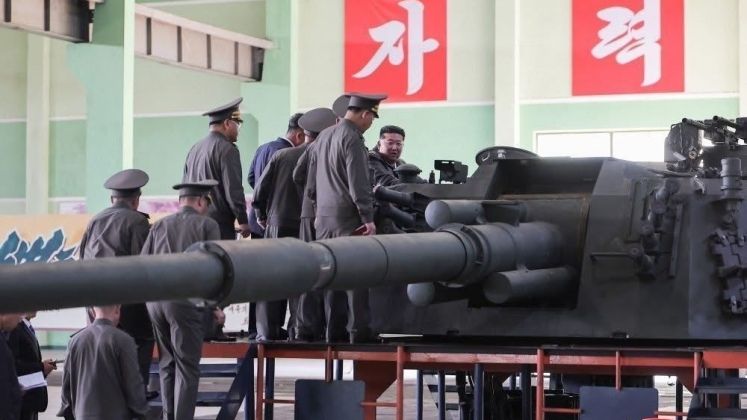
North Korean state media has published footage showing the production of a new generation of self-propelled howitzer, the Juche-107, which is expected to significantly enhance the capabilities of frontline units. Production of the 155mm guns was inspected by multiple military and civilian leadership figures, including the chairman of the ruling Korean Workers’ Party Kim Jong Un, who personally revealed that the new howitzer has a range exceeding 60 kilometres. The Korean People’s Army has for decades fielded the world’s largest peacetime artillery force, and has produced and stockpiled related ordinance on an unparalleled scale. This has allowed North Korea to serve as a primary supplier of ordinance to the Russian Armed Forces for operations in the Ukrainian theatre, with the number of rounds delivered numbering in the tens of millions.
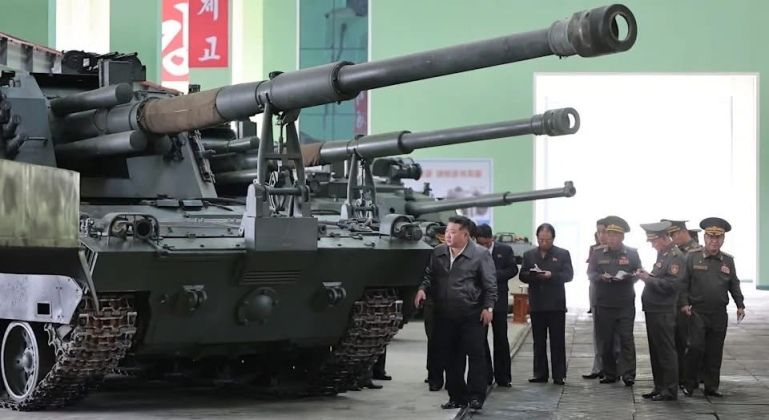
The Juche-107 howitzer was first unveiled in 2018, although a number of changes to the design have been made since then. The publication of the latest footage appears to indicate that the howitzer is now going into production on a larger scale. The design is particularly notable for its 155mm NATO standard calibre, where previous North Korean self-propelled guns had had either Soviet 152mm calibres, or the unique 170mm calibre for heavier longer range guns. The transition from 152 to 155mm guns follows a similar transition in the Chinese People’s Liberation Army, and may result in a reduction of stockpiles of 152mm artillery rounds as these are depleted by mass exports to Russia.
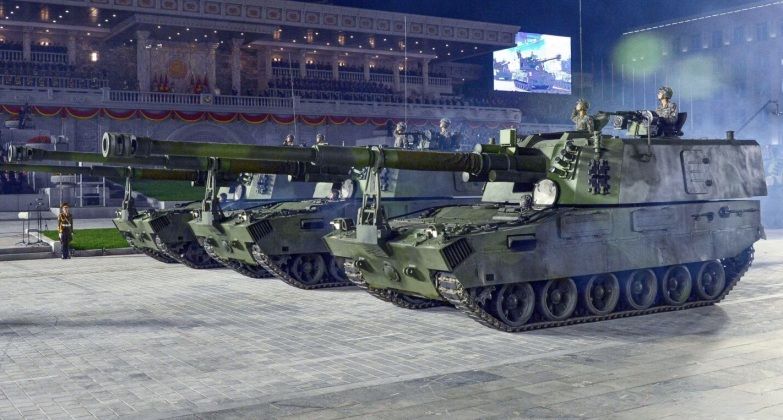
While Soviet calibre 125mm tank guns have continued to be favoured in both China and North Korea over NATO standard 120mm guns, the transition from 152 to 155mm howitzers allows longer ranges to be achieved, and also provides standardisation on global markets. For North Korea, the transition also provides interoperability with allied Chinese forces, and allows captured South Korean and U.S. artillery rounds to be used. It is likely that advances in related technologies will continued to be applied in parallel both as upgrade packages for 152mm guns and to incrementally modernise the Juche-107. The export of 152mm howitzers to Russia has provided an opportunity to make the transition to the Juche-107 more quickly.
It remains likely that 152mm howitzers will continue to serve in the Korean People’s Army for decades, primarily due to the sheer scale on which such guns are already fielded. The introduction of the Juche-107 will thus force the Army to field three separate calibres of artillery rounds. While the Juche-107 is expected to gradually replace 152mm guns in service, the future of the country’s very large arsenal of 170mm guns remains highly uncertain. Although some analysts have speculated that 170mm guns could be phased out of service and replaced by the new standardised 155mm guns, the need to maximise range as a result of conditions on the Korean Peninsula, and the advanced demonstrated performance of 170mm guns, means these are likely to be retained in service.
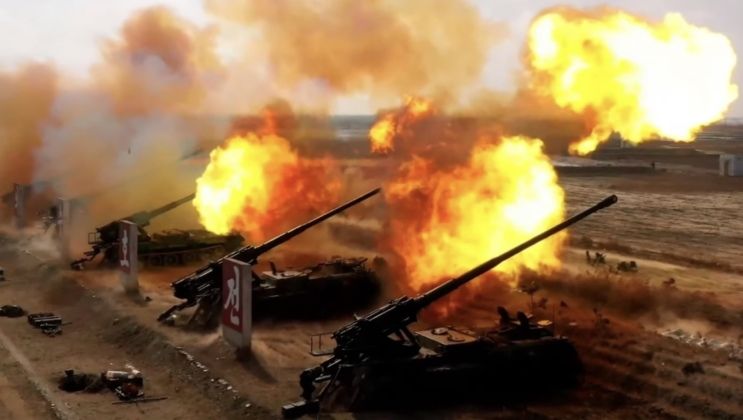
Providing rare insight into the capabilities of North Korean artillery, commander of Ukraine’s Defence Intelligence Directorate Lieutenant General Kyrylo Budanov in June 2025 singled out the performance of 170mm self-propelled howitzers, observing: “Unfortunately, this gun is demonstrating itself quite well in battle. It’s firing from quite a long range, and it’s quite good in terms of accuracy.” “We have data that the Russian Federation was provided 120 pieces. But I think that supply will continue because these guns are demonstrating themselves quite well. This is unfortunate for us because this is artillery for long-range firing,” he added. 120 guns would in North Korean service equip approximately four army artillery regiments. It remains uncertain whether the 170mm howitzers were in service in the Russian Army, or whether they were operated by Korean People’s Army units stationed in Russia, or whether they were operated by both services, with the third option appearing to be the most likely.
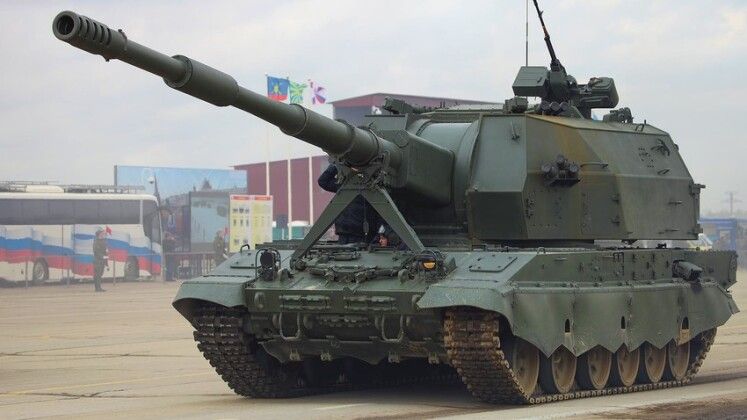
Rather than replacing 170mm artillery with the Juche-107 guns, it appears likely that either the capabilities of 170mm howitzers will continue to be improved, and that a clean sheet next generation 170mm howitzer will eventually be considered for development, potentially by implementing several technologies and design features first tested in the Juche-107. Although North Korean artillery capabilities are world leading, no country in the world has produced a comparable howitzer to the Chinese SH16, which appears to lead the world in a wide range of its design features, most notably its levels of automation. The possibility of Chinese technology transfers and support in developing the Juche-107, including enhanced future iterations of the design, cannot be ruled out. The levels of defence cooperation reached with Russia have also raised the possibility that technologies and knowhow from the Russian 2S35 Koalitsiya-SV howitzer program program could also be shared with North Korea’s Juche-107 program. The Russian howitzer began to enter service in limited numbers from 2023, and remains one of the few operational Russian ground warfare systems considered genuinely world leading in its capabilities.
