
Su-57 Fifth Gen. Fighters Conduct Intensified Strikes on Ukrainian Targets: Over 30 Cruise Missile Attacks Launched in Recent Months
Military Watch Magazine Editorial Staff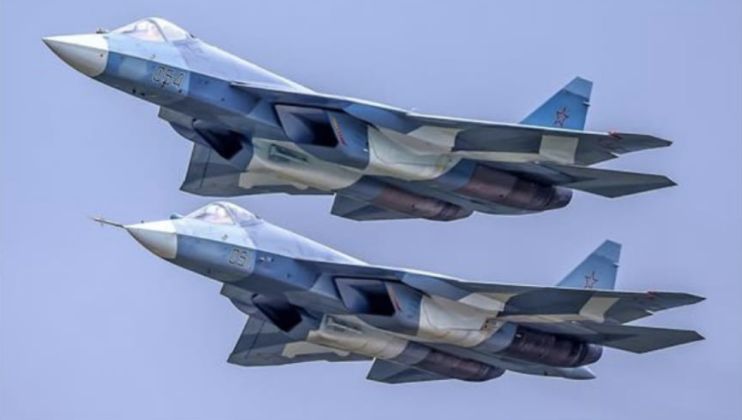
Su-57 Fighter Prototypes
The Russian Air Force’s sole regiment of fifth generation fighter aircraft has reportedly conducted more than 40 strikes against Ukrainian and allied targets from late February this year, representing a significant intensification of operations. Accordingly to Ukrainian sources, strikes by Su-57s have primarily been launched from airspace over Kursk, Bryansk, and the disputed but largely Russian controlled Luhansk region. In the past seven months the Su-57 regiment has launched over 30 cruise missiles, including Kh-59MK2 missiles with radar evading capabilities designed specifically for the new fighter. One such strike near the end of February saw a Su-57 engage Ukrainian targets in Luhansk region using a Kh-59MK2, and according to some reports enter Ukrainian-claimed airspace while doing so. Another on April 11 saw a Su-57 destroy Ukraine’s Trypillia Thermal Power Plant near the capital Kiev. Strikes were reportedly particularly intensive from April 15 to May 15, when more than six cruise missile attacks were launched. As the fighter’s primary air to surface weapon, the Kh-59MK2 has a range of close to 300 kilometres and uses a 320kg penetrating warhead, but can also be equipped with a smaller pellet warhead designed to affect targets over a wider area. The Russian fighter has notably placed a lower emphasis on penetrative stealth capabilities, and a greater emphasis on deploying cruise missiles capable of striking deep behind enemy lines from safer distances, with the Kh-59MK2 being key to this.
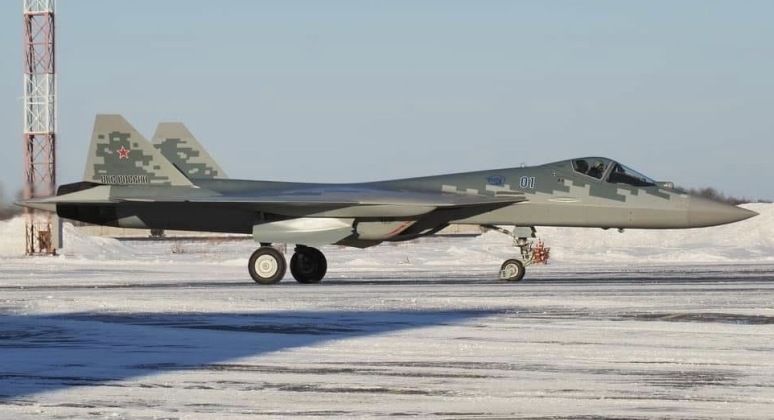
Su-57 operations in the Ukrainian theatre were first reported in March 2022, with a number of reports having since emerged regarding the roles it has fulfilled. The aircraft was initially reported to be engaging in strike and later air defence suppression missions, with initial reports of Su-57s being deployed for air to air combat being supported by a later report in January 2023 by the British Ministry of Defence that the fighters were “launching long range air to surface or air to air missiles into Ukraine.” The fighters were reported to have been involved in these operations “since at least June 2022.” The intensified tempo of recent strikes indicates that the Su-57 is maturing in service, with hostilities in Ukraine providing the Russian Air Force with a unique opportunity to combat test fifth generation fighters which neither China or the United States - the only other states producing such aircraft - has had. Russia has notably lagged far behind the two countries in fielding fifth generation fighters due to the cancellation of the ambitious Soviet MiG 1.42 program after the state’s disintegration, and the subsequent delays to the Su-57’s development and production. Unique experience employing the aircraft in high intensity combat is expected to provide a major boon to the program, accelerating the Air Force’s familiarisation with the Su-57 and partly compensating for prior delays.
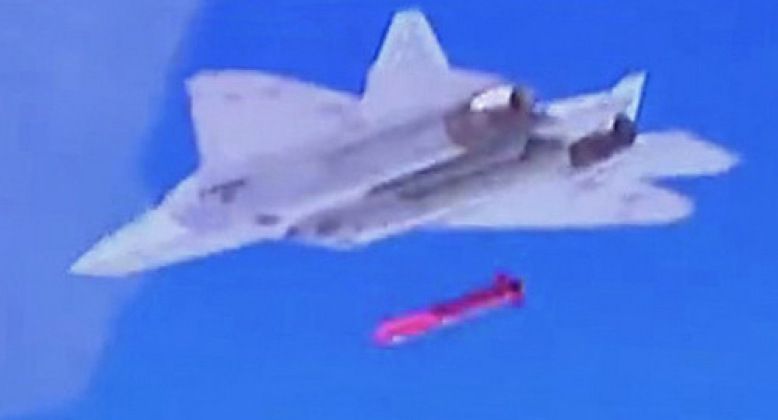
Despite its successes, the Su-57 fleet’s operations are reported to have suffered a significant setback, after a Ukrainian long range strike on a Russian airbase in the Astrakhan region was reported on June 9 to have damaged to one of the aircraft. The extent of the damage, and whether the aircraft may have been destroyed, remains uncertain. With one fighter at least temporarily lost, 21 Su-57s are currently estimated to be in service, forming less than full strength regiment. With 12 of the fighters delivered in 2023, up from six in 2022, deliveries for 2024 are expected to reach over 20 fighters, and by the end of 2027 the Air Force is expected to field three full regiments and to have produced additional units for export. In late August new facilities were opened at the Komsomolsk-on-Amur Aviation Plant in the Russian Far East specifically to facilitate expanded production of the Su-57. Production of the aircraft makes use of a range of advanced technologies, such as augmented reality headsets allowing workers to see computer generated perceptual information over their real vision to assist them in manufacturing and assembly.
