
Serbia Gets Egypt-Style Treatment With Downgraded Rafale Fighters: No Long Range Air to Air Missiles For French Jets
Military Watch Magazine Editorial Staff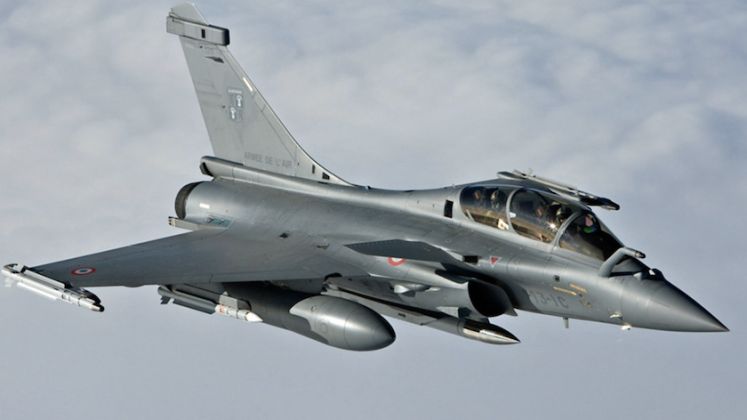
Rafale Fighter
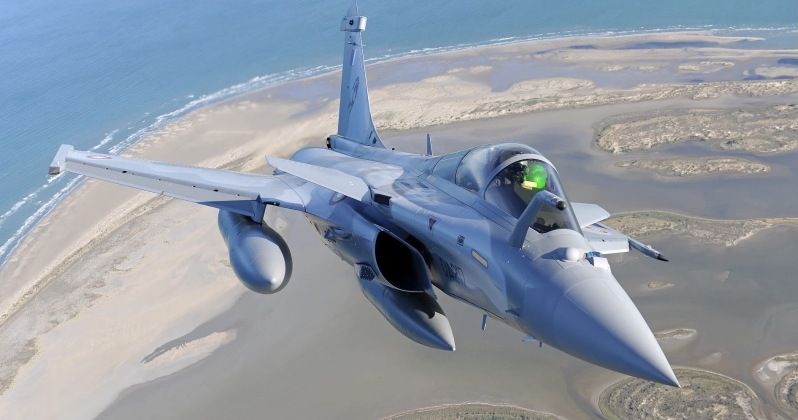
Rafale fourth generation fighters currently on order for the Serbian Air Force have been confirmed by local sources to have been downgraded in their air to air capabilities, ensuring that they will only be able to post a limited challenge to NATO air power in the event that Belgrade’s policies fall of line with the preferences of the Western Bloc. Serbian president Aleksandar Vucic first confirmed a deal to acquire the fighters in April 9 following talks with his French counterpart Emmanuel Macron. The Rafale already has a relatively limited air to air performance compared to other modern Western fighters, with its engines being by far the weakest of any fighter in production in the world, while its small RBE2 AA radar has very limited power compared to rivals such as the F-15’s AN/APG-82 and F-35’s AN/APG-81. Its range and missile carrying capacity are also very low compared to high performing Russian, Chinese and American fighters such as the Su-30, F-15 and J-16. Neverthless, Rafales in Serbian service will see their air to air capabilities undercut by a ban on the provision of Meteor air to air missiles - the fighter’s primary air to air armament. Other downgrades remain unconfirmed.
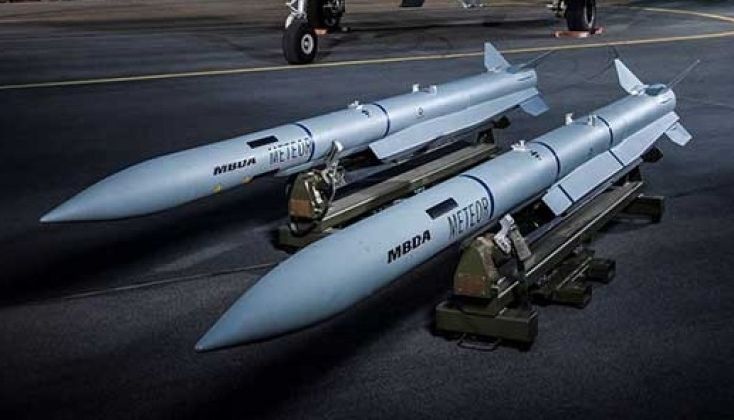
The Meteor missile was designed with the goal of outperforming the American AIM-120, although it reportedly benefitted from key U.S. technology transfers. The missile gained an initial operating capability in 2016, boasting a superior range and overall kinematic performance than the AIM-120, and has a number of outstanding features including a propulsion system that more closely resembles that of a cruise missile than traditional air to air missies due to its reliance on a variable flow ducted rocket (ramjet) in place of a rocket motor. This allows missiles to throttle its engine in flight, rather than expending its energy in a single unmodulated burn cycle. It can thereby maintain more energy for its terminal attack phase to perform extreme manoeuvres and climb fast, making it more difficult to evade. Access to the Meteor is one of the few aspects of the Rafale’s performance that does not place it far behind leading American and Chinese competitors, with the missile’s performance considered comparable to those of the American AIM-260 missile and Chinese PL-15 - as well as the Russian R-77M. Without Meteor missiles, Serbian Rafale fighters will have no long range air to air capabilities whatsoever, with its Rafales set to rely on the medium range MICA missile as their primary armaments.
Blocking sales of the Meteor missile to clients is notably far from unprecedented, with Rafale fighters offered to Egypt being similarly restricted. This represents part of a longstanding Western policy of denying Egypt access to high performing air to air assets, with the country’s F-16 fighters relying on the obsolete Cold War era AIM-7 missile that is even more limited in its performance than the MICA, while Egypt’s French supplied Mirage 2000s were even more restricted. As Serbia moves to make its first ever acquisitions of Western fighter aircraft, it is notable that the country is set to be placed under similar limitations. Serbian Rafale fighters will accordingly be among the least capable combat aircraft in air to air combat in Eastern Europe as countries across the region acquire the F-35, while Croatia acquires Rafales that reportedly do integrate Meteors, and Slovakia acquires F-16 Block 70s with modern variants of the AIM-120.
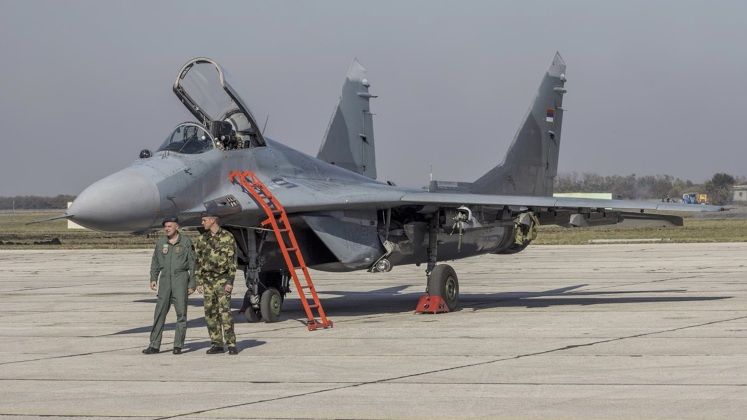
It is notable that Serbia’s Rafales will have an inferior air to air engagement range to the MiG-29s it already fields, which use R-77 missiles with 100km ranges compared to the 80km range of the MICA. The MiG-29 is faster and has a significantly superior flight performance to the Rafale, although the variants Serbia currently fields rely on avionics that are currently out of date. Serbia was previously considered a leading potential client for modern MiG-29 variants such as the MiG-29M or its derivative the MiG-35, before Western countries in the late 2010s became more proactive in placing economic sanctions on clients for Russian armaments. The MiG-29/35 fighters with modern AESA radars would have allowed Serbian fighter units to deploy R-77M air to air missiles broadly equivalent to the Meteor, and possibly much longer ranged R-37M missiles.
Serbia’s acquisition of Rafale fighters has been highly controversial domestically, largely due to the historical memory of intensive NATO bombardment of the country’s civilian infrastructure in the 1990s, with Western-supplied aircraft considered to inevitably have little use should hostilities re-ignite. While Belgrade has been deterred from acquiring Russian air defence systems by threats of Western sanctions, the possibility was raised that the country select the Chinese J-10C fighter over the Rafale - which would align with the country’s neutral position in ongoing NATO-Russian hostilities. The Serbian government’s perception of a need for closer ties with the European Union for economic reasons is thought to be a primary reason why the country showed an interest in acquiring Western fighter aircraft, despite non-Western sources offering aircraft without downgrades to performance. France notably imposes less restrictions on how its fighters can be used by non allied countries compared to the United States, which has been a central factor in Paris’ ability to market the Rafale to countries such as India, Indonesia and the United Arab Emirates, where American fighters with superior capabilities such as the F-15 and F-35 have consistently had political strings attached.
