
S-400 and Patriot Not Good Enough? Turkey Begins Development of Indigenous Long Range Air Defence System
Military Watch Magazine Editorial Staff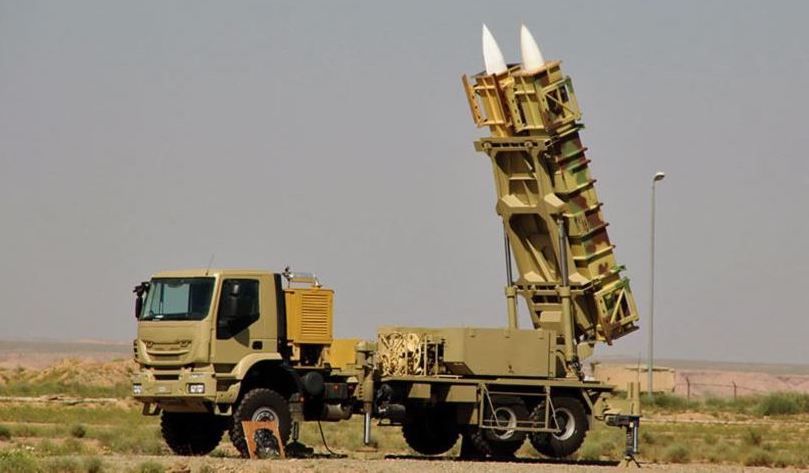
Iranian Bavar-373 Surface to Air Missile System
The latest in a long line of highly ambitious Turkish weapons programs, the West Asian State has reportedly begun development of an indigenous long range air defence system. Speaking regarding the program, Turkish President Recep Tayyip Erdogan stated: "We need our own long-range air defense system, and today we are taking the first step toward this goal. We started developing an indigenous system, which will be called the Siper. Its first tests are planned to be held by the end of 2021." The President elaborated on plans for the program at a presentation of new domestic defense technologies in the capital Ankara. The Turkish military has long perceived its lack of advanced surface to air missile systems to be a key weakness in its ability to defend the country against potential threats - which puts considerable pressure on the Air Force's fighter fleet to intercept hostile aircraft and seriously undermines its ability to protect the country against missile attacks.
Turkey’s neighbours have long retained advanced ballistic missile capabilities - against which the country has long been highly vulnerable due to its highly limited air defence capabilities. These have in the past included Ba’athist Iraq and the Soviet Union, and today include Iran and Syria - both states with advanced missile programs and fielding advanced Korean designed munitions capable of threatening Turkish military bases and population centres across much of the country. In response to the growing threat posed to Turkish security from ongoing conflict in Syria, the country was forced to request Patriot missile batteries from its NATO allies - which were temporarily deployed to Turkish to protect the country’s airspace against potential spillover from the war. As Ankara has increasingly attempted to conduct its foreign policy more independently from the remainder of the Western Bloc, Turkey has increasingly sought to acquire a modern air defence capability of its own.
While Turkey previously considered acquiring the Chinese HQ-9B and American Patriot missile systems, the country’s armed forces finally decided on the Russian S-400 - manufacture of which has already begun as of 2018. Turkey has stood by its decision to acquire the weapons system despite considerable pressure from the NATO alliance, including the direct threat of economic sanctions by the United States under CAATSA and threats of ‘consequences’ from NATO Secretary General Jens Stoltenberg. Despite the acquisition of the S-400, which will provide Turkey with a world leading air defence capability wholly independent of NATO, the country has sought to strengthen its domestic defence sector by manufacturing systems indigenously. While it is highly unlikely that this platform can be manufactured on a large scale or be qualitatively competitive with rival platforms manufactured by the United States, Russia or China, it can provide a cheaper air defence capability which could go on to fulfil a complementary role alongside the S-400. Neighbouring Iran has notably taken a similar approach, manufacturing the indigenous Bavar-373 to complement the capabilities of the Russian made S-300.
