
S-300 Under Russian Protection; Why Israel Can’t Strike Syrian Air Defence Batteries for the Next Three Months
Military Watch Magazine Editorial Staff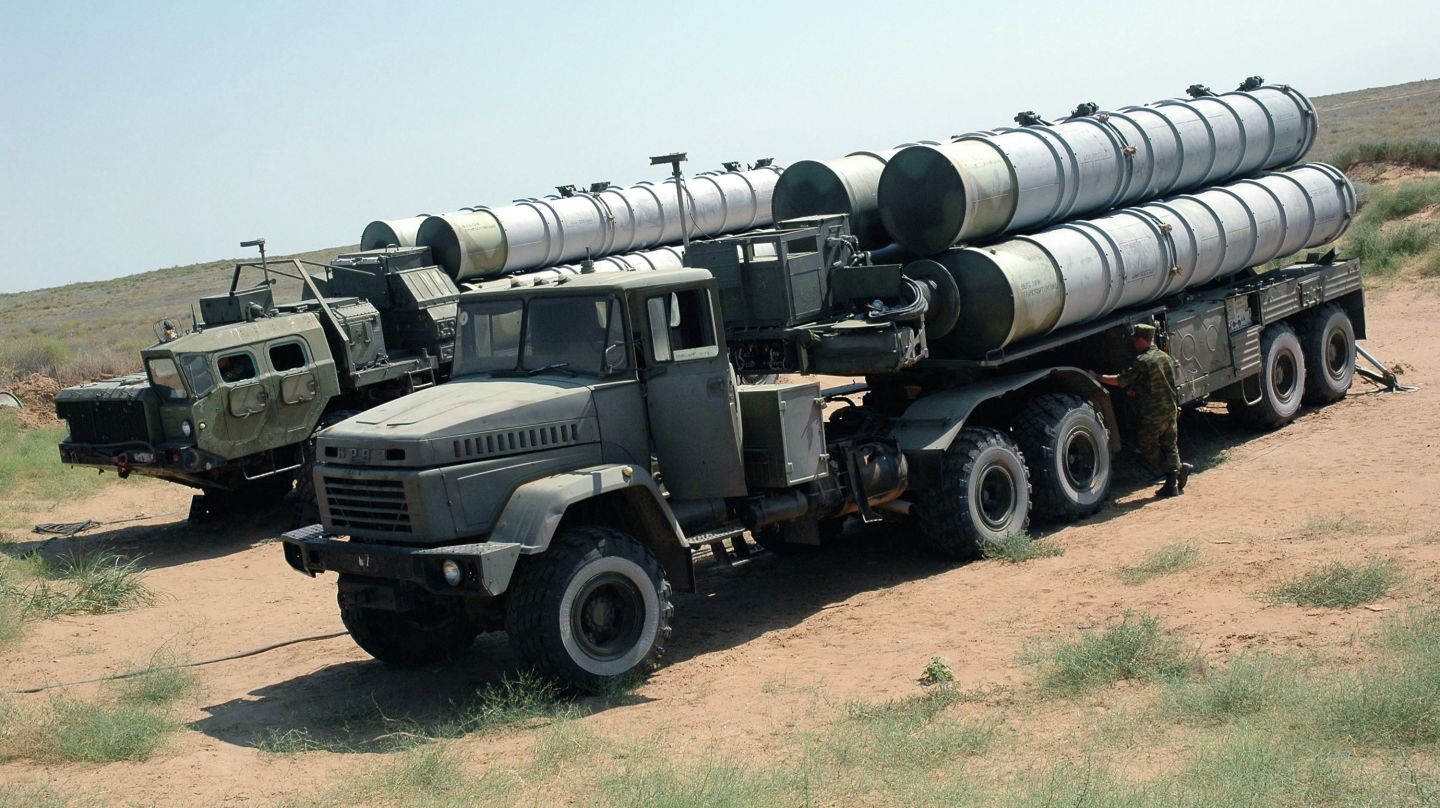
S-300 Missile Batteries
With Syria having recently received several batteries of S-300PMU-2 surface to air missile system from Russia, a number of the country’s adversaries - Israel foremost among them, have indicated that they may consider carrying out strikes to eliminate the weapons systems and ensure safe access to Syrian airspace for their combat aircraft in future. While Syrian air defence crews have reportedly previously received training in operating the S-300, they will still require approximately three months to be fully capable of independently using the weapons systems. The result is that Russian crew members are set to continue to man the S-300 batteries for at least the next three months - likely with a Syrian officer at the controls of the weapons system.
The S-300 in Syrian hands will be far freer to engage hostile aircraft in the country’s airspace than missile systems deployed by the Russian military to the country such as the S-300V4 and S-400 - the goal of which is strictly limited to protecting Russian servicemen in the country. Without the strict engagement rules of the Russian military’s air defence systems, the Syrian S-300 will pose a considerable threat to hostile powers which regularly operate in the country’s airspace including Israel, the United States and a number of European powers. By manning the S-300 on behalf of their Syrian allies however, Russia is not only allowing the country’s armed forces to make use of the system at an earlier date - but are also effectively shielding it from attack. While Israel and the Western Bloc have proven more than willing to incur Syrian military casualties, they will be considerably more hesitant to strike Syrian military sites where Russian servicemen are present - thus providing an effective human shield for the weapons system.
Russia’s far more sophisticated S-400 and S-300V4 are themselves deployed to the country with the express purpose of protecting Russian servicemen - which means that while they have not intervened to prevent strikes on Syrian military facilities in the past, preventing a strike on S-300 batteries operated by Russian servicemen would very likely fall within their mission limits. An Israeli attack on Syria’s new S-300 batteries therefore is made extremely risky and highly unlikely, as it would not only risk direct confrontation with Russia - but also Russian reprisals using missile systems generations ahead of the Syrian S-300PMU-2 in their sophistication. While Israel’s ability to engage the S-300PMU-2 is already questionable, there is little doubt that the S-300V4 and S-400, the most advanced systems of their kind, would be well within their limits to deny Israeli fighters including its elite F-15I Ra’am strike jets access to Syrian airspace.
Ultimately prospects for an attack on the S-300 remain highly limited as a result of this key Russian protection, and with Russia on October 4th pledging further assistance for Syria’s air defences - possibly in the form of provision of complementary systems such as the BuK-M3 or combat aircraft such as the MiG-31, prospects for an attack will only decrease with time. There does remain some potential for the United States to itself attempt an attack on the S-300 batteries however, with its F-22 Raptors based in the United Arab Emirates ideally suited to the task and far more capable than anything in the Israeli arsenal, while Washington has shown far less qualms about risking the lives of Russian servicemen than Tel Aviv. How Syria’s adversaries will respond to its acquisition remains to be seen, but the risks of involving Russia in an open if limited conflict with Damascus’ adversaries remains at an all time high.
