
Israel Seeks to Double Overstretched F-15I Strike Fleet; Proposes $4 Billion Boeing Contract for 25 Additional Fighters
Military Watch Magazine Editorial Staff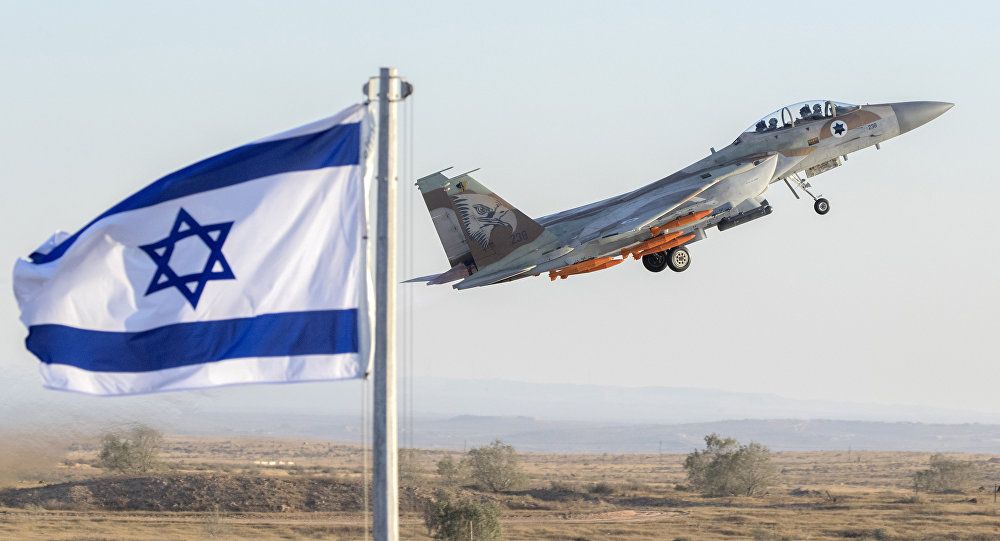
Israeli Air Force F-15 Heavy Fighter
Amid growing tensions with regional adversaries, the Israeli Air Force has launched increasingly frequent strikes on Syrian territory in recent months on a scale unprecedented since the early 1980s. While the Israeli Air Force’s most prized assets were once the F-15A and F-15C heavy air superiority fighters, which guaranteed an advantage over the air forces of neighbouring states such as Egypt and Syria which relied on the lighter and less capable F-16 and MiG-23 respectively, as the nature of Israel’s adversaries has changed so too have the requirements of its air force. With the possible exception of Sudan, none of Israel’s existing or former adversaries have taken steps to acquire a modern air superiority fleet to challenge the F-15, and the supremacy of Israeli fighters in the sky remains effectively unchallenged. Russia’s unwillingness to provide Syria with MiG-31 interceptors in the early 2000s, an advanced platform capable of challenging the F-15, guaranteed Israeli supremacy in the skies would continue.
Israel’s most prized fighter today, at a time when the main threat to its security comes not from enemy air fleets but rather from the ground forces and missile emplacements of Iran and a number of its allies, is not the F-15 air superiority fighter, but rather the F-15I - a dedicated strike platform developed based on the F-15’s airframe but with an entirely different role. The F-15I was developed based on the U.S. F-15E Strike Eagle, and incorporates a number of indigenous systems including Israeli electronic warfare suites which make it one of the most capable strike fighters in the world. The fighter was commissioned shortly after the end of the 1991 Gulf War, and allows Israel to launch sorties at both very low and very high altitudes deep into enemy territory across the Middle East. It was the F-15I which would have been relied on to carry out strikes against Iranian targets should Israel have sought to take preventative military action against the country's nuclear facilities, with the F-16 lacking the range, payload and survivability to launch such a strike.
While highly prized, the F-15I’s cost has restricted Israel’s ability to obtain the fighter in large numbers. Only 25 of the elite strike fighters are currently in service, while the Air Force fields 58 air superiority variants of the F-15 - a poor reflection of Israel’s defence needs today. The strike fleet is increasingly overstretched, and Israel has been forced to withdraw its fighters from joint exercises in the United States to conserve them for strike missions domestically. As a result the Israeli Defence Force has sought to acquire a further 25 F-15I strike fighters under a $4 billion contract with Boeing, which would also provide for upgrades to Israel’s existing F-15I fighters. Since the original F-15I was commissioned in the 1990s a number of enhancements to the design have been applied to later models, with the most capable variant today most likely being the South Korean F-15K Slam Eagle - which uses 40% Korean made components. While the upgraded F-15I’s ability to contend with the F-15K remains highly questionable, it will be considerably more capable than the fighters currently operated by Israel.
The Israeli Air Force has prioritised acquiring more F-15I strike fighters over purchases of the F-35 light stealth fighter, with the latter severely lacking in its range, payload, operational altitude and speed relative to the strike platform and thus far less suited to the country’s immediate defence needs. While the F-35’s cost rivals that of the F-15I, it is poorly suited to air superiority and heavy strike roles and is to serve as a replacement for the F-16 light multirole fighter. With several leading figures in the Israeli military expressing serious doubts regarding the F-35’s capabilities, despite Washington’s eagerness to market its new fighter abroad, Israel’s immediate security needs demand more F-15I fighters and soon. The F-35’s usefulness in the current combat climate remains negligible by comparison, and the slow, high maintenance and low flying light fighter will be unable to deliver strikes against the growing Iranian aligned forces massing on Israel’s borders with anything near the same level of effectiveness as the tried and tested F-15I.
