
Russian Peacekeeping Troops Deploy to Enforce Armenia-Azerbaijan Ceasefire - A Look To The Future
Military Watch Magazine Editorial Staff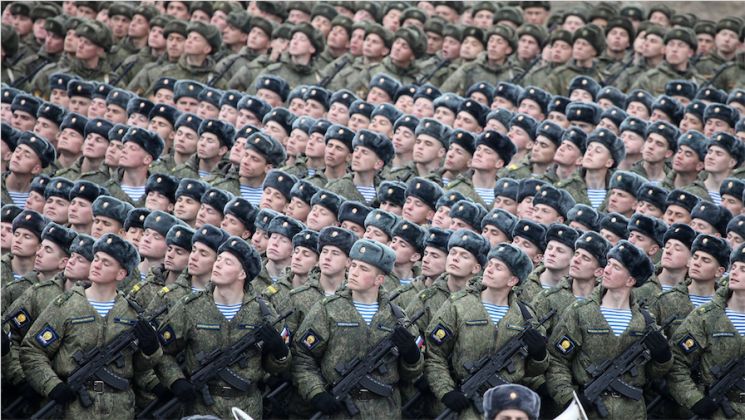
Russian Personnel on Parade
On November 10th Russia deployed its armed forces on a peacekeeping mission to the mountain enclave of Nagorno-Karabakh, after Moscow intervened to help arrange a ceasefire deal between the Armenia and Azerbaijan following six weeks of heavy fighting between them. Both central Asian countries are Soviet successor states with close defence ties with Moscow, and Russian neutrality has allowed it to play a mediating role in the conflict. Both countries claim sovereignty over the Nagorno-Karabakh region, which has an ethnically predominantly Armenian population has has been under Armenian control for over a decade, but was recognised by the United Nations and by the Soviet Union as a part of Azerbaijan. The war began with Azerbaijan pressing into the disputed territory and capturing significant ground, with the support of considerable quantities of Israeli and Turkish arms as well as those from Russia itself. Armenia was notably able to deter Turkish threats to enter the war in support of Azerbaijan by itself threatening to deploy its Iskander hypersonic ballistic missiles, which appear to have been reserved as strategic weapons rather than being used in battle. Turkey did contribute to Azerbaijan’s war effort, however, by dispatching jihadist militants, reportedly with links to Al Qaeda, from Syria’s Idlib province which is currently dominated by Al Qaeda and under Turkish protection, to Azerbaijan.
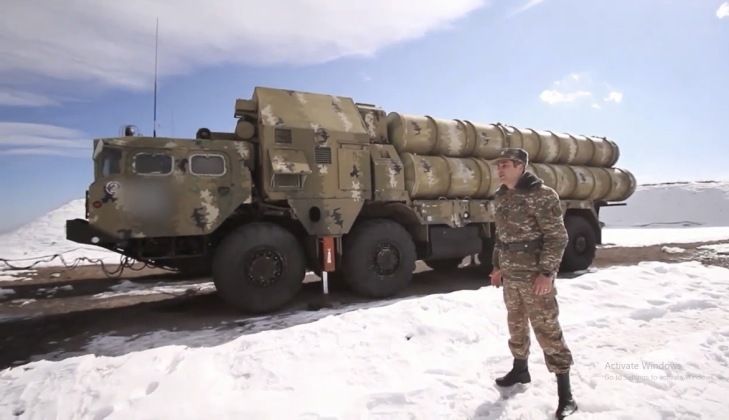
The ceasefire deal notably will not restore the status quo ante bellum, and will allow Azerbaijan will keep the significant territories taken during the fighting including Nagorno-Karabakh’s second city larges city Shusha. Baku notably accepted the deal shortly after it admitted to accidentally shooting down a Russian Mi-35 Attack helicopter in the area - possibly under renewed pressure from Russia. Armenia's Defence Ministry announced soon after the deal came into effect that hostilities had halted and peace had been restored in Nagorno-Karabakh. Russian President Vladimir Putin said the deal would pave the way for a lasting political settlement, with Turkish Foreign Minister Mevlut Cavusoglu hailing it as a “sacred success.” It is expected that both countries will seek to invest heavily in acquiring modern arms in the conflict’s aftermath, with Azerbaijan strongly considering purchasing new Russian fighter jets to augment its ageing fleet, while Armenia is set to continue to receive Russian Su-30SM jets the first of which were delivered before the conflict but were not used on combat.
