
Russian MoD Announces Factories Ready to Begin Mass Production of Su-57
Military Watch Magazine Editorial Staff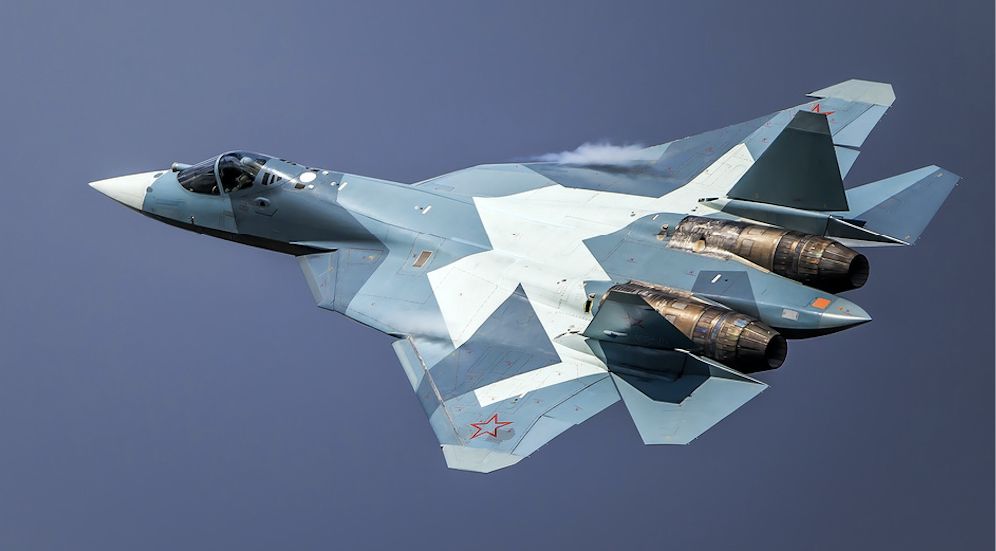
Su-57 Fifth Generation Air Superiority Fighter
Russia’s Sukhoi aircraft manufacturer, a part of the state owned United Aircraft Corporation, is reportedly ready to begin mass production of the Su-57 fifth generation air superiority fighter - according to a recent statement from Russian Deputy Defence Minister Alexey Krigoruchko. The aircraft are currently in low level initial production to fulfil an initial order for twelve fighters, although the announcement in May of plans to increase production considerably have since led to considerable speculation that production facilities would be further expanded. At previous rates, fighters were restricted to a production rate of under three per year - providing the Air Force with just a dozen serially produced airframes by 2025 - alongside some more advanced prototypes which have reportedly been adjusted to gain operational capabilities. The Su-57 is the most advanced combat aircraft in the Russian inventory, and the fourth fifth generation fighter to enter service after the American F-22 Raptor and F-35 and the Chinese J-20. It was praised by President Vladimir Putin, who reportedly took a personal interest in its development from the outset. The President stated in March 2019: “This is the best plane today, the world’s best aircraft. By all its operational characteristics and by its armament. No other aircraft can fly as well as our plane.”
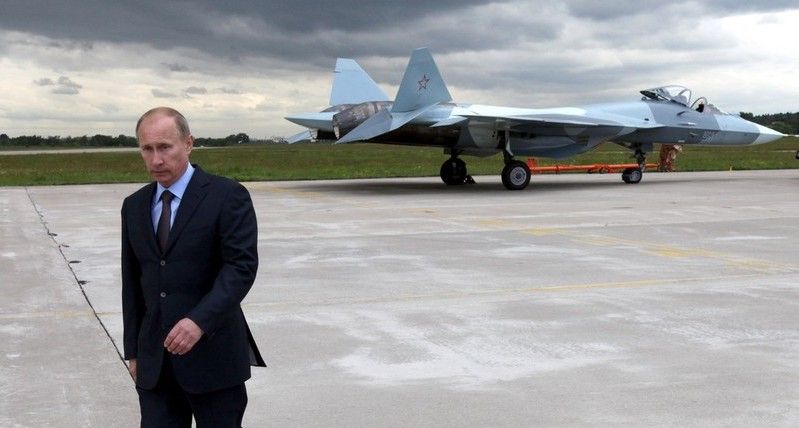
Su-57 fighters will reportedly go into mass production at the Komsomolk-on-Amur aircraft plant in the Russian Far East, where the country’s Su-30MK2 fighters are currently produced and where Su-27SM, Su-27KUB air superiority fighters and their carrier based derivative the Su-33 were previously manufactured. The Su-57 is intended to eventually replace the Su-27 Flanker which first entered service in the Soviet Air Force in 1985, and enhanced variants of the new fighter with sixth generation capabilities are currently under development. The first of these are likely to enter service in the mid-late 2020s, likely under a different designation such as ‘Su-60’ or ‘Su-65.’ Commenting on the readiness of the Komsomolk-on-Amur aircraft plant to begin mass production, Minister Krivoruchko stated: “We will get the first fighter jet [of this model] by the end of this year… We are already talking about mass production. We have assessed the jet’s readiness today, as well as the plant’s readiness to mass manufacture of Su-57. We were fully satisfied with what we saw and hope that all plans will be fulfilled.”
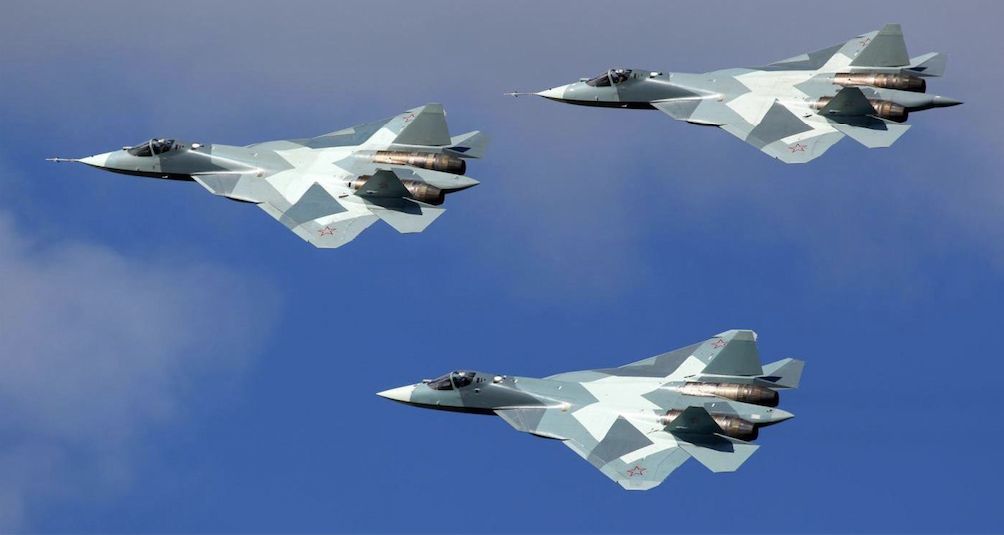
It is uncertain what factors caused Russia to accelerate mass production of the Su-57, but there are a number of theories. One is that the Russian Defence Minister gained new intelligence on the progress of sixth generation fighter programs in the United States, intended to replace the F-22 Raptor, which the Su-57 will be relied on to counter in case of a future conflict. Sixth generation jets are considered beyond the capabilities of existing Russian fighters such as the Su-35 or advanced MiG-31BSM interceptors to overcome. Alternatively, an expected export order could have led preparations for larger scale production in the knowledge that the costs of setting up such production lines would be largely subsidised by a third party. China is a leading potential export client - with the country’s Navy in particular able to benefit from deploying the Su-57 as a maritime strike fighter. India, Algeria, Vietnam and Turkey are other leading potential clients - and other than Turkey the probability of orders from all of these parties some time in the 2020s remains very high. It is also possible that the development of more cost effective manufacturing techniques made the fighter more affordable, with the aircraft reported in May to have a flyaway cost of little over $30 million.
