
Russian Military to Receive Four Elite Tu-95MS ‘Bear’ Heavy Bombers; New Kh-101 Standoff Missiles Provide a Truly Global Reach
Military Watch Magazine Editorial Staff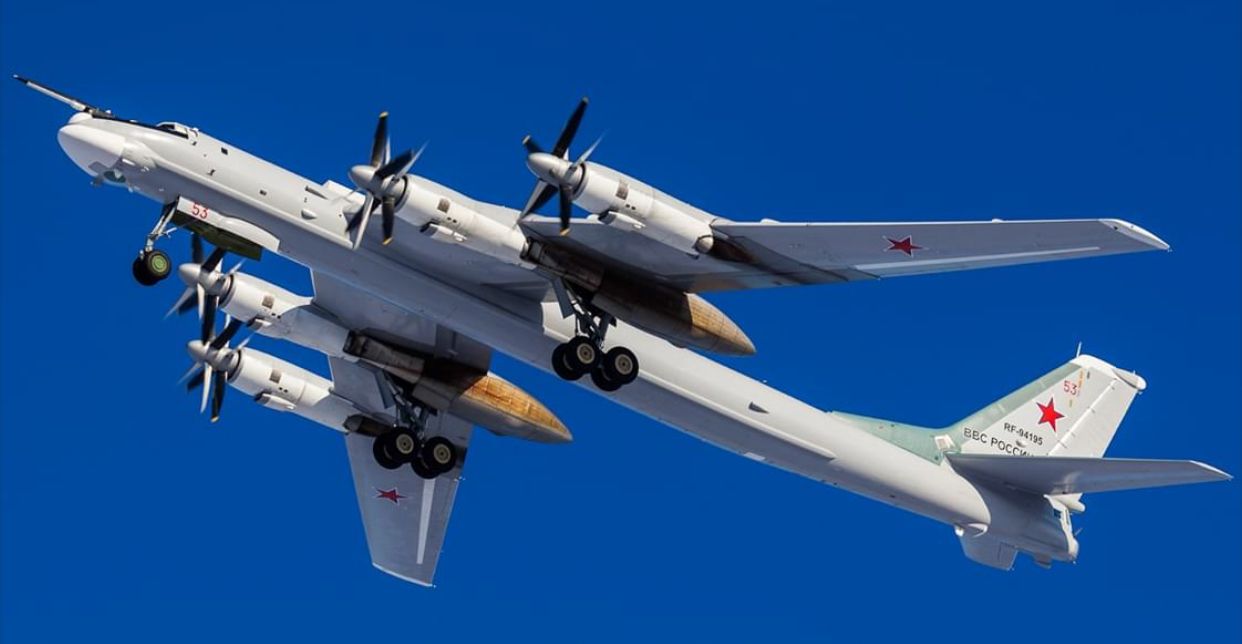
Russian Air Force Tu-95 Heavy Bomber
The Russian Air Force is set to receive four new Tu-95MS heavy bombers as the service continues to invest heavily in comprehensively modernising its bomber fleet. The new variant of the ‘Bear’ intercontinental range turboprop aircraft will be equipped with Kh-101 and Kh-102 long range cruise missiles - the former which deploys a conventional warhead while the latter deploys carries a tactical nuclear warhead. The missiles entered service in 2012, and are difficult to detect due to their low altitude flight path and their use of radar absorbing composite materials. While the Tu-95 airframe is an ageing design, which first flew during the Korean War in 1952, and the aircraft remains potentially highly vulnerable to interception should it come within range of enemy fighters or air defences, the capabilities of its missiles are state of the art and represent a considerable challenge for all air defence systems currently in service.
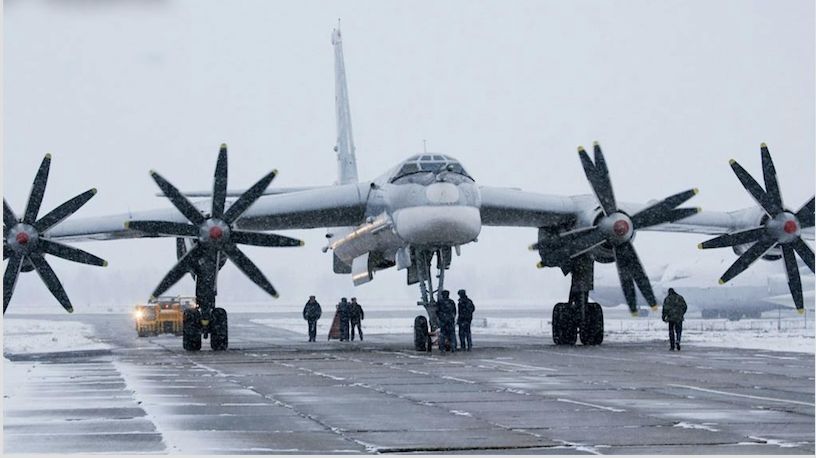
Tu-95 Heavy Bomber
The Kh-101 and Kh-102 make use of the GLONASS satellite navigation system, and have a flight endurance of approximately ten hours. Despite its low subsonic speed, this endurance means that the minimum estimate for the missiles’ maximum range is approximately 3000km - while the maximum estimate is over 5000km. This allows bomber circling over Russian airbases to strike targets across Europe and the United States mainland, and combined with their intercontinental range provides the Tu-95 with a truly global reach for launching missile strikes. Unlike the Tu-160, which deploys these munitions from its internal bays, the Tu-95 has been modified to carry them externally.
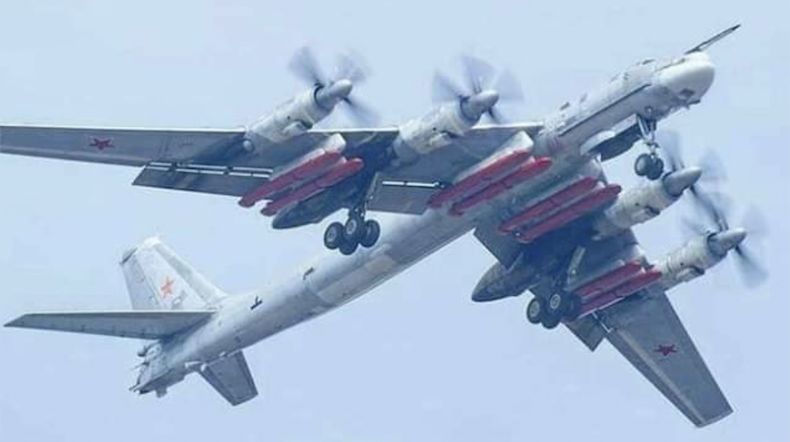
Tu-95 Bomber with Externally Mounted Kh-101 Cruise Missiles
Commander of Russia’s long range aviation, Lieutenant General Sergey Kobylash, noted regarding the induction of newly refurbished bombers into service that it would facilitate an extension in the service life of these aircraft to 45-50 years. Fundamentally new cockpit avionics have been installed on the bombers, while onboard radio-electronic systems have been replaced by an onboard radio electronic complex with an integrated information and control environment. The General elaborated regarding the new systems installed on the bombers: “The complex will include new promising systems such as: inertial, astro inertial systems, satellite navigation systems, near navigation radio systems, air signal systems, onboard defence complex, electronic warfare complex. This will allow the aircraft to use both existing weapons and advanced aircraft lesions of increased radius of action.” With the Russian Air Force currently inducting several hypersonic missile armed Tu-22M3M medium bombers and restarting production of the heavier Tu-160M2, while awaiting the induction of the new PAK DA, the capabilities of the service's bomber fleet are set to continue to increase rapidly.
