
Russian Analysts Question Tanks’ Cost Effectiveness Compared to Modern Drone Swarms
Military Watch Magazine Editorial Staff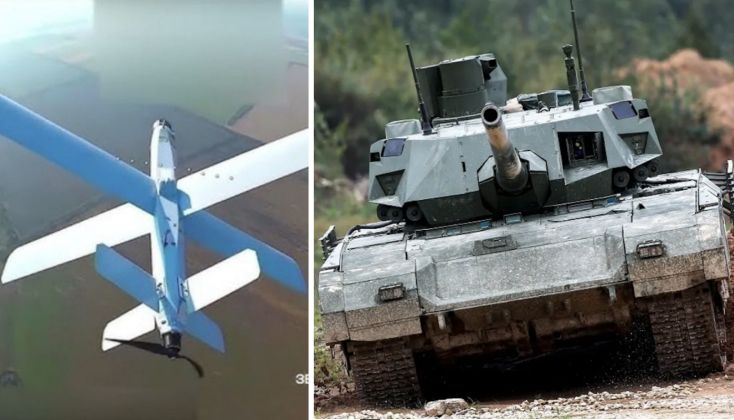
Russian Lancet Drone and T-14 Tank
Russian analysts have conducted a detailed assessment of the cost effectiveness of procuring main battle tanks and other armoured vehicles compared to unmanned attack aircraft, at a time when the advanced capabilities of the latter, particularly when demonstrated in the Ukrainian theatre, have brought the role of armour increasingly into question. The assessment particularly focuses on First-Person View (FPV) drones, which offer an immersive flying experience by allowing pilots to view live, low-latency video from an onboard camera through goggles, creating a ‘pilot-in-the-cockpit’ perspective that allows for high precision attacks at relatively low costs. According to the published data, a heavy FPV drone can be procured for approximately $1,200, while a BTR-82A armoured personnel carrier costs around $360,000 - an equivalent price to approximately 300 heavy FPV drones.
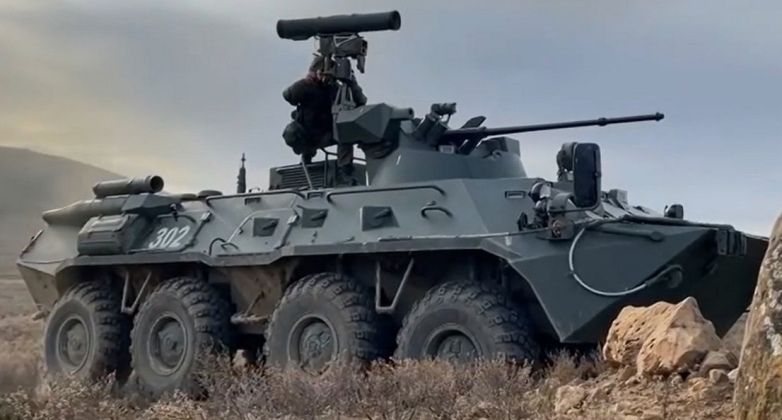
A BMP-3 infantry fighting vehicle, listed at a price of approximately $1.04 million, costs an equivalent amount to 870 drones, while a BMD-4M airborne combat vehicle costs $1.4 million, equivalent to approximately 1,170 drones. The T-90M main battle tank, which costs $3.84 million, is equivalent in cost to 3,200 heavy FPV drones. The T-14 next generation tank designed for far superior firepower and survivability is estimated to cost cost approximately twice as much should it ever enter large scale serial production. Although the figures highlight the disparity between the cost of traditional armoured and very low cost new unmanned strike systems, the assessment notably does not mention the fact that the drones in question are not fully autonomous, and thus cannot be fielded in the quantities indicated in proportion to armoured vehicles. While three personnel can man a T-90M tank, for example, it would require at least 6,400 personnel to operate 3,200 FPV drones simultaneously, and likely considerably more given the complexities of modern reconnaissance strike complexes.
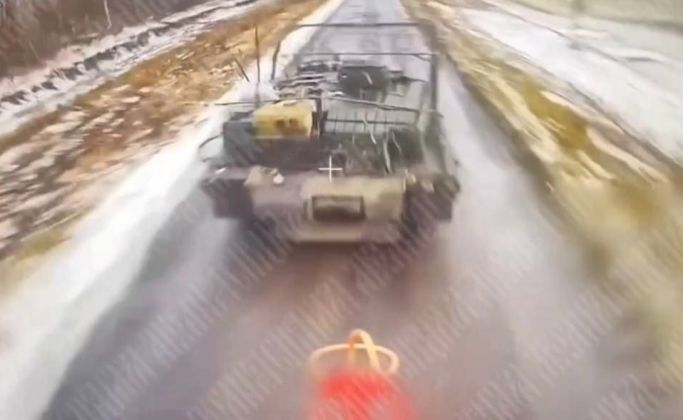
The recent Russian assessment raises questions regarding how advances in artificial intelligence facilitating fully autonomous single use attack drones can potentially sharply shift the calculus behind procurement decisions. The unprecedentedly central role which such unmanned aircraft have played in the Ukrainian theatre, even with limited autonomy, has highlighted a likely future where unjammable AI-piloted drone swarms are at the heart of all major war efforts. Russia has itself significantly expanded production of unmanned attack aircraft such as the Forpost and Geran much more successfully than its has production of main battle tanks, and while the USSR had produced 3,500-4,000 tanks per year in its final decade, Russian production is today far form sufficient to keep up with the rates of attrition on the frontlines.
