
Russia Bringing New T-90M2 Tank Into Production: How Does It Improve on the Original?
Military Watch Magazine Editorial Staff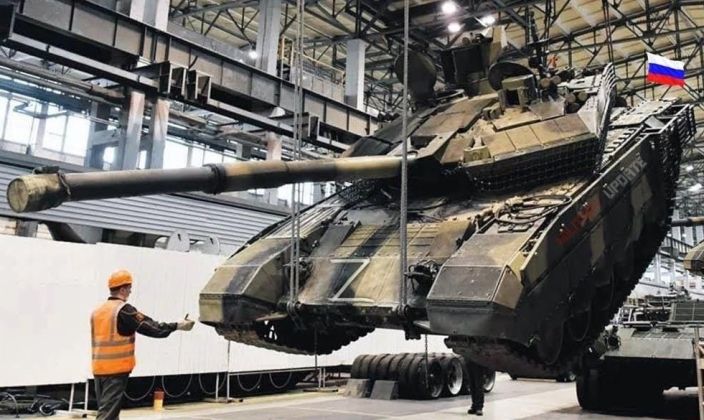
T-90M Tank at Uralvagonzavod
The Russian defence sector is preparing to bring a new class of main battle tank into production, the T-90M2, which with the aim of completing the first ten units at the Uralvagonzavod tank factory in 2026. According to leaked documents published by Frontelligence, the new tank will benefit from a revised the fighting compartment with refined transmission, installation of larger video-observation displays for improved crew situational awareness, and improvements to its reverse capabilities which have been found particularly lacking. It remains undertain whether existing T-90M tanks are also intended to be modernised to this standard, or whether the improved variant will only replace the baseline variant in production. The baseline T-90M has already seen its capabilities improved significantly over time, with a notable example being the integration of the country’s first Active Protection System, Arena-M, from late 2024.
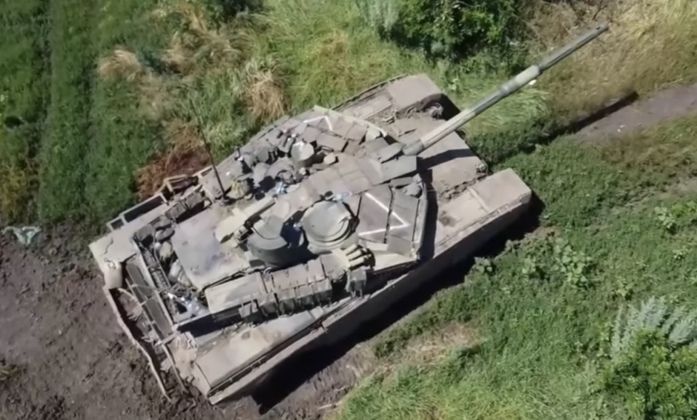
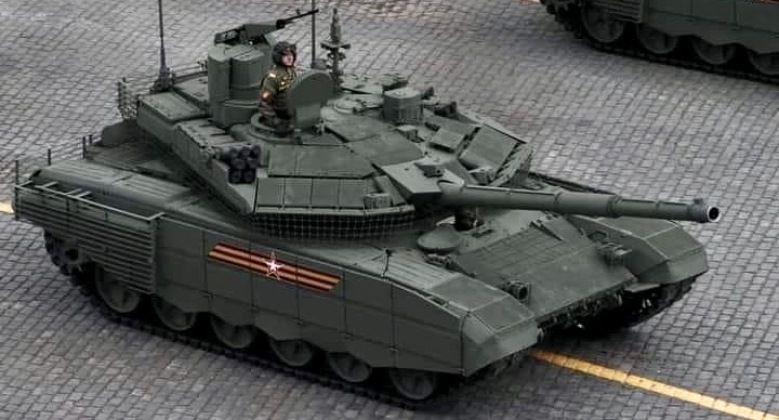
An assessment by the Conflict Intelligence Team published in June revealed that the Russian defence sector is on track to further significantly expand tank production, with output scheduled to reach 1,000 new tanks by mid-2028, and a staggering 3000 tanks by mid-2035. Russian industry has been able to respond to the surge in domestic demand for modern main battle tanks by more than tripling output within two years, with production in 2024 estimated at 280-300 tanks. With a larger known production scale than any other tank class in the world, the capabilities of the latest T-90 variants thus have significant implications for the balance of power in multiple theatres, most notably in Eastern Europe. Although the Uralvagonzavod plant is currently Russia’s only tank production facility, preparations are underway for the Omsktransmash plant near the Kazakh border to resume production of the T-80, a more costly tank design than the T-90 with higher mobility which saw production terminated in the early 2000s due to its much higher costs. The T-90M2 and an enhanced T-80 variant are expected to be produced in parallel at the two facilities.
