
Russian Air Force Receives New Batches of Su-57 Fifth Generation Fighters and Su-34 Strike Fighters
Military Watch Magazine Editorial Staff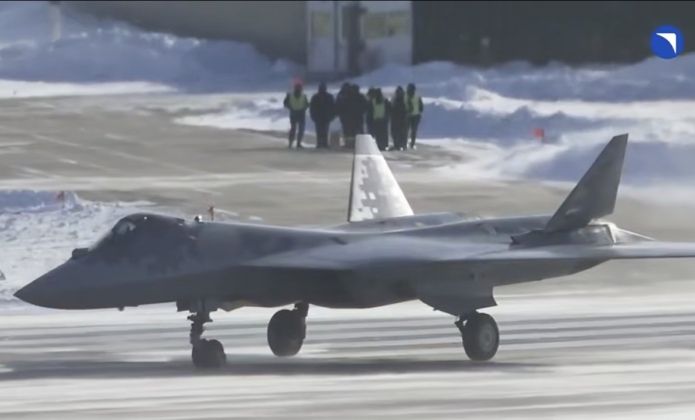
Newly Delivered Su-57 Fighter
New batches of Su-57 fifth generation fighters and Su-34 strike fighters were announced on December 23 to have been delivered to the Russian Air Force by the state owned United Aircraft Corporation (UAC). This follows the delivery of previous patches of Su-57s in mid-November and mid-September. Prior batches of Su-34s were received in April, June, September, October and in November. The two aircraft are being produced at higher rates than Russia’s other three production fighters the Su-30, Su-35 and MiG-29M/35, with orders to increase Su-34 production having been given by the Russian Defence Ministry in October 2023. Russian industry has also set a highly ambitious target of a 67 percent surge in the production of Su-57s in 2024, with 20 fighters expected to enter service this year compared to just 12 fighters in 2023 and only six fighters in 2022. This will nearly double the fleet size from 22 to 42 fighters. The size of the two confirmed Su-57 batches has not been disclosed, and it remains uncertain how close Russian industry has come to meeting ambitious production targets.
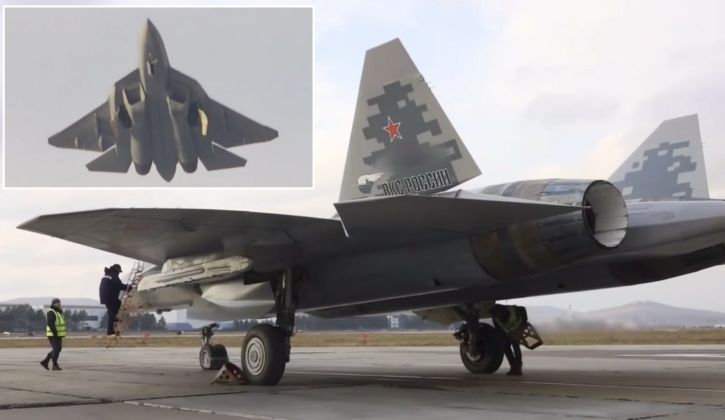
To accommodate expanded production of the Su-57, the Komsomolsk-on-Amur Aviation Plant in the Russian Far East in August saw new facilities opened in August, although these are considered unlikely to contribute to the expansion of production in 2024. It remains uncertain what scale the fighter’s production will reach, with this depending heavily both on foreign orders and the success of the development of the competing S-75 lightweight fifth generation fighter. The preceding Su-30, for example, saw the large majority of aircraft built being ordered by foreign clients rather than for the Russian Armed Forces. Although the Su-57’s direct predecessor from the fourth generation, the Su-27, was produced at rates of over 100 per year in the Soviet Union, the aircraft was not only much less costly to manufacture, but it was also built at a time when the USSR had a far larger defence budget in inflation adjusted figures and a much larger air force to accommodate new aircraft. With these production rates having been maintained exclusively to meet domestic demand, however, the large orders that are expected for the Su-57 from clients such as India and Algeria could facilitate production at rates approaching 40 aircraft per year in the early 2030s.
