
NATO Preparing For Maritime Blockade of Russian Civilian Trade with Focus on Arctic and Baltic - Reports
Military Watch Magazine Editorial Staff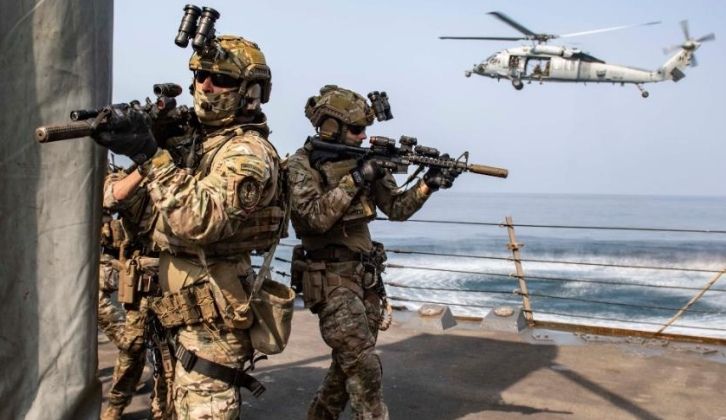
U.S. Coast Guard Maritime Security Response Team
US MoW
Russian Ambassador to Norway Nikolay Korchunov has warned that NATO members are planning to impose a maritime blockade of Russia, observing that this was aimed at “restricting freedom of navigation and violates international law norms.” Planned Western operations would involve “putting the Baltic-Arctic region on a barrack-like footing” through expanded military operations and exercises, with NATO members also developing plans for “a partial or complete naval blockade” of Russia. Norway, Sweden, and Finland were also reported to be “working together to increase military mobility through the development of transport and logistics corridors from west to east, as well as through cross-border use of bases and other military infrastructure.”
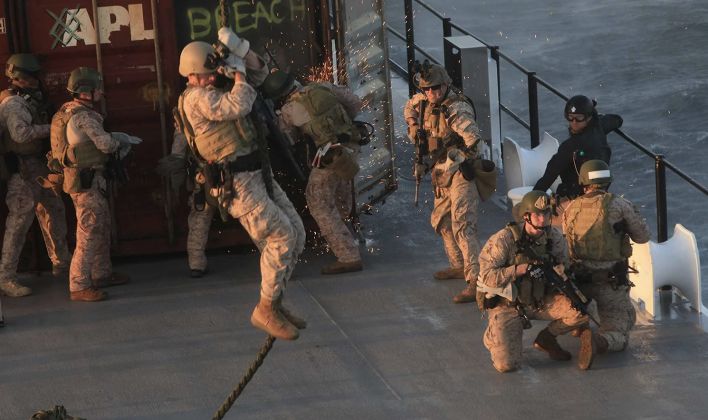
Korchunov warned that Western plans to use force to restrict Russian access to international waters represented a direct threat to the country’s national security, and would force Moscow to take countermeasures. His statement follows a report on February 13 that British Defence Secretary John Healey had met with his counterparts from Baltic and Nordic countries at the Munich Security Conference to discuss plans for illegal seizures of Russia-linked oil tankers in international waters. Forced takeovers of oil tankers by Western Bloc states would be far from unprecedented, with the U.S. Armed Forces having initiated an unprecedented series of operations targeting tankers in international waters from late 2025, namely those shipping Venezuelan oil for export, with a primary focus on crippling the country’s economy. The U.S. Navy and Coast Guard on February 9 targeted the oil tanker Aquila II in international waters in the Indian Ocean, which is at least the eighth vessel targeted for forceful seizure by U.S. forces.
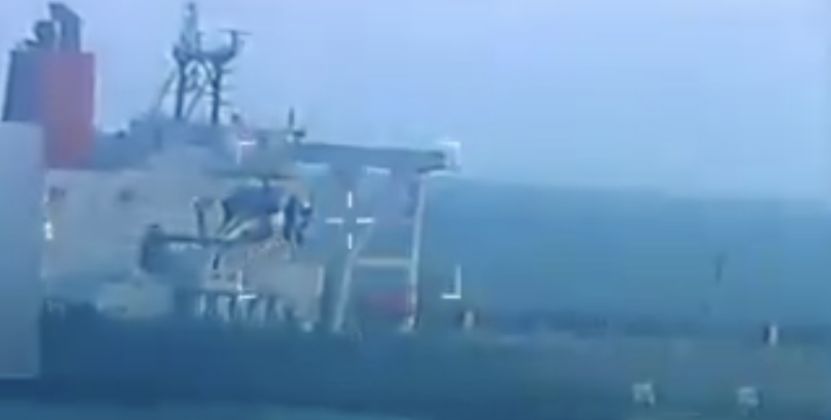
Commenting on ongoing Western operations against the civilian shipping of targeted countries, Russian Foreign Minister Sergey Lavrov recently warned: “the U.S. objective – to dominate the world economy – is being realised using a fairly large number of coercive measures that are incompatible with fair competition.” To achieve this objective, the U.S. leadership “want to take control of all the routes for providing the world’s leading countries and all continents with energy resources.” “A ‘war’ against tankers in the open sea is being waged,” he added. The rapid expansion of NATO force deployments in the Arctic, which have brought forces increasingly close to Russian territory, have widely been interpreted by analysts as being intended in part to ensure an ability to exercise a degree of control over the Northern Sea Route, a recently opened passage through the Russian Arctic that provides an alternative route for civilian trade, including oil shipments, away from Western-controlled waters.
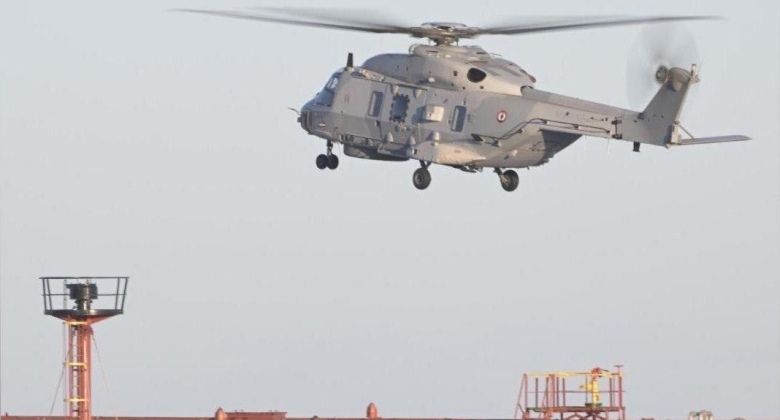
The Northern Sea Route made headlines in October 2025 after the Chinese merchant fleet made its first ever container shipment to Europe through it, supported by Russia’s nuclear icebreaker fleet. This nearly halved the shipping time compared to southern routes passing through the Malacca Strait and Suez Canal. Attempts by Western Bloc forces to target shipping there would be in line with broader trends in their operations. The NATO member states’ targeting of civilian shipping is expected to go far beyond oil shipments, and include the targeting of a wide range of civilian exports. In November 2025, for example, U.S. special forces boarded a cargo ship in the international waters in the Indian Ocean, securing, removing and destroying civilian goods that were being shipped from China to Iran. As early as 2019 U.S. forces boarded and commandeered a North Korea coal export ship, the Wise Honest, which was subsequently sold and the funds appropriated by the U.S. Treasury. The U.S. Naval Institute in 2020 proposed hiring mercenary privateers to target Chinese civilian shipping in a similar way as an option to escalate pressure.
