
Russia’s Most Advanced Tank Makes Rare Appearance: How Has the T-14 Armata Program Evolved in Wartime?
Military Watch Magazine Editorial Staff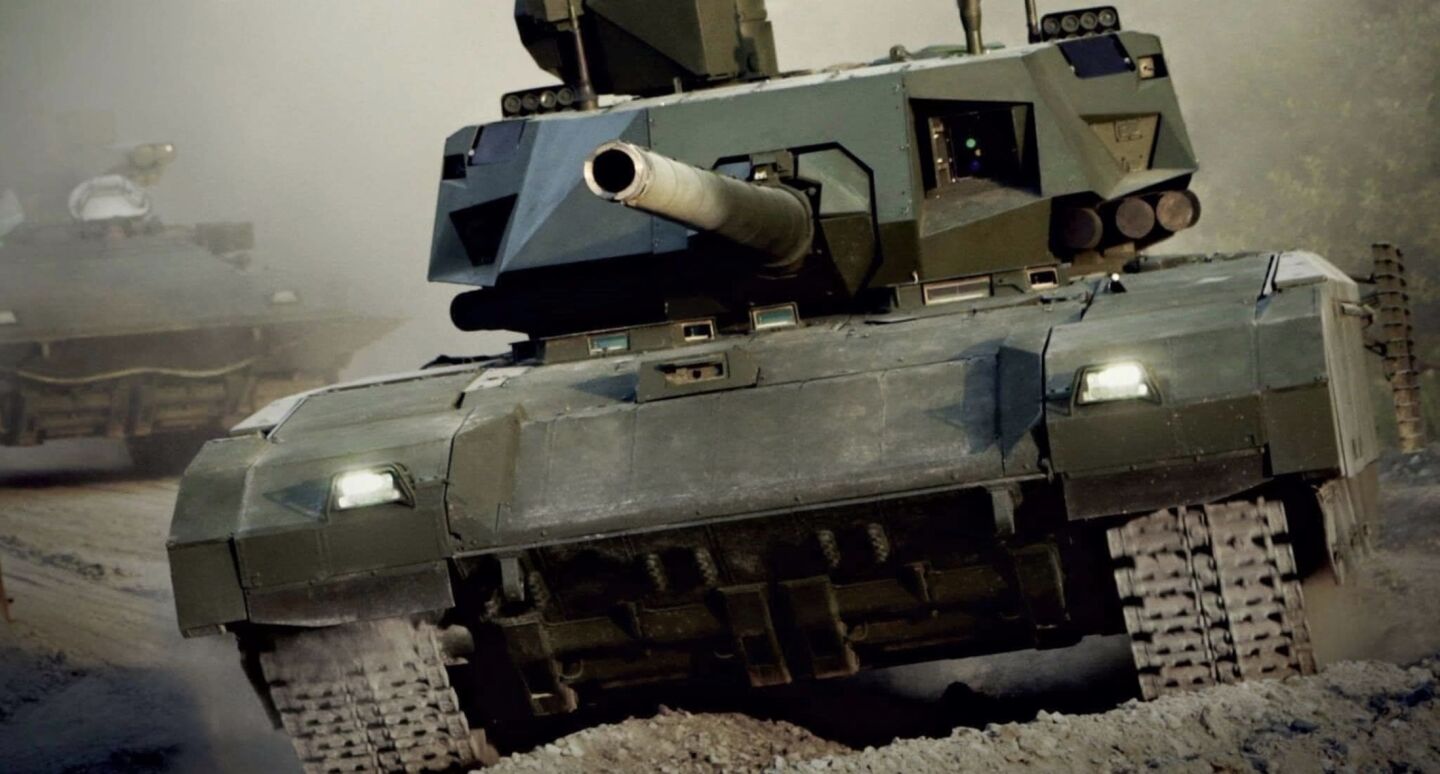
T-14 Tank Prototype
The widespread circulation of footage of T-14 tank at a firing range in exercises has drawn attention to the status of the Russian next generation tank, which since the outbreak of full scale hostilities in the Ukrainian theatre in early 2022 has become increasingly uncertain. The T-14 has generated persistent publicity, which has been defined less by operational deployment than by repeated reports of testing, possible deployment, withdrawal, production difficulties and appearances at military exhibitions. The contrast between the tank's prominent status in Russian military publicity and its apparent total absence from the war zone has made it one of the clearest examples of the difficulties Russia’s defence sector has faced in bringing new generations of military equipment into service.
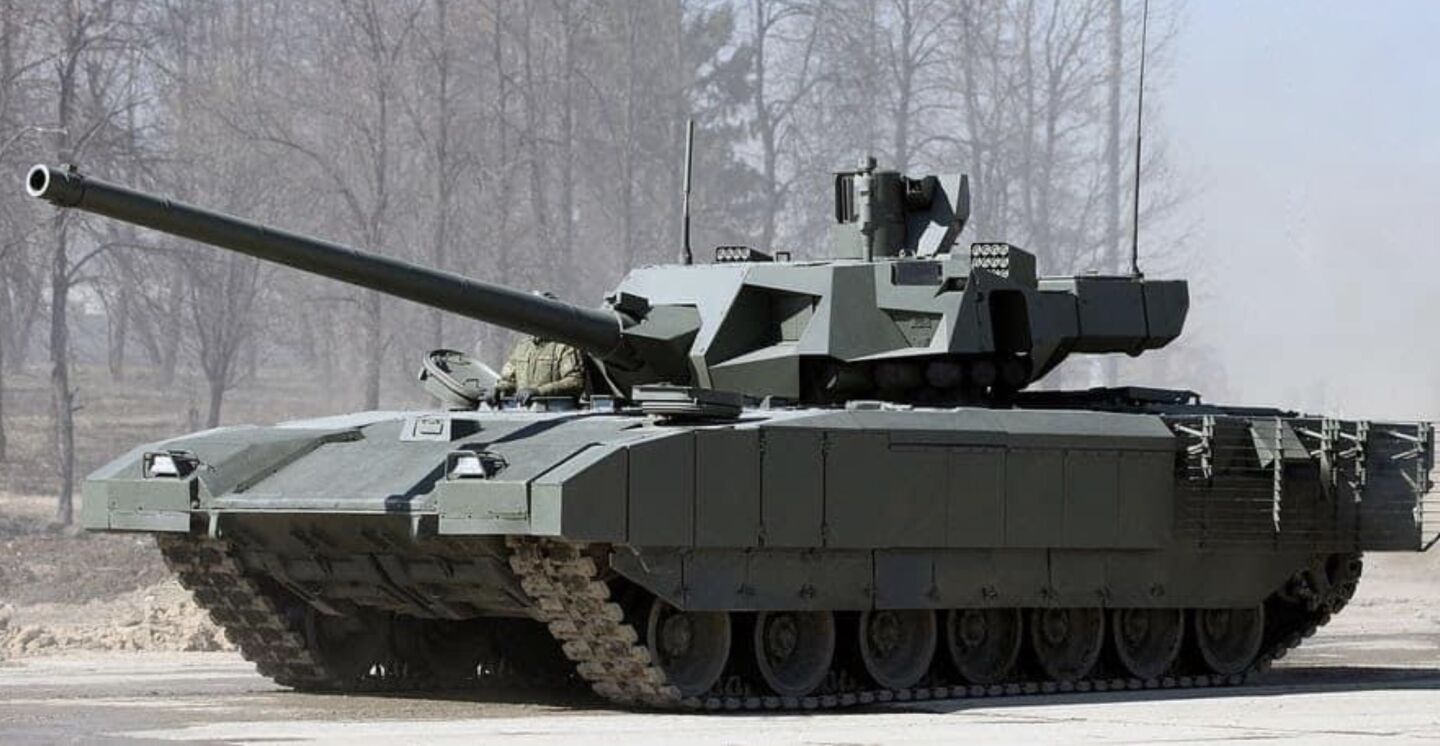
The T-14 appeared in the Moscow Victory Day parade in May 2022, alongside T-90M tanks and other modern Russian equipment. It was also displayed at the Army 2022 military-technical forum in August, where Rosoboronexport presented an export version of the tank. The export presentation was significant because Russia has continued to market the vehicle internationally despite non having been delivered to the Russian Army itself. By late 2022, reports emerged that the T-14 may enter service and operate in the Ukrainian theatre in a limited capacity, with images and videos emerging In November and December showing T-14s conducting training, including footage associated with training areas used by mobilised Russian personnel.
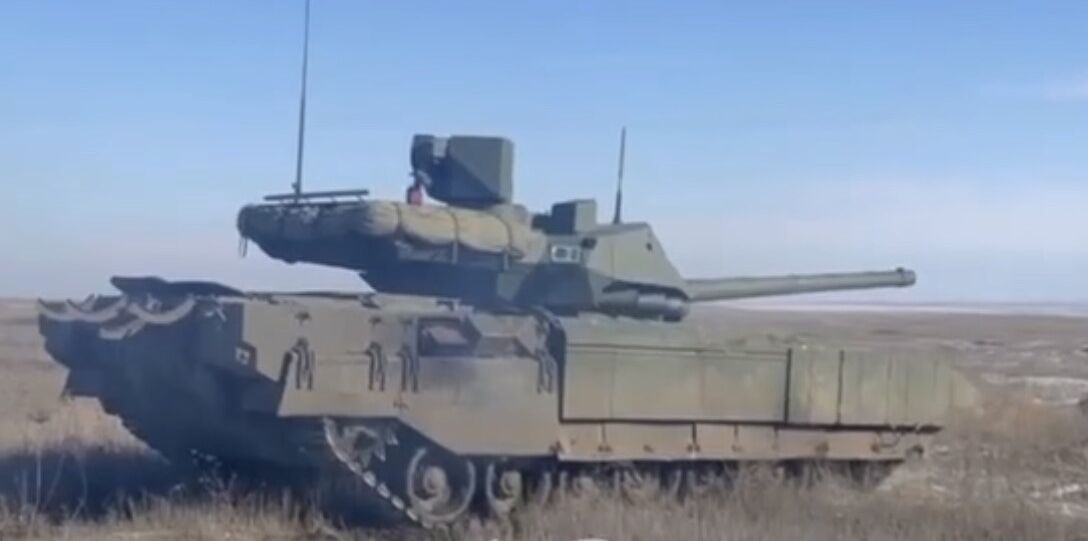
In December 2022 Russian television presenter Vladimir Solovyov published footage of what he described as combat coordination involving T-14-equipped tank battalion. Some Russian and foreign reports interpreted the footage as evidence that the tank was being prepared for deployment to Ukraine, although there was no independent confirmation that the vehicles had crossed into the theatre at that point. The possibility of deployment received particular attention in January 2023 after British Defence Intelligence assessed that Russia was likely considering sending a small number of T-14s to participate in frontline operations. Satellite imagery from late December had reportedly shown T-14s at a training area in southern Russia associated with pre-deployment activity. T
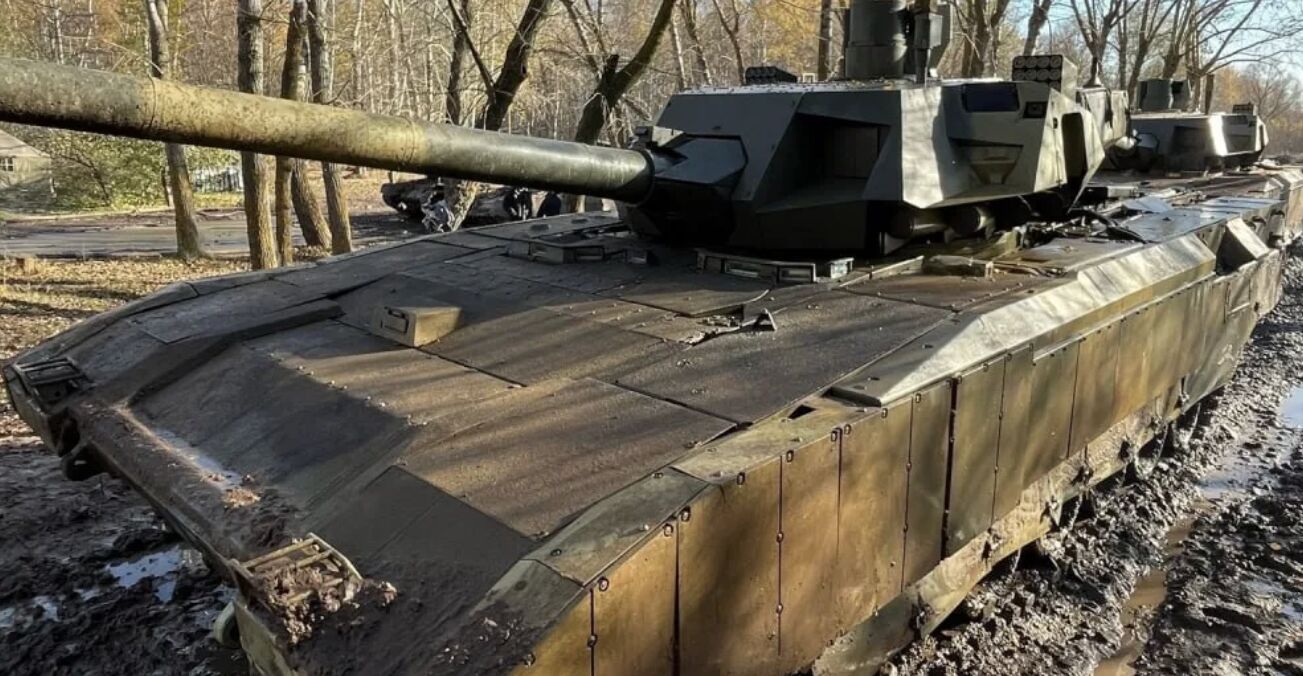
On April 25, 2023, Russia media outlet RIA Novosti, citing an unnamed source, reported that T-14s had begun firing on Ukrainian positions but had not participated in direct assault operations. According to the report, the vehicles had received additional protection on their flanks and their crews had undergone combat coordination. Russian reporting continued to claim that the T-14 was being evaluated in Ukraine, and on July 19, TASS quoted a defence-industry source as saying that several T-14s belonging to the Southern Battlegroup had been used in combat to assess their performance and had subsequently been withdrawn from the frontlines. A second source said that the tank had entered service with units of the Southern Military District, although the necessary trials were continuing.
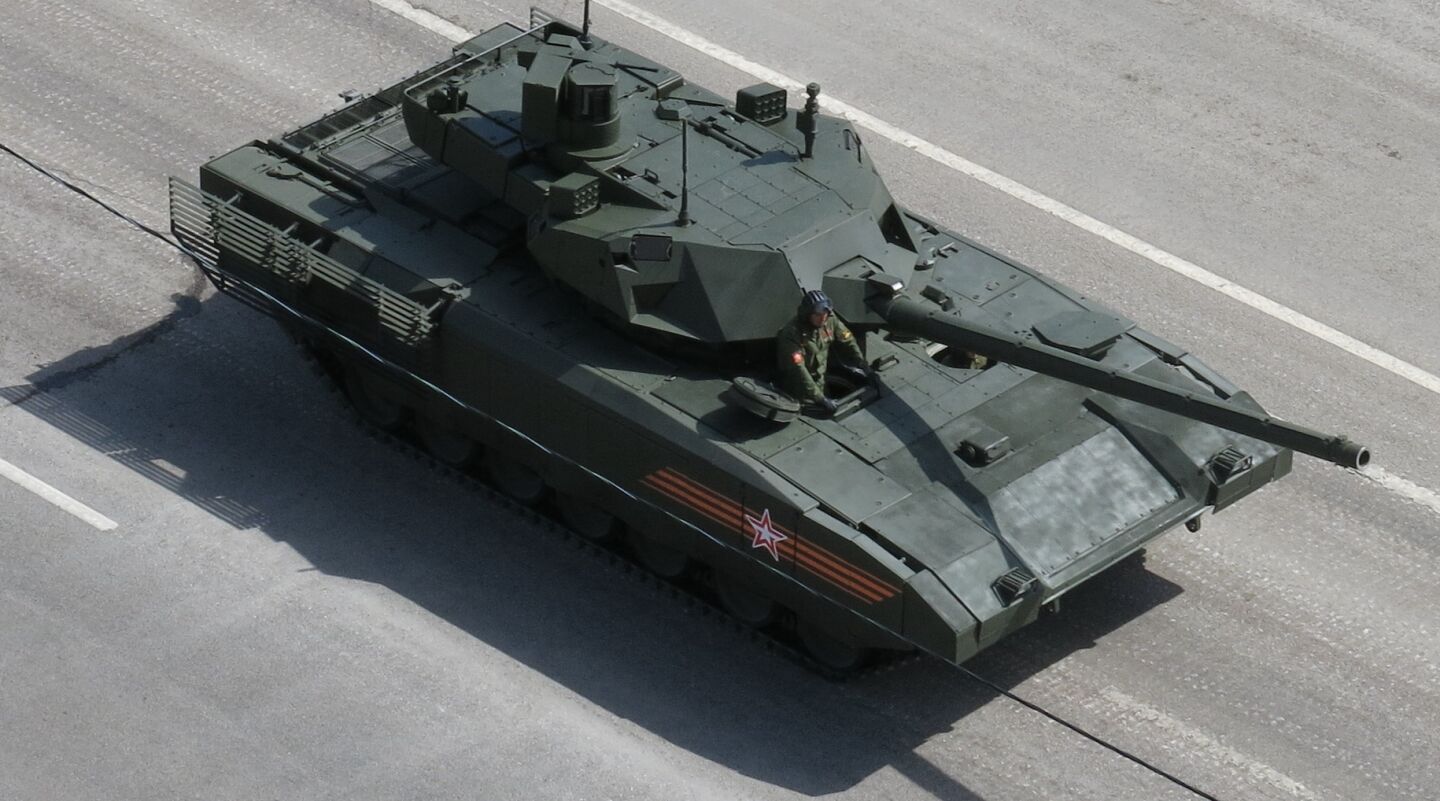
On August 22, 2023, TASS reported another defence-industry source as saying that the T-14 had been used several times in the Ukrainian theatre and was being modified on the basis of its experience there. Subsequently in March 2024, however, Rostec chief Sergey Chemezov said that the Russian Army was not using the T-14 in Ukraine because of its high cost, although he still described the tank as superior to existing tanks in terms of functionality. This explanation has been seriously questioned, on the basis that even limited service entry would providing experience to further refine the design, could significantly increase the possibility of exports, and could provide disproportionate benefits for the Army’s capabilities by providing optimal command tanks. The T-14 far greater combat potential than any other Russian or Western tank types has made its lack of procurements difficult to explain based on cost alone.
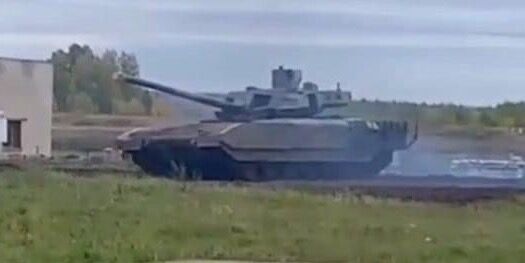
In April 2024 new footage of from a Russian test range showed personnel training to operate T-14 tanks during exercises, fuelling speculation that the type may be intended to belatedly enter service in the name future. The release of the footage was closely followed by a TASS report indicating that the tank was undergoing state and troop trials, and would enter service before January 2025. This did not occur, however, and while the T-14 was expected to be the world’s first fourth generation tank to enter service in the 2010s, delays allowed the Chinese Type 100 to achieve this landmark goal in 2025 with a more advanced and better refined design. The future of the T-14 program thus remains highly uncertain, and it is unclear whether it is intended to be brought into service, whether it is a viable product for export markets, and to what extent its appearances are intended primarily for public relations purposes.
