
Russia Strengthens Arctic Air Defences as NATO Pivots Northwards
Military Watch Magazine Editorial Staff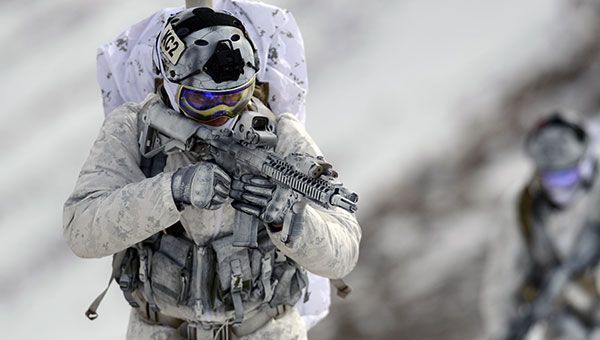
U.S. Special Forces in Winter Gear
As Western powers increase investment in Arctic warfare capabilities, Russia’s armed forces have begun to deploy increasingly sophisticated systems to the country’s far north to better contend for resources in the region. Among a number of other recent developments, the U.S. Marines have increased their focus on training for war in sub freezing temperatures and constructed new strategically located facilities in Norway for such purposes. A U.S. carrier strike group meanwhile carried out operations in the Arctic Circle in 2018 fir the first time in 27 years - a strain in the warship’s capabilities which sent a strong signal to Russia regarding Western resolve to contend for influence in the resource rich region. More recently in early 2019. Britain’s Defence Secretary announced the launch of a ten year programme to train over a thousand Royal Marines for Arctic warfare, with the intention of building up to a brigade strength deployment in the near future. He further announced that Britain’s new submarine-hunting aircraft would fly over the Arctic in 2020 in their first deployment to the region. As part of Russia’s response to this emerging perceived threat, Russian forces have themselves deployed a number of new assets to the region. Many of these high end systems have been focused on air defence against potential enemy missile and air attacks.
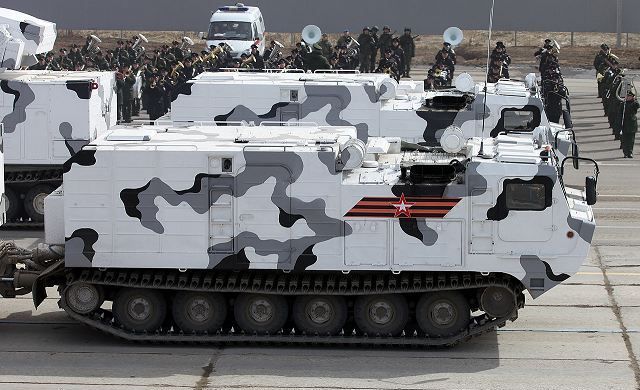
Early 2019 saw the Russian military resume Arctic patrols by MiG-31 Foxhound heavy interceptors. These long range platforms are capable of exceeding speeds of Mach 2.8 and reaching altitudes of 21km, which combined with their powerful sensors and long range munitions gives them coverage of much of the Arctic from Russian territory. The MiG-31 is capable of deploying advanced air to air munitions at extreme ranges - including the 300km range R-33, 400km range R-37 and the Kh-47M2 Kinzhal hypersonic ballistic missile - a unique and highly lethal platform capable of both anti shipping and air to ground strikes at ranges of approximately 2000km. While Foxhounds provide an advanced high end long range air defence capability, this is complemented by a growing number of Pantsir-SA and TOR-M2DT short range air defence missile systems. The former is mounted on a DT-30 twin off-road vehicle - unlike its more widely used wheeled counterpart the Pantsir-S, and replaces twin autocannons with an additional six surface to air missiles - bringing the total number to 18.
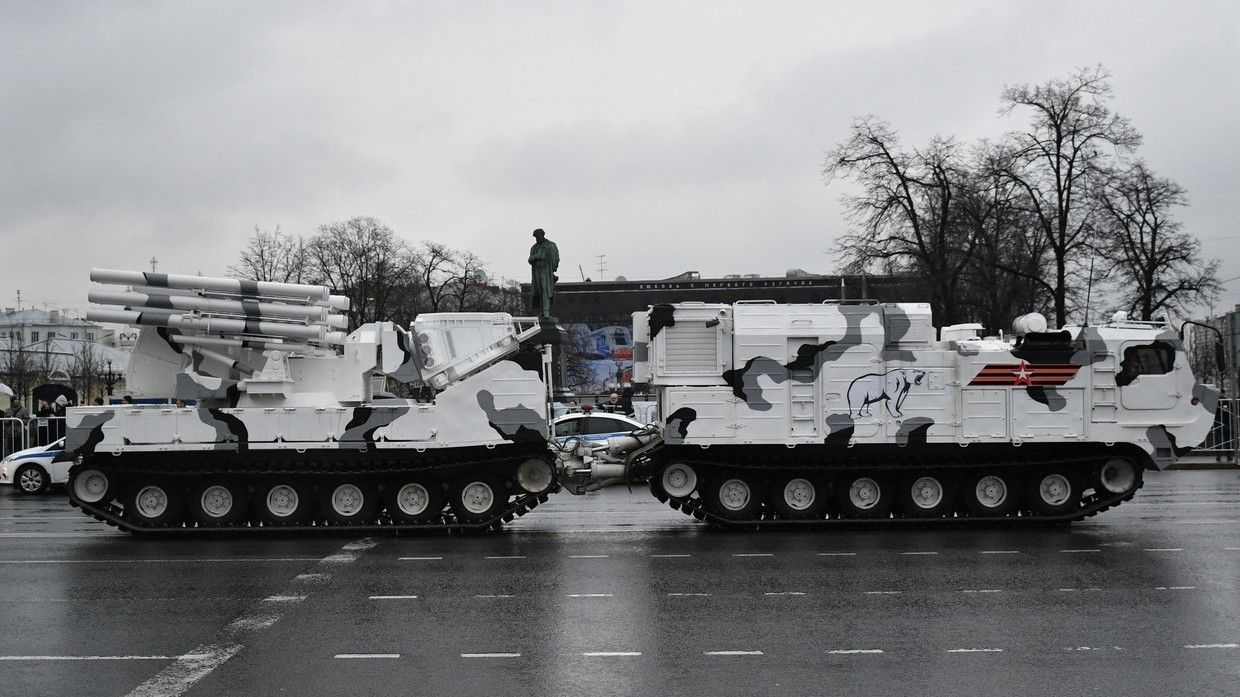
The TOR-M2DT is a variant of the TOR-M2 designed specifically for use in the Arctic theatre, and makes use of a tracked launch vehicle for better all-weather capabilities. The system is capable of deploying 9M331 and 9M332 surface to air missiles through a vertical cold launch system, and these missiles make use of a nose mounted thrust vectoring jets for a high degree of manoeuvrability. The range of these missiles is approximately 7km, and they are capable of intercepting both missiles and enemy aircraft. These systems are intended to defend command centres in the Arctic against potential attacks, and are capable of operating at temperatures as low as minus 50 Celsius. The Pantsir-SA and TOR-M2D are likely to be two of the first of many modern Russian missile systems modified for Arctic use - and the termination of the intermediate range nuclear forces treaty could well facilitate the deployment of advanced land based cruise or ballistic missiles with longer ranges to better assert Russian control of the theatre in the event of conflict with the Western Bloc.
