
Russia Scrambles Su-27 and Su-35 Fighters to Closely Intercept British RC-135W Recon Jet
Military Watch Magazine Editorial Staff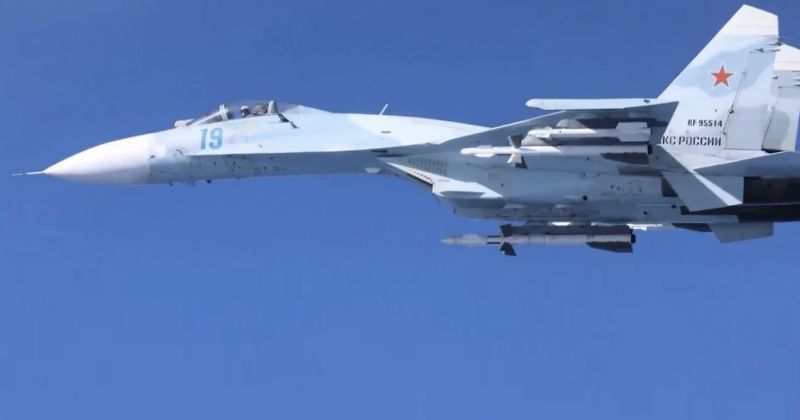
Russian Su-27 Fighter During Interception of British RC-135W
The Russian Aerospace Forces scrambled Su-35 and Su-27 fighter aircraft to repeatedly intercept a British Royal Air Force RC-135W Rivet Joint reconnaissance aircraft operating near Russian forces over the Black Sea. The British Ministry of Defence on May 20 published footage of the incidents, which included a very close approach by a Su-35 that triggered the British aircraft’s onboard emergency systems and automatically disable its autopilot. A Su-27 subsequently made six passes directly in front of the RC-135, closing to within six metres of its nose. The engagements occurred at time of high tensions between Moscow and London, as British forces have been actively involved in the ongoing Russian-Ukrainian War with significant deployments of personnel, including Royal Marines, for operations on the ground.
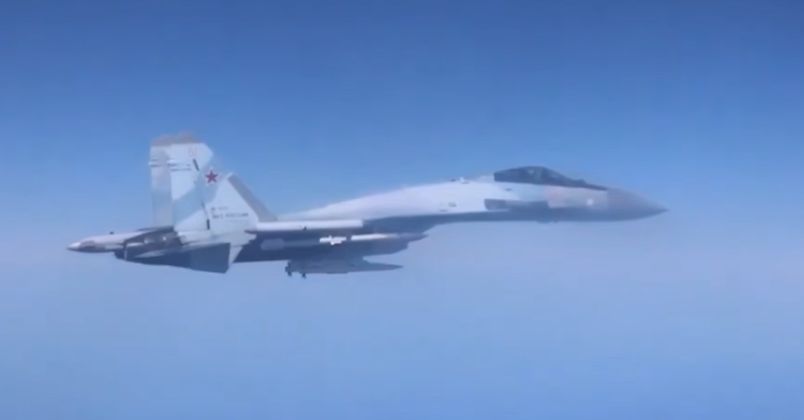
Russian fighters have been involved in multiple interceptions of NATO reconnaissance aircraft over the Black Sea, as Western Bloc aircraft have intensified activities largely to provide intelligence to Ukrainian forces for use in the ongoing war effort against Russia. RC-135s are equipped to intercept communications, collect intelligence on radar and other signal emitters, and locate enemy command and control assets. Their presence is particularly important due to limitations on Ukraine’s own intelligence collection capabilities. Intelligence collection by Western aircraft has complemented the deployment of several hundred satellites to provide intelligence and weapons guidance to support the Ukrainian war effort.
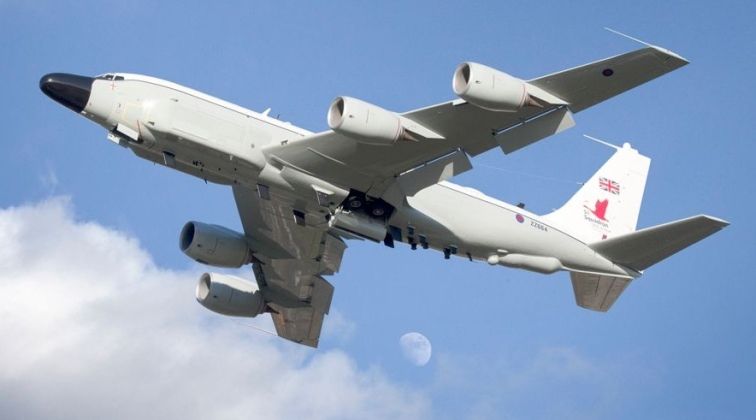
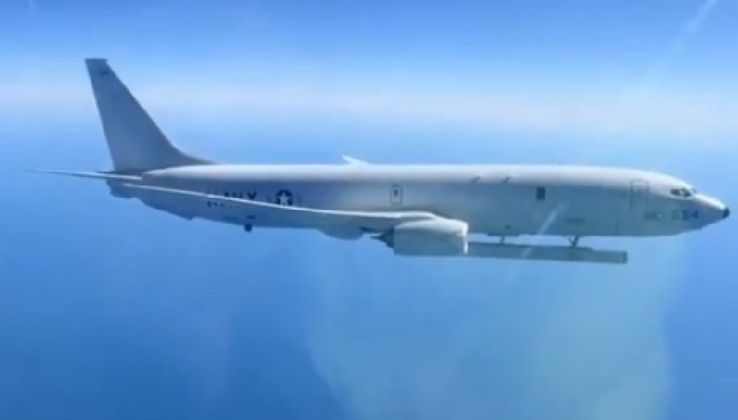
Interceptions of Western surveillance aircraft in one case resulted in a Russian Su-27 firing a warning shot while intercepting a British RC-135W October 20, 2022, launching a missile. The British aircraft have at times had fighter escorts, with Russian Su-27s having in July 2024 intercepted an RC-135 that was accompanied by two Eurofighter combat jets approaching the country’s borders over the Black Sea. A month prior, the U.S. Air Force deployment a Northrop Grumman RQ-4A Global Hawk surveillance drone for flights over the Black Sea, with reports from Russian sources at the time indicating that the aircraft was being used to survey the country’s air defences to support future air defence suppression efforts in the region. In August 2025 the U.S. Navy debuted a new sensor configuration for the P-8A Poseidon maritime patrol aircraft over the Black Sea, with the aircraft integrating the rare and highly secretive AN/APS-154 Advanced Airborne Sensor radar pod allowing it to survey targets deep inside Russian territory.
The Su-27 was developed during the Cold War and entered service in 1984 as the most capable superiority fighter in the Soviet fleet, and after being tested in the U.S. in the 1990s it was widely assessed to have significantly surpassed the capabilities of Western fighter types. The fighter is today considered largely obsolete, however, although a single regiment’s worth in Russian service has been modernised to the Su-27SM2/3 standard with updated avionics. The Su-35 is a heavily enhanced derivative of the design that entered service 30 years later in 2014, and uses a high composite airframe, integrates AL-41F-1S next generation engines, and benefits from new ‘4+ generation’ avionics and weaponry including a phased array radar and modern data links. Su-27s have gradually been withdrawn from service, and have not been deployed in significant numbers for combat operations in the Ukrainian theatre, while the Su-35’s operations against Ukrainian forces over four years have made it the world’s most intensively combat tested fighter type of the post-Cold War era for air-to-air operations.
