
Russia’s Vital Soviet Era Tank Reserves Are Almost Totally Depleted By Wartime Attrition: Will North Korean Tanks Soon Fill Its Ranks?
Military Watch Magazine Editorial Staff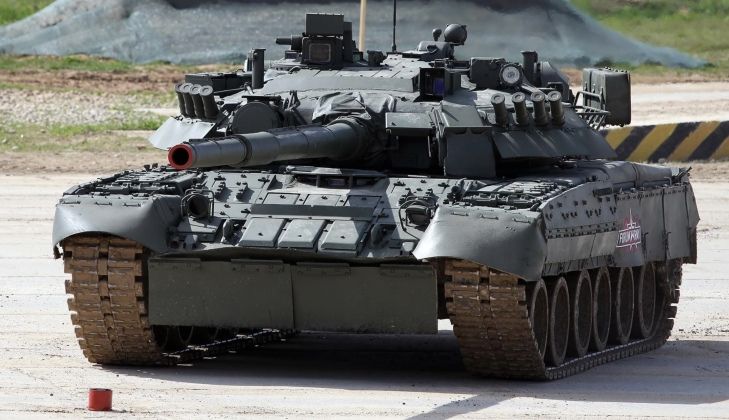
T-80 Main Battle Tank
Satellite imagery has indicated that the Russian Armed Forces’ reserves of main battle tanks are suffering from increasingly serious depletion, and are close to exhaustion, following over four years of high intensity conflict in the Ukrainian theatre, and the expansion of the Army’s frontline armoured units. Preceding the outbreak of full scale hostilities in February 2022, Russia had for decades maintained by far the world’s the largest reserves of main battle tanks, which by several estimates stood at over 20,000 vehicles inherited from the Soviet Union. These reserves were drawn down significantly in the 2010s, however, with the large majority of T-54/55, T-62 and T-64 tanks being scrapped, while some vehicles from these reserves were also delivered abroad, including T-72s sold to Venezuela and T-62s donated to Syria. Russian armour suffered particularly high rates of attrition in the opening months of hostilities, as Ukrainian forces, supported on the ground by advisors and combat personnel from NATO member states such as the British Royal Marines, made effective use of anti-tank missiles such as the Javelin to inflict heavy losses.
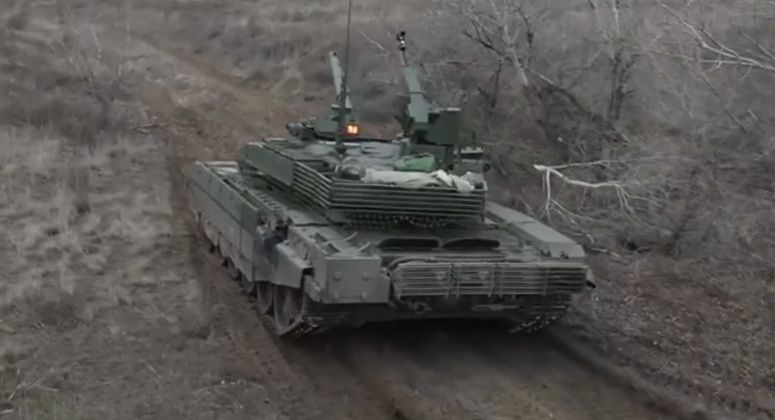
The most recent available satellite imagery indicates that the Russian Armed Forces retain only 2,088 tanks in storage across nine identified facilities, including T-54/55s, T-62s, T-64s, T-72s, and T-80s. The 904th Base, where there are approximately 50 tanks, functions as a transit hub between other storage facilities and frontline units, indicating that these are already being prepared for delivery to Russian Army units. The depletion of reserves to just 2,000 vehicles is a particularly serious development when considering that these likely represent some of the most severely deteriorated and least usable vehicles from reserves, as the tanks in better condition that required less refurbishment were removed from storage first. T-72B and T-80BV/U/UD in particular, which represent relatively modern and capable designs with high modernisation potentials, are likely to be in very poor condition, with their having remained in reserve storage for the last four years indicating that they may not be suitable for service.
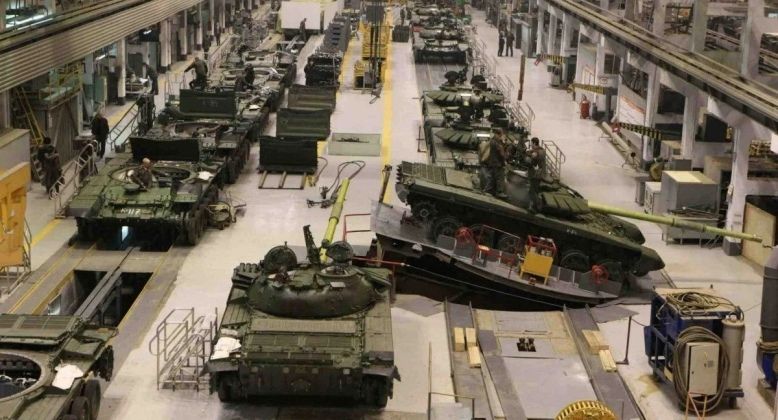
Russia’s defence sector significantly increased production of main battle tanks, from approximately 90-110 per year in 2020-2021, to 280-300 tanks in 2024, which represents an effective tripling of output. Nevertheless, this remains far below Soviet era production levels of around 4,000 T-72 and T-80 tanks per year in the mid-late 1980s, and is wholly insufficient to replenish losses in the Ukrainian theatre. Russia’s inability to achieve a greater expansion of its tank production capacity despite four years of concerted efforts and considerable investments reflects the extent to which the country’s industrial base has declined substantially since the disintegration of the Soviet Union, particularly when considering that the T-80 tanks that made up the bulk of Soviet production were more costly and far more complex than the T-90M tanks currently in production.
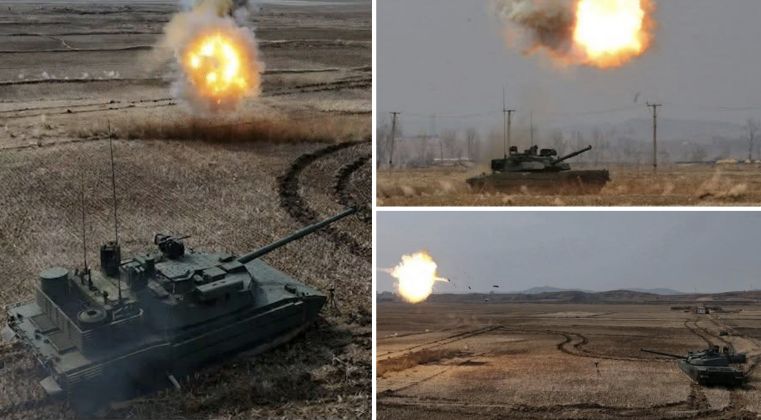
Alongside the destruction and capture of tanks in the Ukrainian theatre, a further factor depleting Russian tank reserves has bee the expansion of Russian Army frontline units, which have increased from approximately 3,000 tanks at the start of the war, to an estimated more than 4,000 today. Analysts have speculated that as shortages are poised to worsen in the near term, the Russian Defence Ministry could seek to purchase North Korean main battle tanks to replenish its fleet, with the North Korean Chonma 20 tank appearing to have broadly comparable capabilities to the T-90M. The scale of North Korean tank production, however, remains entirely unknown. Vast North Korean reserves of T-54/55 and T-62 tanks could also be made available for export. Russia’s defence sector is projected to gradually increase output of T-90 tanks, with an assessment by the Conflict Intelligence Team indicating that output will reach a landmark 1,000 new tanks by mid-2028, and 3000 tanks by mid-2035, meaning a priority will be to manage shortages until this expanded capacity can be achieved.
