
The World’s Largest T-64 Tank Fleet Has Been Fighting Russia For Four Years: How Has It Fared?
Military Watch Magazine Editorial Staff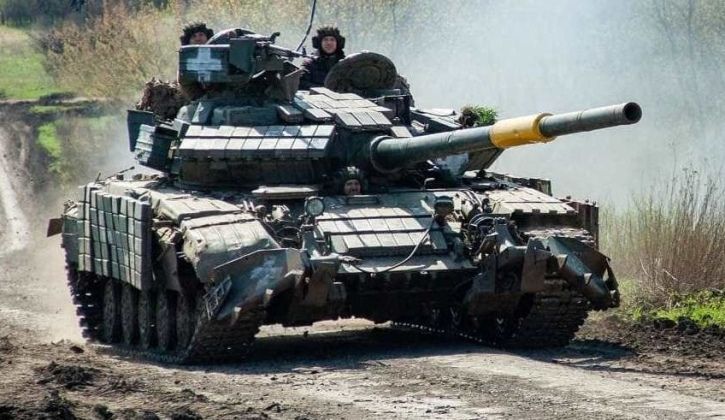
Ukrainian Army T-64 Tank
The Ukrainain Army is today estimated to field the world’s largest fleet of T-64 main battle tanks, with the vehicles having continued to form the backbone of its forces despite four years of attrition and high intensity combat with Russian forces from February 2022. Despite the small size of the Ukrainain economy, the country was not only able to field Europe’s largest tank fleet before the outbreak of hostilities, but also to comprise it of complex high cost vehicles, with the T-64 being considerably more maintenance intensive and mobile than the T-72s and T-90s that form the backbone of the Russian fleet and the fleets of most Soviet successor states. This was a result of the fact that Ukraine inherited T-64s in disproportionately high quantities after the disintegration of the Soviet Union, with the vehicles today being over 40 years old.
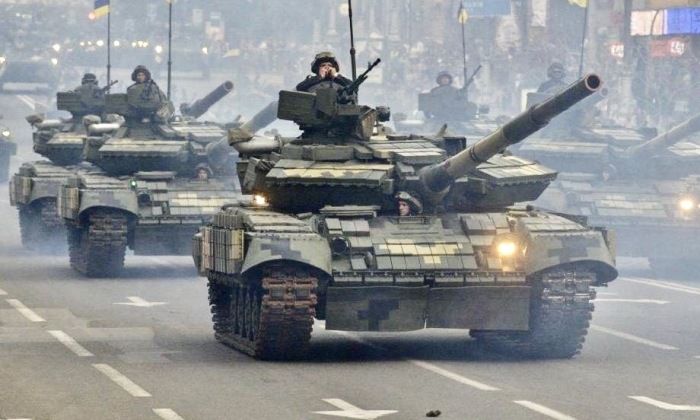
The T-64 is one of three tank types of its generation developed in the Soviet Union, and following its service entry in 1964, the simpler and less costly T-72 was brought into service in 1973, followed by the significantly more costly and capable T-80 in 1975. The T-64 was near unanimously considered to have placed the Soviet tank fleet 15-20 years ahead of those of its closest competitors abroad, with its pioneering advanced composite laminate armour, reduced crew requirements from four to three, integration guided anti-tank missiles, and use of a piston five-cylinder diesel engine to provide high mobility, placing it in a class by itself. Its firing rate of ten rounds per minute also far exceeded that of any Western Cold War era tank type. A disproportionate number of T-64s were based in Ukraine for logistical reasons, since the tank was designed and built in Kharkov, with 2,340 T-64s inherited when the USSR disintegrated, including 1,574 modern T-64B variants. With most Soviet successor states prioritising the T-72 for retention in service, while the T-64’s elite status had prevented it from being marketed for export during the Soviet era, Ukraine quickly became the only major operator of the tank
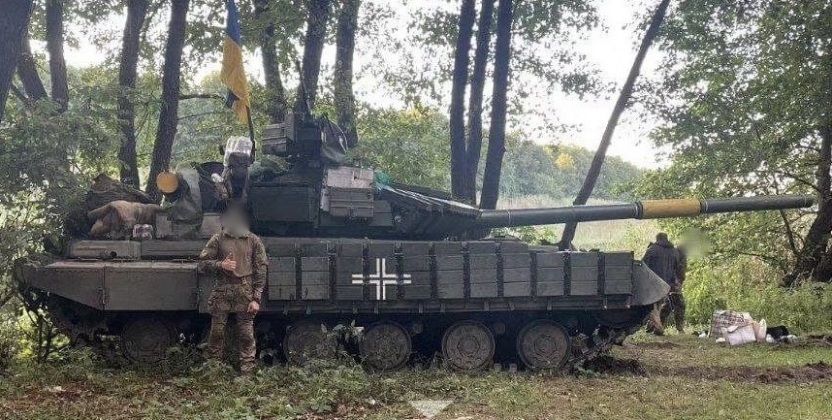
Although revolutionary during the 1960s and 1970s, the T-64 was by the turn of the century largely considered obsolete. Unable to integrate modern munitions, their most capable projectiles date back to the mid-1980s, seriously limiting their penetrative capabilities against even lower end Russian tanks such as the T-73B3. The T-64’s weak base armour, and the age of its explosive reactive armour, have ensured that modern Russian anti-tank projectiles which are technologically over thirty years ahead of those in Ukraine were able to penetrate Ukrainian tanks reliably. Nevertheless the limited number of tank-on-tank engagements in the Ukrainain theatres, and the emphasis both sides have placed on using tanks for infantry support, has allowed the T-64 to play a significant role in the conflict. The fact that more modern tanks, such as the Leopard 2A6 and Russian T-80BVM have proven to be similarly vulnerable to attacks by drones and loitering munitions has meant the T-64’s disadvantages relative to other tank types in the conflict have been less overwhelming that was initially expected.
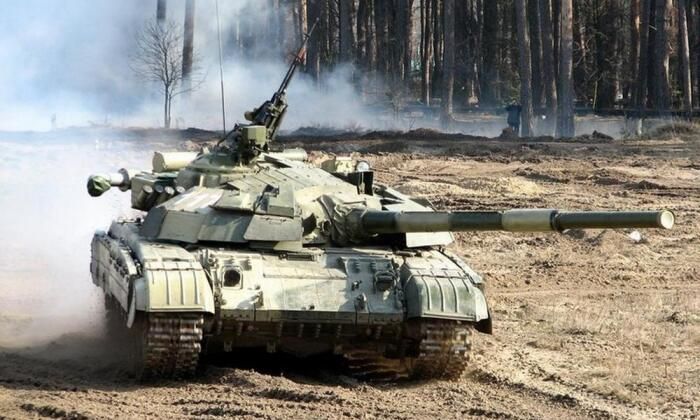
As the Russian-Ukrainian War increasingly devolved into a war of attrition, multiple tank types that are significantly less capable than the T-64 have been brought into service on both sides. These include older T-72A, T-62 and T-55 tanks brought out of storage and into service in Russia, and T-55, Leopard 1, and Leopard 2A4 tanks donated to Ukraine by NATO members. Although far from outstandingly old or obsolete by the standards of the wider fleets being used in the war, the wear on the T-64 fleet from decades of use, and the type’s inherent complexity and high maintenance requirements compared to most other Soviet designs such as the T-72, have reportedly contributed to very low availability rates across the Ukrainain tank fleet.
As revealed by Ukrainian armoured warfare specialist Mykola Salamakha, currently only a third, and in some cases just a fifth, of the Army’s tanks are considered combat-ready. He noted that poor use of the vehicles, including for operations focused on boosting morale, have been an important contributor to losses, lamenting: “They send a tank forward just to show the infantry they have support — we lose them in such operations.” Although Ukraine’s strategic partners in NATO have not had reserves of T-64s to replace its losses, the significant numbers in storage in the country have allowed losses to be replenished.
