
Was Russia’s New R-77M Enhanced Air-to-Air Missile Key to its First Su-35 Kill Against a Ukrainian F-16?
Military Watch Magazine Editorial Staff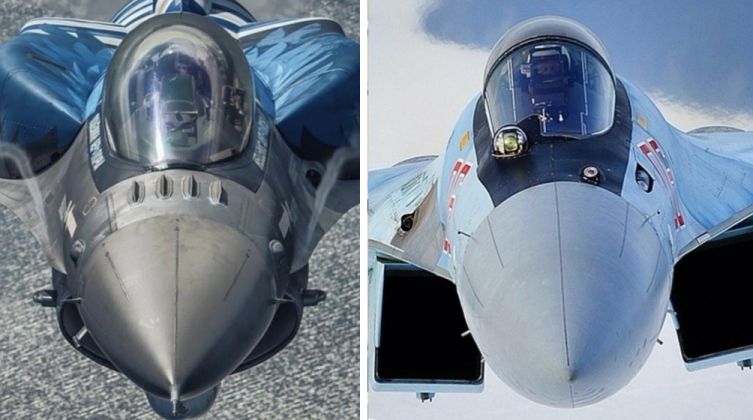
F-16 (left) and Su-35 Fighters
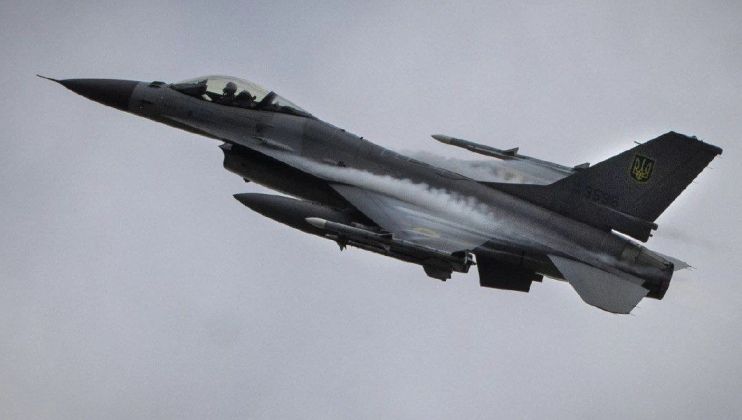
Following reports on May 15 that a Russian Aerospace Forces Su-35 fighter achieved the type’s first ever kill against a Western fighter type, a Ukrainian Air Force F-16, analysts have widely speculated on the possible conditions of the engagement. Little was reported regarding the engagement, other than that an active radar guided air-to-air missile was launched to destroy the target at beyond visual ranges, and that the missile launch was recorded by Ukrainian monitoring channels. Ukrainian F-16 units have been forced to adopt radically different tactics to be able to operate in a war zone dominated by much more capable fighters like the Su-35, including restricting flights to low altitudes to create ground clutter that reduces the effectiveness of Russian radar tracking and missile seekers, and operating far behind the frontlines to minimise the number of engagements.
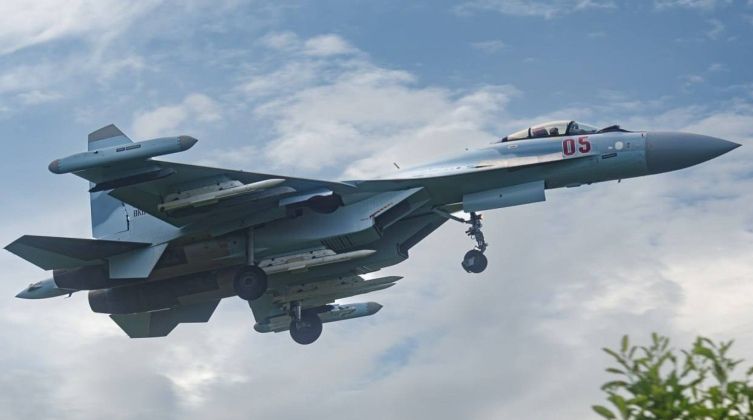
Uncertainty surrounding the kind of weaponry used to achieve the shootdown of the F-16 has raised the possibility that the Su-35 may have been equipped with a new missile type, against which usual Ukrainian evasive tactics were not effective. The R-77M active radar guided air-to-air missile was confirmed in July 2025 to have begun to be used to equip the fighters, and was developed to provide a primary anti-aircraft weapon succeeding the ageing R-77-1 and R-27. The R-77M is considered significantly more capable of engaging low altitude targets at extreme ranges, as not only is its range close to double that of the R-77-1, but it uses an AESA radar in its homing head to provide greater immunity to jamming and a longer target lock on range. The missile also uses an active phased array antenna to provide a fuller and wider angle picture of its target, making it far more difficult to evade even for manoeuvrable fighter-sized targets.
The R-77M’s much delayed service entry has belatedly narrowed the performance gap between the long range air-to-air capabilities of the Su-35, and top tier Chinese and U.S. fourth generation fighter types such as the J-16 and F-15EX. Although the Su-35’s radar is significantly less advanced than those of its newest Chinese and U.S. counterparts, its sheer size, at around triple that of the F-35’s radar, has helped to compensate for this, allowing the aircraft to operate without a high reliance on airborne early warning and control (AEW&C) systems, which Russia fields in only limited numbers. Should the R-77M be confirmed to have been a primary factor in facilitating the shootdown, it may force Ukrainian fighter units to further revise operational planning, potentially resulting in operations being restricted to even further behind the frontlines to avoid engagements. While the R-77M is expected to serve as the primary air-to-air missile for the Su-57 fifth generation fighter fleet, it remains uncertain on what scale procurements will be financed to equip fourth generation fighter types like the Su-35. An effective demonstration of its superiority in combat in the Ukrainian theatre, however, could result in significantly more financing due to the missile’s apparent potential to revolutionise the Su-35’s performance.
