
Russia Unveils New Heavy Armour Configuration For T-90M Tanks as Active Protection System Boosts Survivability
Military Watch Magazine Editorial Staff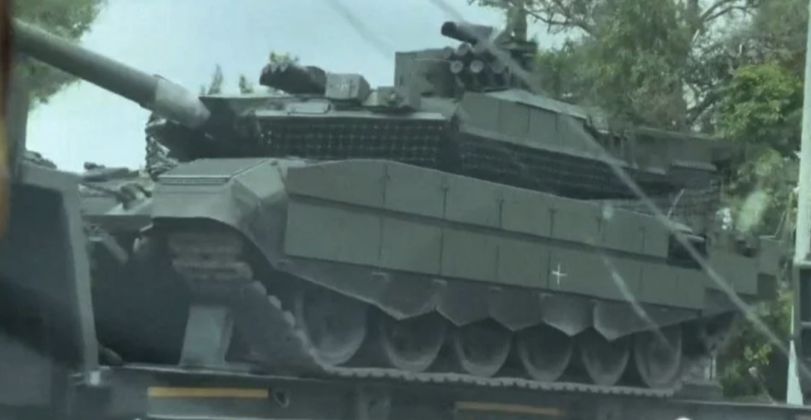
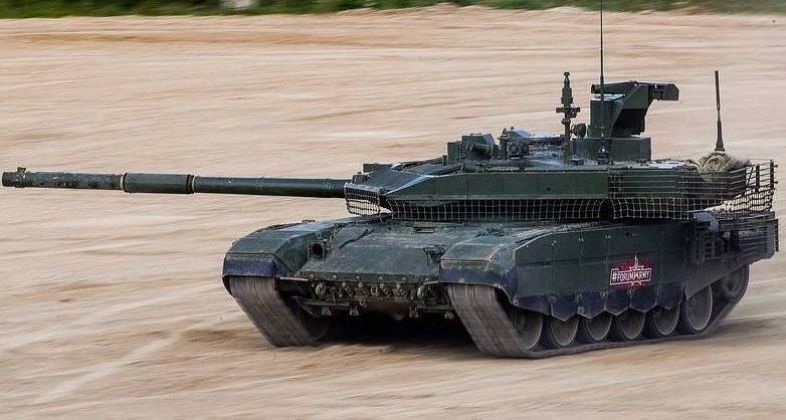
T-90M Tank with Improved Armour Protection and Arena-M System
Footage released by Russian sources has shown the T-90M main battle tank in a new configuration, which integrates further explosive reactive armour, anti-drone ‘cage’ protection, and the Arena-M hard kill active protection system. The vehicles’ appearance follows a statement by the Russian state technology corporation Rostec that the T-90M is being continuously upgraded based on feedback from personnel in the Ukrainian theatre, and an evaluation by the General Designer at Russia’s largest tank producer, the Uralvagonzavod Group, Andrey Terlikov, that the tank has a decade of further modernisation potential. The integration of the Arena-M from late 2024 is one of the most significant improvements made, and has also been seen on T-73B3 tanks.
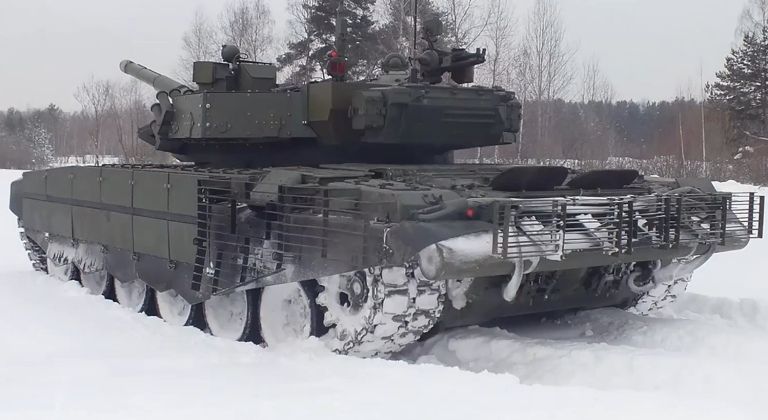
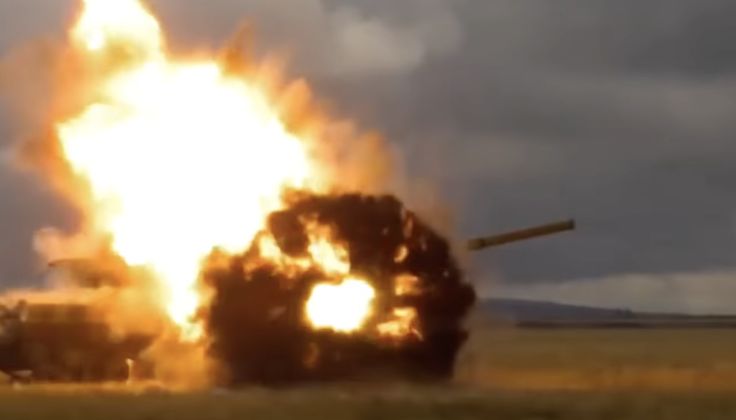
In early January 2026 it was confirmed that a new variant of the Arena-M system capable of intercepting single-use drone and loitering munition attacks had completed development. The system uses a radar to continuously monitor the surrounding environment for incoming threats, and when detecting an incoming projectile tracks it automatically, calculates its trajectory, and deploys protective munitions to intercept and destroy it before it impacts the tank. The baseline Arena-M can intercept rockets, missiles, and anti-tank projectiles travelling as fast as 1,000 meters per second at ranges of up to 50 meters, with the capabilities of the new improved variant remaining unknown.
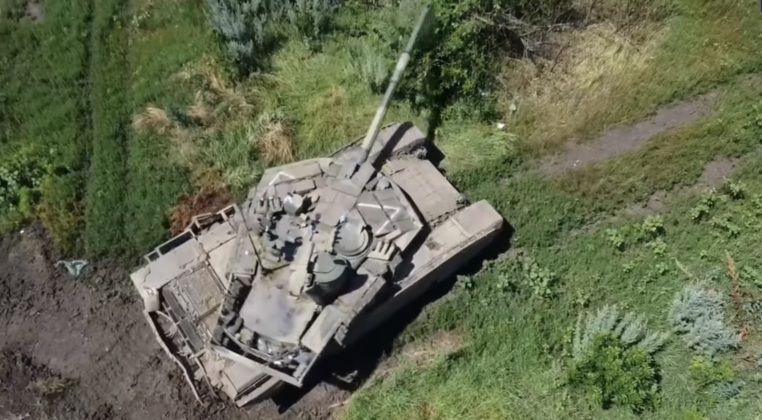
Beginning in 2022, Russia's tank industry pioneered new types of top armour protection against drone and loitering munition strikes, after tank units took heavy losses to such attacks from late February that year. CEO of the Russian state defence conglomerate Rostec, Sergey Chemezov in May, observed regarding these developments: “If we talk, for example, about our tanks manufactured by Uralvagonzavod, they have received additional all round protection from drones and anti-tank missiles based on the experience of the special military operation. They're only planning to do it with the Abrams - they’ve copied it from us. Earlier, the Israelis adopted this from us. In other words, we can say that we are leading trends in the global tank industry.”
The T-90M was the first Russian tank to enter service with very significant performance advantages over Soviet era designs, one of which is the integration of the new 2A46M-5 125mm smoothbore gun, access to the 3BM-69/70 round with 800-900mm of penetration capacity, and the use of new fire controls including thermal imaging systems for both gunners and commanders. The tank’s survivability is improved with new variants of the Relikt explosive reactive armour, a more powerful engine, and extra protection and isolation of internally stored munitions. The tank was nevertheless considered only a stopgap until the more advanced T-14 next generation tank could be brought into service, although with the future of the T-14 program now being highly uncertain, investment in T-90M procurements and modernisation have increased significantly.
Preceding the outbreak of full scale hostilities in the Ukrainian theatre, the Russian Army intended to field around 600 T-90M tanks, upgrading 400 older T-90As to this standard while building up to 200 more. The escalation of the conflict, extreme losses of other types of tanks, and high tensions with NATO, have led to significant investments in expanding production. Production of T-90 tanks has increased rapidly from approximately 90 tanks per year in 2020-2021, to an estimated output of 280-300 tanks in 2024, according to reports by open-source investigators from the Conflict Intelligence Team. The investigators assessed that Russia’s defence sector will further significantly expand production to reach an output of 1,000 tanks by mid-2028, and is on track to reach an output of 3,000 tanks annually by mid-2035.
