
Russia Surges Combat Aircraft Production to Double Pre-War Levels Amid Major Export Driven Growth
Military Watch Magazine Editorial Staff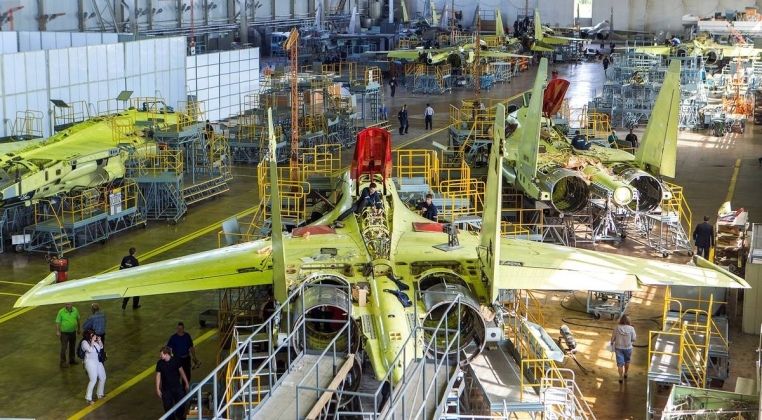
Su-35 Production at the Komsomolsk-on-Amur Aircraft Plant
Head of the Russian state tech corporation Rostec, Sergei Chemezov, has reported success in doubling the production of combat aircraft since the start of full scale hostilities in the Ukrainian theatre in 2022, following years of sustained efforts to increase output of fighters, bombers and attack helicopters. Chemezov made the claim directly to President Vladimir Putin at a meeting. In March 2025, general director of the state run United Arms Corporation Vadim Badekhain revealed that plans were underway to accelerate production of the Su-35 air superiority fighter, with officials at the corporation observing that the firm was investing in workforce training and infrastructure modernisation to eliminate bottlenecks and sustain higher production rates. This followed prior confirmation of efforts to significant expand the production scales of the Su-34 strike fighter and Su-57 fifth generation fighter.
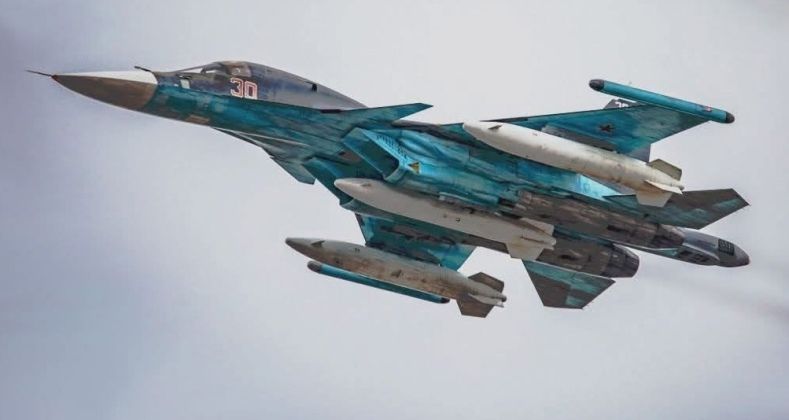
In April 2025 the Chkalov Aircraft Factory in Novosibirsk, Siberia, which produces all Su-34 strike fighters, was reported to have reached double the production rates seen before 2022, with production estimated at close to 30 fighters per year. This reflected both the Su-34’s simpler and lower cost design, which had fuelled expectations that it would be easier to increase production, as well as the fact that procurements have been more strongly prioritised due to its particularly critical role in service. Production of the Su-57 fifth generation fighter is estimated to be over ten times that of pre-war levels, although largely due to the fact that production was extremely limited at just three fighters in 2021 and six in 2022. Thus production of just 12 fighters in 2023 already represented a doubling of production.
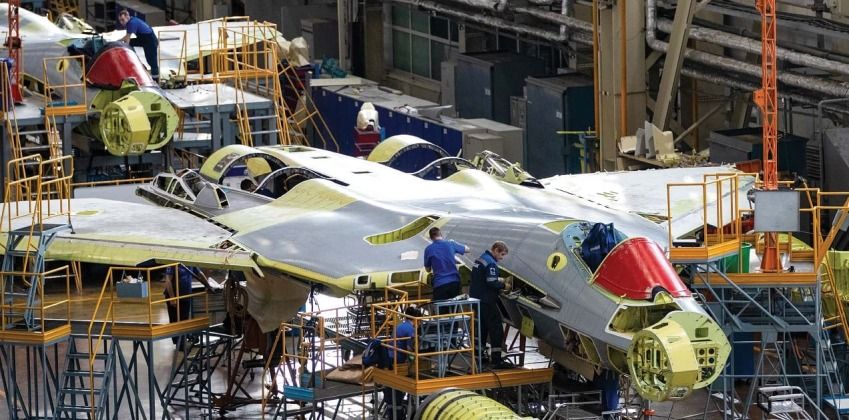
A primary factor allowing Russia to significantly increase fighter production has been a surge in demand from foreign clients, which has provided considerable additional funding to major programs. Where before 2025 only 24 Su-35 fighters were delivered for export, namely to fulfil a Chinese order placed in 2015, by the end of 2025 confirmed orders had risen to 96. These included 18 fighters delivered to Algeria from February that year, six more ordered by Ethiopia, and 48 ordered by Iran. Algeria was that year confirmed as the first export client for the Su-57, with the first two fighters arriving in the country in November. In April 2026 Russian defence export conglomerate Rosoboronexport confirmed that multiple countries had placed orders for the Su-57.
Exports are expected to continue to drive the expansion of Russian fighter production, and particularly production of the Su-57. In August 2025 Deputy Commander-in-Chief of the Russian Aerospace Forces Lieutenant General Alexander Maksimtsev confirmed that preparations were underway for deliveries of Su-57s at an accelerated rate, following the opening of new facilities for their production earlier than month. The Indian Defence Ministry in January 2026 confirmed that talks for the license production of the Su-57 had reached an advanced technical stage. The following month in early February Russian Industry and Trade Minister Anton Alikhanov announced that contracts had been signed in the Middle East for the export of the Su-57, with Iran considered by far the most likely client in the region. North Korean officials have shown an interest in procuring Russian fighters for several years, and in September 2023 inspected production facilities and a Su-57 cockpit at the Komsomolsk-on-Amur Aircraft Plant, fuelling speculation that Moscow could look for loopholes in the current UN arms embargo to be able to supply the aircraft. Should Russian industry be able to sustain an increase in Su-57 production, the fighter is expected to facilitate a continued rapid expansion of the country’s combat aviation export profile.
