
Russia Unveils Long Awaited AESA Radar Upgrade For Su-35 Long Range Fighters
Military Watch Magazine Editorial Staff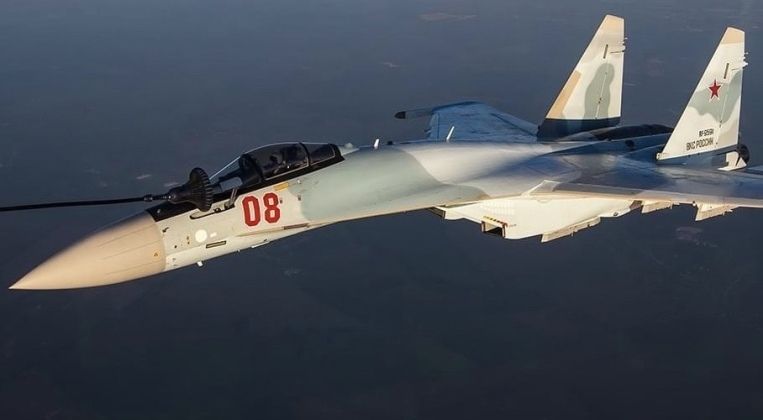
Russian Aerospace Forces Su-35 Fighter
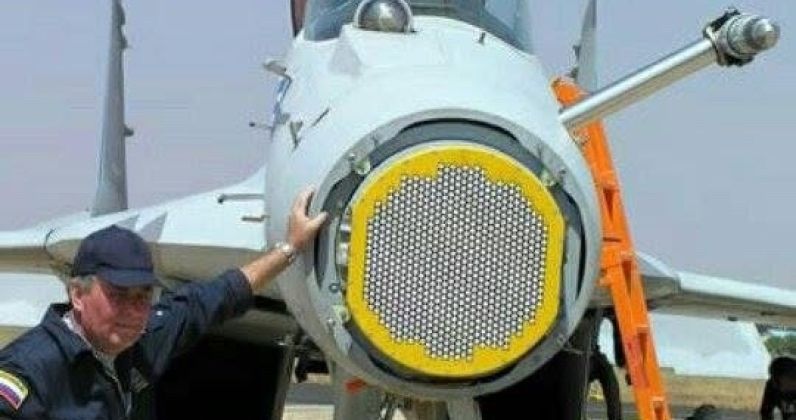
Russian state media sources have reported the unveiling of a new active electronically scanned array (AESA) radar for the Su-35 air superiority fighter, which is intended to replace the Irbis-E passive electronically scanned array (PESA) radar that the aircraft has relied on since entering service in 2014. Russia’s electronics industry has remained behind much of the world in developing such radars for its fighters, with the United States having operationalised its first AESA radar equipped fighter squadron in the year 2000, followed by Japan in 2002. Russia’s Su-57 fifth generation fighter was its first with an AESA radar, although the aircraft entered service only in 2020, with the first full regiment was formed only in 2025.
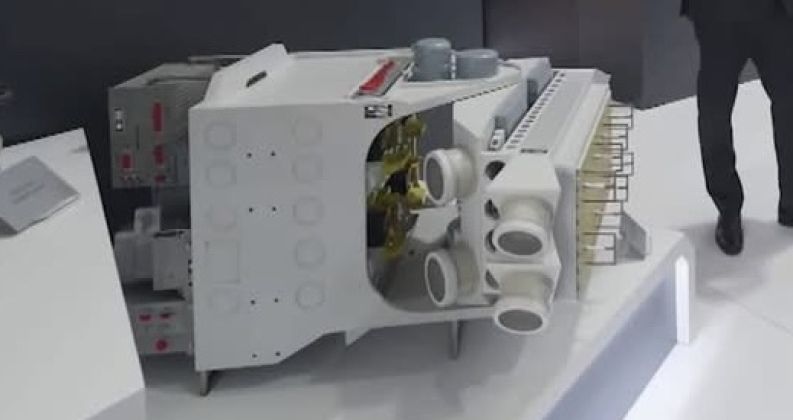
Although the Soviet Union had led the world by two decades in operationalising tactical combat jets with electronically scanned array radars, post-Soviet decline in the Russian defence sector meant the transition from PESA to AESA radars was highly protracted, with only European fighter programs remaining behind Russia. AESA radars have the advantage of being able to scan more precisely and send out radio waves at different frequencies in multiple directions simultaneously, which has major advantages for electronic warfare. Their radar signatures are also significantly lower, making it more difficult for potential adversaries to use their emissions to home in on their locations.
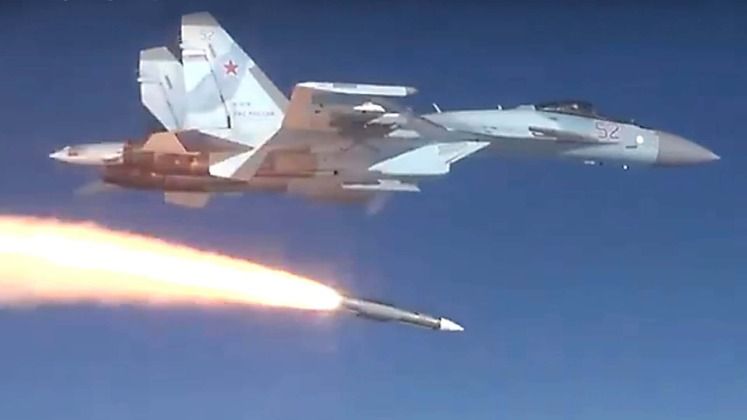
The Su-35’s lack of an AESA radar has long been a leading disadvantage compared to rival heavyweight fighter types such as the U.S. F-15SA/QA/EX and the Chinese J-11BG, J-15B, J-16. These fighter types all integrate outstandingly large and powerful radars. The situational awareness provided by the Irbis-E has been considered insufficient to guide R-37M long range air-to-air missiles to their targets at maximum ranges, raising the possibility that the new AESA radar will be capable of doing so. These missiles have been relied on heavily in the ongoing Russian-Ukrainian War, with the missile’s 350 kilometre range having been considered a game changer for the Su-35’s combat potential.
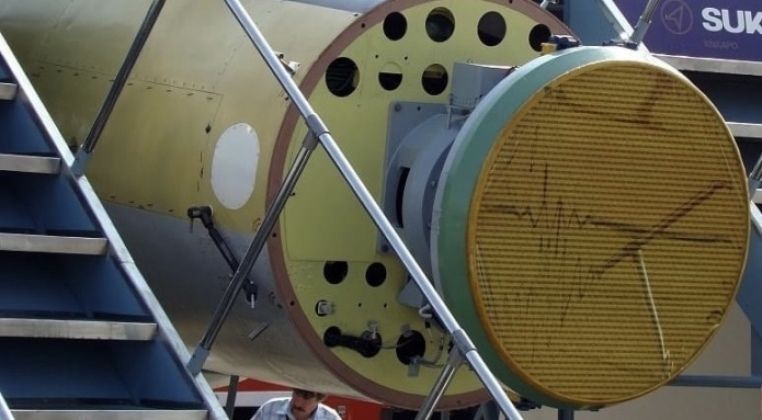
The Irbis-E X-waveband multi role radar is considered one of the most capable PESA radars ever integrated onto a fighter, with the maximum deflection angle of its beam remaining totally unrivalled at 120 degrees, while it retains a 350-400 kilometre detection range against larger fighter-sized targets, and can track 30 and fire on on eight aircraft simultaneously. Chinese evaluations of the Su-35 indicate that the radar is approximately 20 percent less powerful than the similarly sized AESA radar integrated onto J-16 fighters. The capabilities of the Su-35’s newer AESA radar remain highly uncertain, as does whether it is intended to modernise fighters in Russian Aerospace Forces service, or whether it is instead intended primarily to improve the fighter’s competitiveness on export markets. The development of an AESA radar exclusively for export would be far from unprecedented, with the Zhuk-AE radar having been developed for export variants of the lighter MiG-35 fighter, but never being procured by the Russian Defence Ministry.
The Su-35 achieved unprecedented export successes in 2025, with deliveries to Algeria confirmed to have begun in February, and totalling 18 fighters. Leaked Russian government documents subsequently showed that the delivery of 48 Su-35 fighters was scheduled to re-equip the Iranian Air Force, with the delivery six more Su-35s to Ethiopia also scheduled, marking a major breakthrough for the program that would bring total exports to 96 fighters. The fighter is expected to be pitched to North Korea to help cover the costs of Russia’s tens of billions of dollars of defence procurements from the country, although whether the East Asian state’s defence ministry will be interested in the aircraft, or will instead prioritise procuring the more advanced Su-57 fifth generation fighter, remains uncertain.
