
Republic of China Air Force’s Four New MQ-9 Drones Highly Vulnerable in a Future Taiwan Strait War
Military Watch Magazine Editorial Staff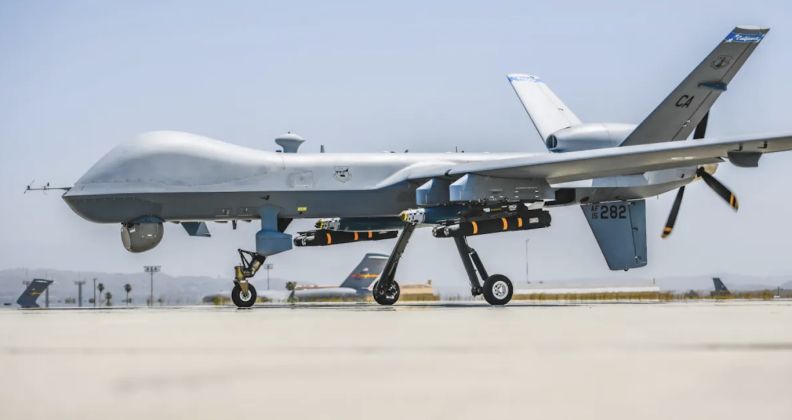
U.S. Air Force MQ-9 Reaper
The Republic of China Air Force has continued to make significant progress in bringing four MQ-9B unmanned long range multirole aircraft into service, with local sources reporting that the first two of the aircraft are currently undergoing system testing by the manufacturer and by local personnel. The MQ-9B is a large drone with long-duration loiter capabilities and all-weather surveillance. Once fully operational, the aircraft are expected to be relied on heavy for monitoring the airspace and waters in and around the Taiwan Strait. The MQ-9B can also integrate a range of precision guided weapons such as Hellfire missiles and Joint Direct Attack Munitions, providing a reconnaissance-strike capability, although the utility of this in the Taiwan Strait remains questionable.
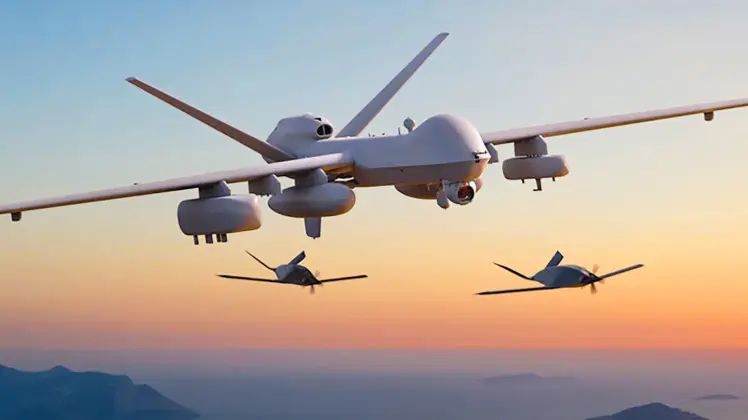
The MQ-9B is prized for its maximum flight time exceeding 40 hours, and its advanced all-weather surveillance and satellite communication capabilities. Equipped with multiple sensors including optoelectronics, infrared, and radar, a single aircraft can monitor significant areas of airspace and water for extended periods and transmit intelligence in real-time via data link. The Republic of China Ministry of Defence has allocated a budget of over 21.7 billion New Taiwan Dollars ($685 million) from 2022 to 2029 to procure four of the aircraft, averaging over $171 million per aircraft, with the budget also covering a ground control station, and related auxiliary equipment. The first two MQ-9s were reported to have been delivered in the United States on March 17, with the second batch of two expected to be delivered in 2027.
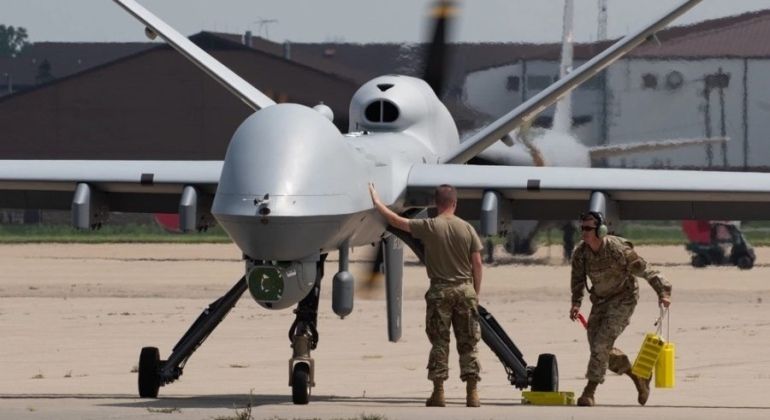
The cost effectiveness of procuring four MQ-9s has been widely questioned, with the aircraft considered highly vulnerable to even rudimentary air defences, while the Chinese People’s Liberation Army’s air defences on the Chinese mainland are in many respects the most formidable in the world. Questions regarding the aircraft’s survivability were recently highlighted after the shootdown of over 50 Reaper drones over Iran and Yemen, despite these MQ-9s having received extensive support from other assets such as EA-18G electronic attack aircraft to suppress local air defences. Operating with far less support, and against an incomparably more capable air defence network, MQ-9s operating in a potential Taiwan Strait conflict are expected to suffer losses significantly more rapidly still. In early March multiple Taipei-based sources reported that severe losses in the U.S. MQ-9 fleet during attacks on Iran from February 28 were expected to seriously delay plans to deliver four of the aircraft to the Republic of China Air Force.
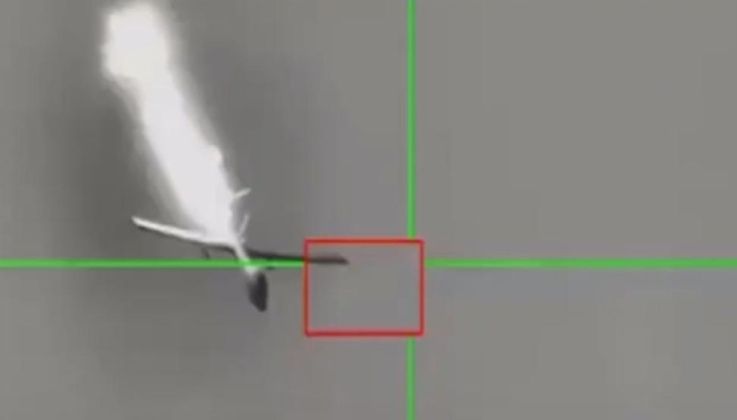
The severe losses of MQ-9 drones have underscored broader concerns about U.S. military resilience in a prolonged high-intensity conflict, with difficulties replacing even a relatively inexpensive unmanned aircraft demonstrating the constraints imposed by closed production lines and a very limited industrial surge capacity. Shortages of MQ-9s have implications extending well beyond the U.S. Air Force itself, with the aircraft performing persistent intelligence, surveillance, reconnaissance, target acquisition and precision strike missions that are routinely shared with allied militaries through combined operations. Despite the extent of losses, the aircraft are credited with having played a particularly central role in the war effort against Iran, with their relative expendability compared to manned fighters allowing them to be used for high risk operations inside Iranian airspace. The much smaller fleet of four MQ-9s scheduled for deployment in the Taiwan Strait, however, will not have the numbers needed to endure such losses even if mainland Chinese air defences were similarly limited to those of Iran.
