
Pakistan Test Fires Nuclear Capable Ballistic Missile; What is the Shaheen-II Capable Of?
Military Watch Magazine Editorial Staff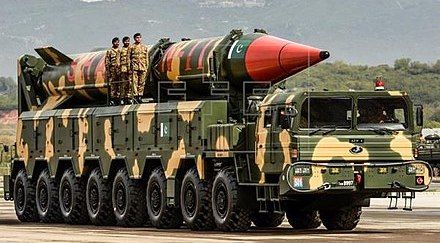
Pakistani Shaheen-II Nuclear Capable Ballistic Missile
Pakistan’s armed forces have test fired a nuclear capable Shaheen-II intermediate range ballistic missile, a platform with a range estimated at between 1,500km and 2000km which provides a key pillar of the country’s strategic deterrent. The test came just one day after the Indian Air Force tested a BrahMos cruise missile from a Su-30MKI fighter, a Mach 3 munition with considerably range launched from the country’s most advanced and heaviest combat jet. The Pakistani Military’s Inter-Services Public Relations media outlet stated regarding the launch that the missile: “fully meets Pakistan's strategic needs towards maintenance of desired deterrence stability in the region.” The test was reportedly "aimed at ensuring operational readiness of Army Strategic Forces Command.” The missile landed in the Arabian Sea, and the successful test received the congratulations of President Dr Arif Alvi and Prime Minister Imran Khan. Demonstrating the capabilities of a nuclear capable ballistic missile able to strike targets deep inside Indian territory has come as part of Pakistan’s efforts to emphasise the strength of its nuclear deterrent at a time of high tensions with neighbouring India.
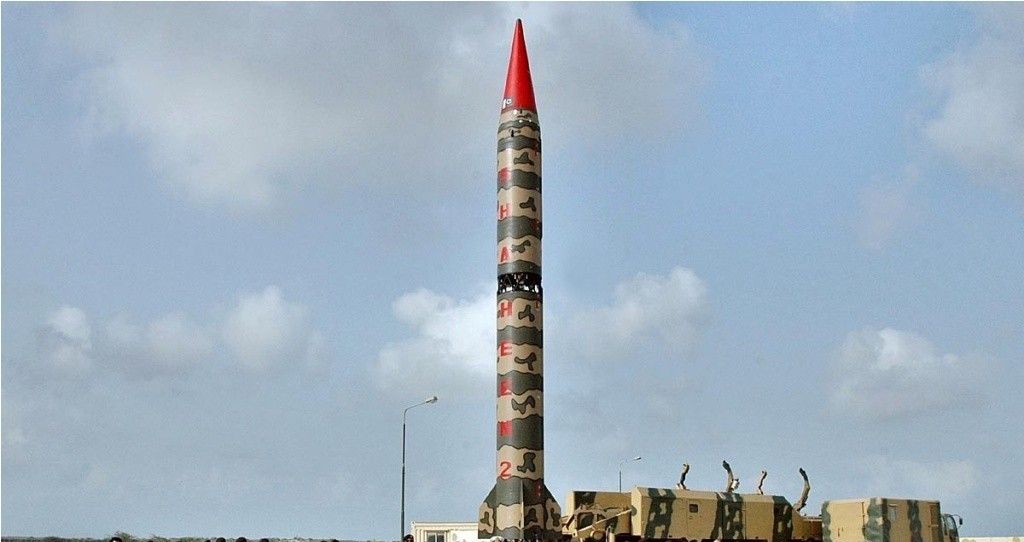
The Shaheen-II first entered service in November 2014 and makes use of a solid fuel rocket motor - meaning it can be stored fully fuelled and needs a far shorter time to prepare for launch than older liquid fuelled designs. Over 50 of these missiles are expected to be deployed from transporter erector launchers at present, though their continued viability in light of India’s recent order for S-400 air defence systems remains in question. The S-400 is capable of intercepting targets at hypersonic speeds, and a single system can engage up to eighty targets simultaneously posing a serious threat to the viability of Pakistan’s deterrent force. It has been speculated that neighbouring China, which currently deploys the S-400 and has provided considerable assistance to the Pakistani ballistic missile program in the past, could aid its South Asian defence partner in developing countermeasures for its ballistic missiles. Pakistan first acquired an intermediate range missile capability in January 2003 with the entry into service of the Ghauri missile, also known as the Half-5. The missile was a close derivative of the North Korean Rodong-1 developed in the 1990s, with the design modified for Pakistani use. The missile retains near identical specifications to the Shaheen-II in terms of range and payload, but makes use of a liquid rather than a solid fuel composite. Much as the Ghauri was developed into the Ghauri-II for an extended 2,300km range, so too is the Shaheen-II design reportedly being enhanced to develop the Shaheen-III - which is expected to enter service in the mid 2020s. This missile will reportedly retain a longer range of well over 2000km and will deploy a multiple independently target reentry vehicle - allowing it to overwhelm Indian missile defences.
