
Pakistan Tests Nasr Nuclear Artillery in Show of Force; Response to India’s ‘Cold Start’ Doctrine and S-400 Acquisition
Military Watch Magazine Editorial Staff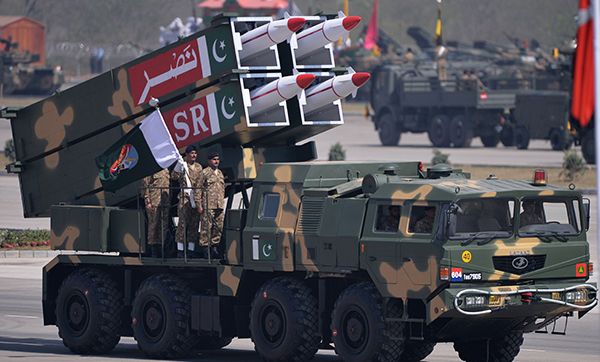
Pakistani Nasr Nucelar Rocket Artillery
Pakistan’s Army Strategic Forces Command conducted two tests of the Nasr (Hatf-IX) nuclear rocket artillery in January 2019, with these “aimed at testing the extreme inflight manoeuvrability, including the end flight manoeuvrability” of the munitions - according to Pakistan’s Inter-Services Public Relations. The artillery system is reportedly “capable of defeating, by assured penetration, any currently available BMD (ballistic missile defence) system in our neighbourhood or any other system under procurement / development,” the statement added in reference to India’s recent contracting of the Russian S-400 air defence system. In flight manoeuvrability is a particularly prized asset for projectiles to be able to evade interception by advanced missile defence systems such as the S-400 - and the rocket artillery could potentially be used to neutralise Indian air defence systems near the Pakistani border. India’s armed forces placed an order for Almaz Antey’s S-400 in October 2018, and the majority of missile batteries are set to be deployed near the Pakistani border to provide defence against aircraft, cruise missiles and ballistic missiles. The deployment of the S-400 has been cause for serious concern in Pakistan’s armed forces, with the missile system deploying hypersonic missiles capable of striking targets across much of Pakistani airspace due to their extreme range - and thereby potentially imposing a no fly zone over Pakistani territory.
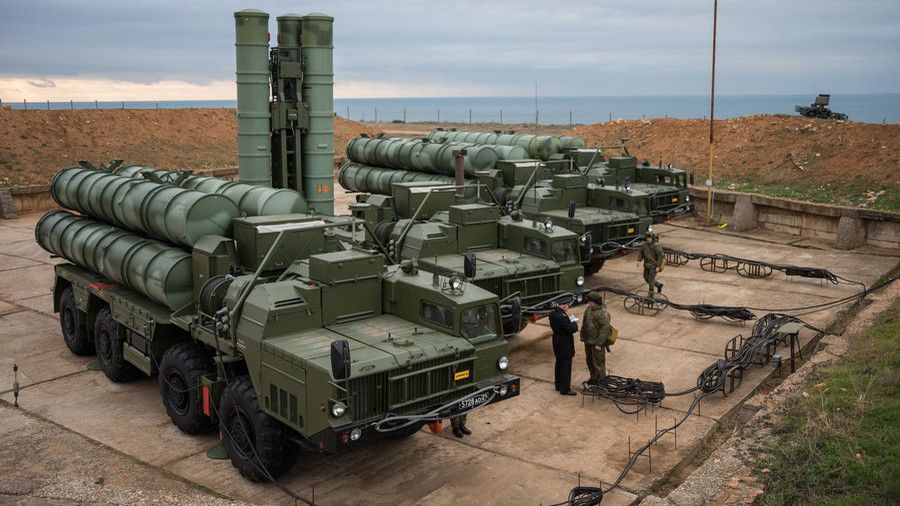
S-400 Surface to Air Missile Launchers
The Nasr entered service in Pakistan’s armed forces in 2013, and was perceived as a response to India’s ‘Cold Start’ doctrine under which Indian ground forces and armoured units would make a rapid advance into Pakistani territory while the Indian strategic nuclear arsenal would deter Islamabad from deploying its own strategic nuclear assets. As a low yield tactical nuclear weapon weapon however, Pakistan plans to deploy the Nasr missile against Indian armoured units and troop concentrations crossing the border - while deterring Indian forces from deploying strategic nuclear arms with its own strategic arsenal. The Nasr epitomises a tactical nuclear weapon, in that it is deployed from a rocket artillery launcher - each of which carries four munitions each with a nuclear warhead. The Nasr’s use of solid fuel meanwhile minimises the launch time - allowing it to be stored fully fuelled at all times.
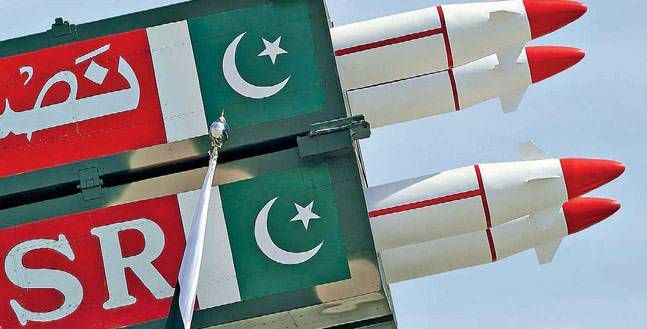
Nasr Nuclear Rocket Artillery
Pakistan’s test of the Nasr rocket artillery system has also closely coincided with growing Indian cooperation with both the United States and Israel in the field of missile defence, with the Indian military acquiring a number of Israeli surface to air missile systems specialised in intercepting ballistic missiles to complement existing Russian made platforms. The United States’ 2019 Missile Defense Review acknowledged that the U.S. “has discussed potential missile defence cooperation with India.” The defence review alluded to Pakistan’s growing missile capabilities as a stimulus for aiding India in developing its missile defences. The United States and India have discussed such cooperation since the mid-2000s, and there remain prospects for acquisitions of American air defence technologies in future. Nasr missile tests can thus be perceived as an attempt to stress India’s vulnerability to low level nuclear attacks at a time when the country may be more risk averse due to a perception of growing invulnerability to missile and air attacks. Missiles were launched in quad salvoes from a single launcher, emphasising Pakistan’s armed forces' plan to launch dozens nuclear strikes in rapid succession from multiple launchers in the event of war. The missile systems have reportedly seen their manoeuvrability improved and their range extended - and Nasr is now capable or striking targets at ranges of up to 70km.
