
North Korean-Russian Relations After the Kim-Putin Vladivostok Summit; A Look at Potential Venues for Cooperation
Military Watch Magazine Editorial Staff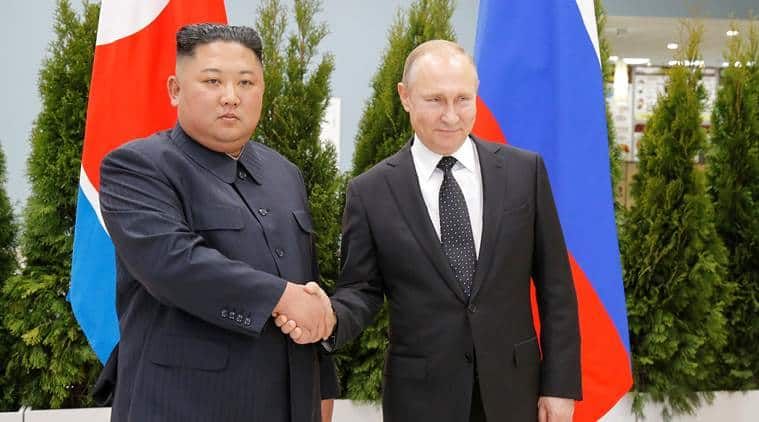
Leader Kim Jong Un Meets President Vladimir Putin in Vladivostok
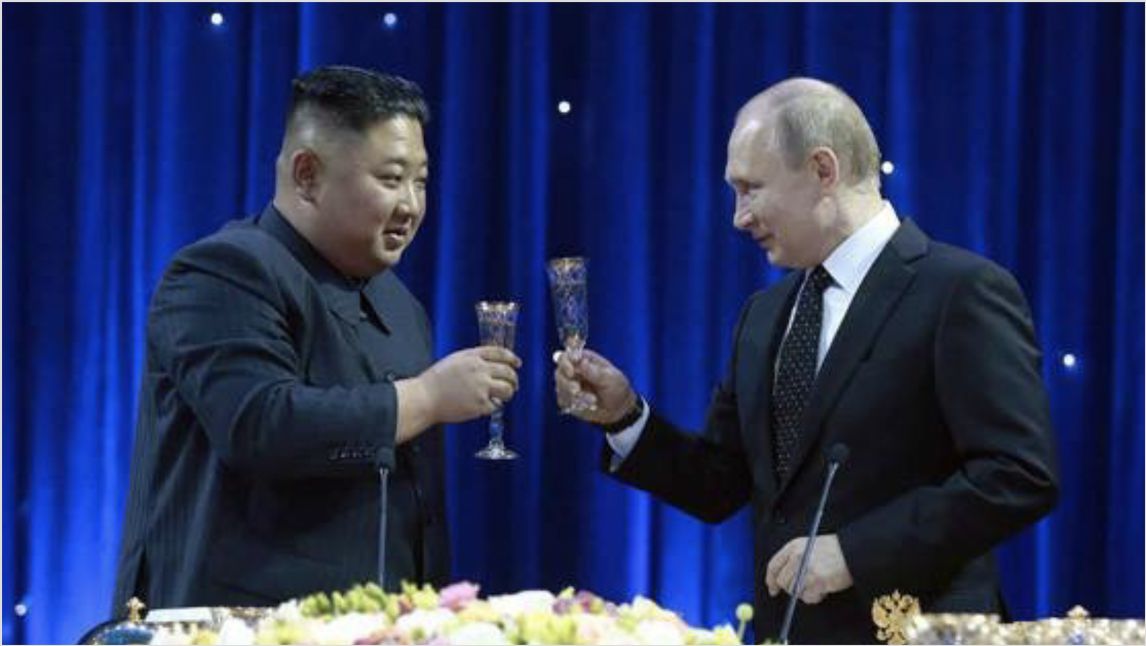
April 25th saw the first meeting of North Korean Leader Kim Jong Un and Russian President Vladimir Putin, and the first known visit by the former to Russia following his first official overseas visits in 2018 to China and Singapore and a further visit to Vietnam in February 2019. With the retirement of the North Korean head of state Presidium President Kim Yong Nam in mid-April 2019, who had previously been primarily responsible for Pyongyang’s overseas diplomacy and met with President Putin, Chinese Premier Xi Jinping and other Korean strategic partners on several occasions, leader Kim Jong Un appears to have taken the lead in Korean diplomacy following six years adjusting to power following his father’s death in December 2011. Leader Kim's meeting with President Putin came shortly after the failure of a major summit with U.S. President Donald Trump in February, and was widely interpreted to represent North Korean attempts to improve its foreign relations through ties to historically friendly third parties to offset the damage of continuing Western economic pressure.
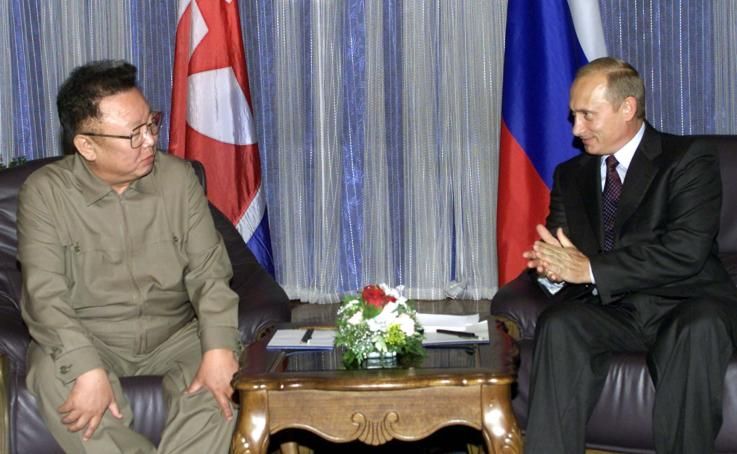
North Korea’s previous two Leaders, Kim Jong Il and Kim Il Sung - the current leader’s respective father and grandfather - paid several visits to Russia and the Soviet Union while in power, with some Western reports claiming that Kim Jong Il was in fact born in the USSR and spent much of the Korean War there. Relations between Pyongyang and the USSR suffered following the death of Premier Joseph Stalin in 1953 - with Pyongyang drawing Moscow’s ire for refusing to take clear sides in the Sino-Soviet split or adopt a new ‘desalinised’ form of government in line with new Soviet doctrine. While relation improved somewhat in the 1980s following Kim Il Sung’s visit to Moscow, where he negotiated major Soviet arms sales to and investment in North Korea, the USSR’s collapse in 1991 and emergence of the Russian Federation as a Western aligned successor state in the 1990s saw ties deteriorate considerably. The inauguration of the administration of President Vladimir Putin in May 2000, however, led to a considerable improvement in relations, with the Russian leader visiting Pyongyang in July and signing a Joint Declaration with Kim Jong Il. The Korean Leader reportedly referred to President Putin as ‘a leader with whom we can do business,’ in contrast to his Western aligned predecessor Boris Yeltsin. Kim Jong Il’s final state visit was to Russia in August 2011, four months before his death.
As the first meeting between a North Korean Leader and a Russian President in over eight years, much has changed in both countries’ relations with the Western Bloc since 2011 - and with each facing growing pressure including economic sanctions and U.S. led military exercises on their borders the need for cooperation has never been greater. Upon approving the first U.S. drafted economic sanctions against Pyongyang at the Security Council, Russian Permanent Representative of Russia to the United Nations Vitaly Churkin insisted that all sanctions should be lifted once the East Asian states begins to cooperate and halts testing of nuclear arms and ballistic missiles. President Putin has since called for a relaxing of sanctions after Pyongyang ended missile and nuclear testing at the end of 2017, while criticising Western efforts to press Russia to impose harsher economic sanctions on North Korea while Moscow was itself placed under harsh U.S. and European sanctions. A number of factors, including strong economic ties, much valued Korean labour exports to Russia’s Far East, and signs of continuing military cooperation all indicate that relations have remained strong throughout the 2010s, and North Korea’s conclusion of its weapons program following obtention of a thermonuclear armed intercontinental range ballistic missile appears to have paved the way for a further strengthening of ties.
With little doubt that the lifting of the United Nations Security Council’s economic sanctions on North Korea depends almost solely on the United States due to Washington’s overwhelming influence at the council, the value of a summit with the Russian leader for Pyongyang was called to question. With sanctions in place, venues for economic cooperation between Moscow and Pyongyang are seriously restricted, while the Hanoi Summit of February 2019 demonstrated that the United States lacks a clear and consistent position on its terms for the relaxing of UN sanctions - demanding what amounted to Pyongyang’s complete surrender of its deterrent and all other weapons of mass destruction to the United States Military and intrusive U.S. inspections. The complete relaxing of sanctions by the United States, even if such conditions were met, remained highly unlikely. While Moscow has already pledged not to support further UNSC sanctions on Pyongyang, and lacks the power to lift existing sanctions, there remain a number of venues for cooperation outside the body which could be highly beneficial to both parties.
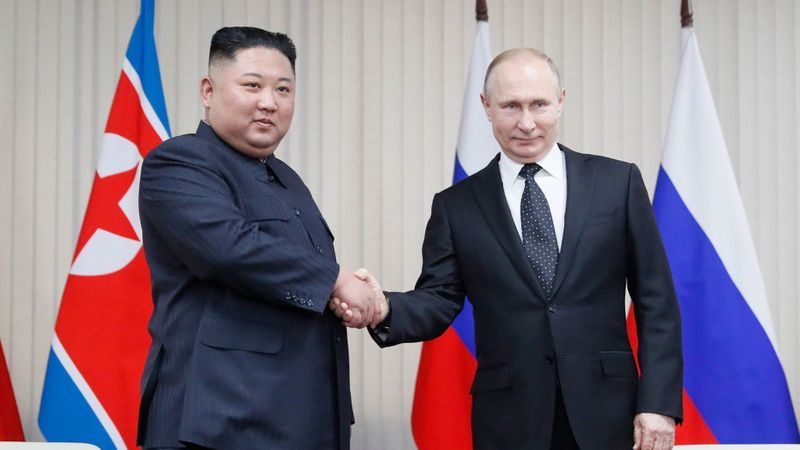
Following negotiations Leader Kim Jong Un noted a "very meaningful exchange,” and stated regarding its nature: "The reason we visited Russia this time is to meet and share opinions with your excellency, President Putin, and also share views on the Korean Peninsula and regional political situation, which has garnered the urgent attention of the world, and also hold deep discussions on strategic ways to pursue stability in the regional political situation and on the matters of jointly managing the situation.” President Putin for his part reiterated his previous statement showing a degree of solidarity with Pyongyang over its decision to pursue a nuclear program, noting that Western military action against small states seen to pursue policy at odds with Western interests such as Iraq, Yugoslavia and Libya, made it hard today to persuade North Korea to disarm in the face of an imminent threat to its very existence. He thus concluded regarding the key facilitator of a Korean disarmament: “The most important thing, as we have discussed today during the talks, is to restore the rule of international law and revert to the position where global developments were regulated by international law instead of the rule of the fist. If this happens, this would be the first and critical step toward resolving challenging situations such as the one on the Korean Peninsula.”’
A number of possibilities for what was concluded at the summit have been raised. One was for Russia to act as an intermediary for Pyongyang and Washington - following North Korea’s request to work with officials other that Secretary of State Mike Pompeo who was referred to as ‘immature’ - with Moscow potentially contributing valuable channels to negotiations following the failure of the Hanoi Summit. Another was for further relaxations on enforcement of UNSC sanctions which would benefit the economies of the two neighbouring states. President Donald Trump previously referred to a Chinese relaxation of enforcement in early 2018, and Russia could well follow suit. With few means of monitoring trade across the Russian-Korean border, the possibility for Moscow turning a blind eye to sanctions evasion remains. Improved military cooperation between the two states also remain a considerable possibility, with Russia previously having been accused by the Untied States of supplying North Korea with missile technologies and other reports indicating continued sales of supplies and equipment for the country’s large Air Force - primarily comprised of Soviet built aircraft such as the MiG-29. The possibility was also raised in 2015 by Russian Defence Minister Sergei Shoigu of holding joint military drills with North Korea’s armed forces - with negotiations reportedly opened to determine the possibility of such actions. The possibility of such joint exercises could provide both parties with the leverage needed to press the United States to scale down its own much criticises military exercises in South Korea and return to the negotiating table - though they could have quite the opposite effect and lead to further escalation. Joint military drills may materialise in the form of Korean participation in larger multilateral exercises such as the Vostok drills in 2018, which saw hundreds of thousands of Russian personnel joined by thousands of Chinese and Mongolian forces. North Korea has also expressed interest in joining the annual Tank Biathlon held in Russia - potentially using its advanced indigenous main battle tank the Pokpung Ho. Integration of the North Korean economy onto the Belt One Road program, for which the ability to transit goods across Russian territory using the vast railway network laid down under the Soviet Union is vital, remains another potentially key means of facilitating mutually beneficial cooperation.
