
Captured U.S. Abrams and German Leopard 2 Tanks Displayed in North Korea After Forces’ Kursk Battles
Military Watch Magazine Editorial Staff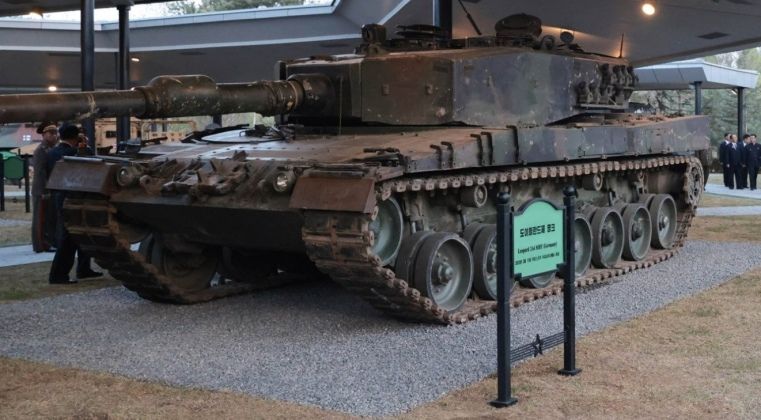
Captured Ukrainian Leopard 2A4 Tank in North Korea
North Korean state media has published images confirming the delivery of captured NATO military equipment to the country, after the Korean People’s Army was deployed from late 2024 to help Russian forces repel a Ukrainian and Western assault into the Russian Kursk region. NATO member states have supplied armaments to Ukraine on an outstandingly large scale, providing considerable opportunities for Russia’s defence sector to analyse equipment such as U.S. M1 Abrams and German Leopard 2A6 tanks, U.S. Javelin anti-tank missile systems, and U.S. Excalibur precision guided artillery rounds. North Korea’s active participation in the war effort appears to have resulted in its forces not only being given intelligence on NATO equipment, but also given direct access. While NATO members’ forces, such as U.S. Forward Observation Group personnel, played key roles in supporting the assault on Kursk, it remains uncertain whether and to what extend they engaged North Korean forces.
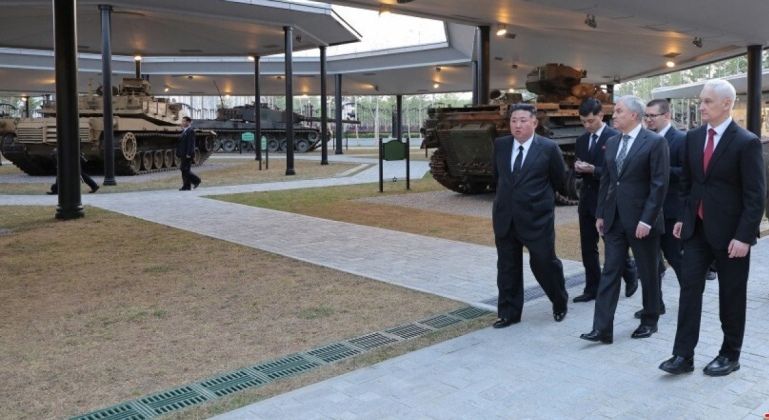
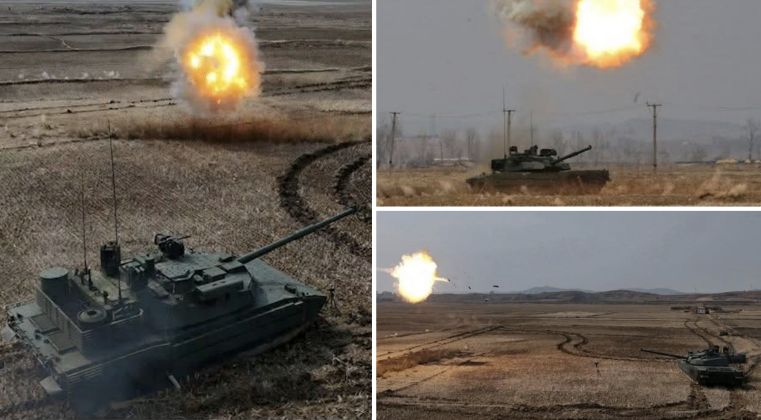
It remains unknown whether the NATO equipment displayed in North Korea was captured by Korean People’s Army units, or whether it may have been captured by Russian Army units and provided as a sign of gratitude and good will. The equipment displayed includes at least one Leopard 2A4 and one M1A1 Abrams tanks, which are among the most high profile pieces of equipment NATO members have provided to Ukraine. The two are by far the most widely deployed types of NATO standard main battle tanks, although both are less sophisticated than either the new Chonma 20 tanks which North Korea has itself developed, or than the K2 tanks in large scale production in South Korea. A notable example is that Western tank types lack active protection systems seen on tanks produced in the two Koreas, although NATO members plan to integrate such systems by procuring them from Israel.
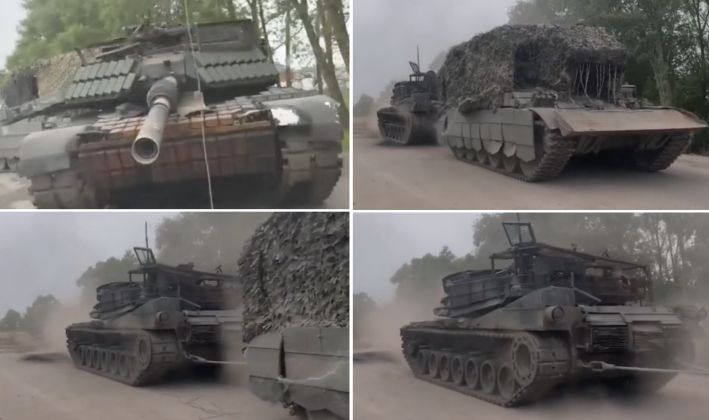
It is expected that a detailed examination of Western tank vulnerabilities, such as weaknesses in armour coverage, sensor exposure, or mobility limitations, could influence North Korea’s anti-armour doctrine, which has itself been rapidly evolving as new technologies have rapidly been developed. North Korea has displayed captured Western military equipment extensively in the past, including the U.S. Navy warship USS Pueblo and multiple aircraft, tanks and other vehicles captured during the Korean War and in subsequent skirmishes. While a decade prior North Korea’s defence sector would have been expected to extensively study Western tanks to influence the designs of its own vehicles, the country’s defence sector has largely moved ahead in terms of capabilities, with the new Chonma 20 tanks appearing to be close to parity with new South Korean and Chinese designs.
The viability of Western main battle tanks for high intensity combat has increasingly been questioned, with the Ukrainian Army by early June 2025 assessed to have lost 87 percent of the Abrams tanks it had been supplied, after its Leopard 2 tanks had from June 2023 quickly taken similarly extreme losses. The U.S. Army subsequently cancelled plans for further modernisation of the M1A2 to deeply revise the Abrams’ design, and instead financed the development of the very deeply revised and much lighter M1E3 Abrams next generation variant. Analysts have widely assessed that the obsolescence of conventional Western tank designs seen in the Ukrainian theatre was a primary factor prompting the particularly radical redesign of the Abrams. The M1E3 program is expected to produce a fourth generation main battle tank, with China in 2025 having been the first country to introduce such a vehicle into service. North Korea has yet to develop such a tank, but the rate of progress made in its defence sector has raised the possibly that such a tank will be unveiled by the early 2030s.
